What was it like for female DJs 30 years ago? What progress has been made since?

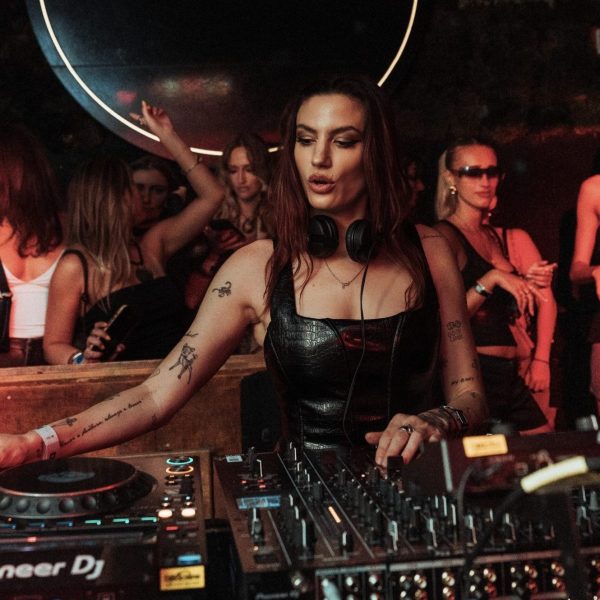
We bring together three highly experienced and respected figures—Anja Schneider, DJ Minx, and DJ Paulette—to discuss the past, present, and future of women in dance music.

What was it like for women DJs 30 years ago? What progress has been made for female artists in dance music over the years? And when it comes to inclusion, representation, and cultural change, how far have we actually come? 

As part of AlphaTheta / Pioneer DJ’s global initiative Equal Beats, which aims to create a greater gender parity in the music industry through events, research, mentorship and community building, we spoke to three of the scene’s most experienced and respected figures—Anja Schneider, DJ Minx, and DJ Paulette—to try to answer these questions. 

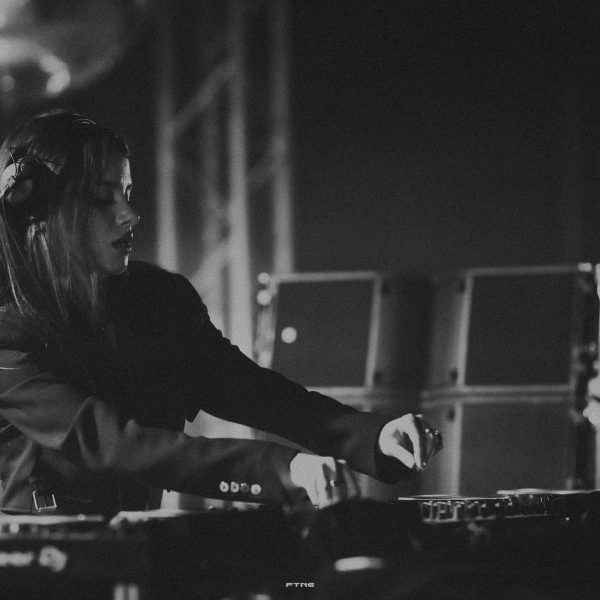
Anja Schneider began her career in radio, after she replaced the influential Monika Dietl on Radio Fritz in 1997. In the mid-2000s, Anja began DJing in clubs and later cofounded the label and event series Mobilee with Ralf Kollmann, which she ran for 12 years until she parted ways with Mobilee in 2017. In the same year, she launched her own label, Sous, a home for her own productions and for emerging and established producers. In 2021, the Berlin Music Commission awarded Anja the Honour Prize for her outstanding impact on the music scene. As well as DJing, producing, and running Sous, Anja hosts the podcast Clubroom Backstage and the monthly party PuMp at OHM in Berlin. 

In the late ‘80s in Detroit, DJ Minx, AKA Jennifer Damaris, taught herself to mix vinyl on the floor of her apartment, and landed her first booking shortly after. In 1996, she founded the collective Women on Wax, a community for female DJs from the Metro Detroit area. In 2001, she launched Women on Wax Recordings, through which she caught the attention of Richie Hawtin, who re-released her track “A Walk in the Park” on his imprint Minus, which significantly boosted Jennifer’s profile. In 2018, Jennifer was awarded the Spirit of Detroit award by the city of Detroit. Today, Jennifer curates the event series House Your Life, in addition to touring as a DJ, producing music, and hosting her own stage at the annual Movement festival in Detroit. 

DJ Paulette started as a singer in bands in the late ‘80s and began to DJ in the early ‘90s. As a resident of the queer party Flesh at the seminal Haçienda club in Manchester, she honed her skills as a DJ before relocating to London and, later, Paris, before moving back to Manchester in 2015. For many years, DJ Paulette fronted and contributed to radio shows, from Gilles Peterson’s Worldwide FM to BBC 6 Music. In 2022, Paulette received DJ Mag‘s Lifetime Achievement Award as part of its Top 100 DJs poll, and the following year, she won The Keychange (PRS) Inspiration Award at the Sound City festival, recognising her significant and pioneering contributions to music over her 30-year career. In 2024, Manchester University Press published her debut book, Welcome to the Club: The Life and Lessons of a Black Woman DJ.

We recently hosted a 90-minute roundtable discussion between Anja, Jennifer, and Paulette, which we present here in an edited format. The result is a discussion full of honest reflections, painful memories, and inspiring wisdom, from three women who have decades of experience to draw upon. 

Let’s go back to the early days of the dance music scenes in each of your respective cities. Were there female DJs? Were there more men than women on the dance floor?

DJ Minx: I started going out, discovering the music in late ‘88 / ‘89. I used to hear it on the radio, so I had no idea that it was a club thing. I had no idea what house or techno was, period. I would hear it, and the fact that there was a track that went on and on and on, I didn’t even know about mixing. So I didn’t realise that these were tracks mixed together. 

One of my friends wanted to go to see Jeff Mills; “The Wizard” [Mills’ former alias] was on the radio every week, and that’s how I heard the music. One of my friends wanted to go to a club where “They’re playing that house and techno.” And I was like, “Is that the thing that just goes on and on and on?”

So we went to the club and waited to get in, and it was an absolute must to get in there. So we finally got in. It was dark. The music was thumping. We see all these people jumping around and screaming. It was euphoria. 

No one’s dancing with anyone. Everyone is an individual. And this was intriguing to me. There were men and women. There must have been equal amounts of people in the life family, or as we call it, the LGBTQ. I saw all types, Asians, Americans, dancing in one room together.

I lived downtown, and this was three blocks from my house, so I started going every week.

The DJ at the time was mostly Derrick May. I did know that on the radio there was Stacey Hotwaxx Hale, and I didn’t know if Stacey was a woman or a man. Then I later found out that she was playing at this club as well. She and Kelli Hand invited me over like, “We heard you’re a DJ, come play some wax.” That’s how I met them and realised that there were women involved; but those are the only two women that I knew about.

Paulette, you started going to clubs in Manchester when you were just 14, I believe?

DJ Paulette: Yes I did, I started going to clubs when I was 14, which was the early ‘80s. I was going to pretty much every club on the Manchester City Centre circuit, but this was pre-house. My family were going to the soul and funk all-dayers.

But my thing was to go to the more alternative nights, because I was really into electronic music. I was into Kraftwerk and the Sheffield sounds, so Cabaret Voltaire and early Human League. There was never a female DJ behind the decks. Every DJ that I followed from club to club was male.

Fast forward to 1991. I wasn’t in the clubbing vein around the second “summer of love.” When I got back into it I was on the queer scene, and the DJ I was following was Tim Lennox, and the music he was playing. 

When I started DJing at the Haçienda, and I was playing at the queer night Flesh, it was a very mixed crowd: Black, white, Chinese, you name it, women, lesbians, gays, all together in the one room.

But even then, the DJs were still very much male, and it wasn’t until I started DJing at Flesh that I actually met another female DJ, Kath McDermott, and she was DJing upstairs, and I held court downstairs.

Anja, when you started going out in Berlin it was just after the Wall came down..? 

Anja Schneider: Yes, that was the first time I came to Berlin. I was born close to Cologne. I planned my first weekend in Berlin, and I planned to go to Tresor. I drove 12 hours to get there. It was during this time, in 1992 or something, that there was the Globus room upstairs, and they weren’t playing house or techno music, it was something like “hip house.”

I was young and a little bit afraid. It took me four hours until I asked someone, “I’m very sorry, is this the legendary Tresor club?” And this guy was looking at me like, “No girl, come on.” He took me around the corner, and there were stairs, and I was afraid to walk down by myself into Tresor.

Every step you took you could feel the sweat. I could feel the bass. And it was something completely different. There were the same amount of women as men. There were a lot of queer people. The first DJ I recognised was Jeff Mills. I had fallen directly in love with the Detroit music scene.

The first female DJ I recognised in the Tresor context was definitely Electric Indigo. She was also, during this time, already building female:pressure. And then later on, Ellen Allien, she was playing at E-work, the legendary Fridays there. We had a woman already on the radio, Monika Dietl, and she was introducing Berliners to the techno scene.

Dimitri Hegemann and Regina Baer, who were running Tresor, had this really strong connection to Detroit. After that weekend, I decided “I have to come to Berlin” because I could feel there was something going on. And so I moved directly to Berlin. 

I was always waiting until Friday, and then I went out from Friday to Sunday, and experienced all these clubs. 

DJ Paulette: There’s a link in all of our stories, the context of the history that’s running behind them. In 1989/90 in Detroit, what was happening politically there, the same with Anja, and you’re talking about when the Wall had just come down, and in Manchester, in the UK, we had a colour bar running. We were coming off the back of the AIDS crisis.

You’ve got a lot of laws and things that are happening socially that are trying to prevent this music and these cultures actually getting through, so it’s really interesting that in this percolation of talent, up pops Jennifer and Anja and myself, in different parts of the world, having a little moment of, “Oh, I think I can breathe here.”

Anja Schneider: The whole reunification of Germany was happening during this time, this was happening in the clubs during the night or in the mornings.

I heard that when Dimitri brought the first Detroit DJs over to Berlin, the US had no idea what was happening in Germany. Tresor was on the Eastern part of the Wall, and all the American DJs were always asking him, “It’s not in the Eastern part, it’s in the West, right?” And he was always lying to them, “Yes, of course,” because they were still thinking the Russians will come!

DJ Minx: Oh I’ll tell [the Detroit DJs] if they don’t know. I’ll let them know that that’s what [Tresor] was doing that whole time! 

Jennifer, were you conscious of what you wore and how you looked when you were DJing?

DJ Minx: So this was a really tough time for me, even if we just look at deciding to be a DJ, oh, gosh, it was such a stressful time.

I had a lot of support from my friends, who had not seen a woman DJ. OK, so we had women DJs out there but we didn’t have one like me. So I’m girly. Yes, I am a lesbian, but I am a very girly girl, I wear pearls, I wear jewels and hair and all that. It was more negative, because first of all, the way I looked, I appeared to be a joke.

My mentor, Jerry—his name is Jerald James—was a school teacher at the time. He was always supportive in the way of, “You have to show these people what you can do and fuck them, because you’re not going to get the respect until you gain it.”

So upon practising within my own apartment on the floor with some JBLs with the pitch control that I’m dialling and trying to get these vinyls to mix up, I got it quickly. Then I started thinking, ‘I can do this.’ But going to my first set… the young ladies at the door wouldn’t let me in. They were like, “Hi, what do you mean you’re here to DJ?” I said, “Well, Bruce invited me to play a set.”

I used to own a mobile record store with Jerry and this guy Duane. On this particular day, [Bruce] was like, “You’re a DJ? You have a card?” And I gave him a card that said “DJ Minx,” it was handwritten, and he said, “Oh, come and play tonight.”

So we got all these people together, but these ladies [at the door] wouldn’t let me in, and when I got ready to leave again, this guy came from the back, and he’s like, “Wait a minute, Minx, where are you going?” He’s like, “She has a bag of records, it’s not a purse, she has records. Let her in.”

So I go into this very, very dark room, and I go to the turntables, and I’m nervous. My hands are shaking. I put the track on. I walked into a house club, this night. So the first track I played was a track from John Acquaviva. I put it on, and the whole dance floor is looking at the booth, frozen.

I hated that I was there. I was nervous. I was crying on the inside. But I was like, “I’m just going to mix, like I do in my apartment on the floor.” The people started screaming and clapping and screaming, and I only played for 20 minutes. And there were two women in the booth cheering me on. It was the two women from the front door apologising to me, hugging me.

Throughout my DJing, it was always a challenge. Because of being a woman, there was always disrespect. The challenges were real, and they were very painful. Everywhere I went, “You playing wearing that?” 

“Yes.”

“Orange heels and a pencil skirt?”

“Yes, with glitter earrings and these nails, let’s go.” It was awful.

How long did those challenges and those comments go on for?

DJ Minx: Actually, it went on for quite a while. I can’t really remember when it stopped. But it started to change because of [people saying], “Sleep with me and I’ll let you play the parties,” and me saying, “Really? OK, I don’t want to play the party, I’m fine.”

Or, “If you play for me for free, then we’ll consider adding you.”

I’d say, “That’s OK. I don’t want to do it.”

That’s when the women started flocking to me. Other women who wanted to DJ were like, “Please help me, I heard you did this, I heard you did that.” That’s how I built Women On Wax. The disrespect went on for quite a while, but it slowed down because people started to see my talent and also respect that I didn’t let people walk all over me. That’s when it started changing. 

I was also full-time at General Motors as a project manager, so I had a full-time job. I didn’t have time to dedicate 100% to DJing because I just didn’t believe that it would be a career for me. I absolutely did not feel that it would be. I heard too much negativity from people, and “It’s a man’s world.” That was the biggest thing.

Thank you for sharing those challenging experiences, Jennifer. What about you Paulette, was your experience starting out as a DJ similar to Jennifer’s?

DJ Paulette: So it’s strange for me, because when I started DJing it was with an organisation that was really open to women—A Bit Ginger Productions—who put on the Flesh party. They were really pushing female creatives, entertainers, artists, and DJs to the point where both myself and Kath McDermott were on every poster. We were on every lineup in equal position. We had equal set lengths, and we never actually had to question our standing or status within that organisation.

And in terms of dress, I mean, the Haçienda did not have any air conditioning, and the Flesh party was always really, really full, so I wore next to nothing, and I didn’t even think about what I was wearing in that space. I did not even think it mattered that I was wearing a bondage bikini or a fluffy bra and knickers or a dyed string vest with a thong underneath it. It didn’t even cross my mind that what I was doing or what I was wearing would be considered in any way strange or weird, or odd.

I did not think about it until I started playing on the straight scene. I went to my first party at a straight club, playing house, dressed like I did going to Flesh. And I remember this so clearly, because I walked in and I’m in these thigh-high boots, sequinned knickers and a metal bra. And I walked in, and everyone was, like, fully clothed. I was like, “Shit, they don’t dress like that here, and they don’t look like me here.” I had a shaved head, a cleanly shaved head, so I looked like an alien. It was like I had just dropped from space.

A few weekends after that, I went record shopping at Eastern Bloc in Manchester, and I’d never really met any sort of aggression or antagonism or anything like that because it was a queer night. People weren’t looking at me to pull because I was not their type. So I didn’t have to think about people propositioning me for what I wore, or anything like that. But I went record shopping at Eastern Bloc, it was a Saturday afternoon, and a friend of mine had said to the guys behind the counter, ‘You should start leaving a bag for Paulette along with [the bags for] Jon Dasilva and Dave Haslam and Graham Park.’ 

And they said, “No.” And he said, “Why not?”

They said, “Because she only gets the gig because she wears a fluffy bra and knickers.”

And it was like, I’m in there every week, two or three times a week, buying tunes, keeping you all in wages. And you think that I’m only getting the gig because I’m a bit of window dressing for people who are coming into the club?

And annoyingly, I started to change the way I looked. If I was playing at a straight night, I developed a different kind of look and a different way of dressing, which was more suited to that less hedonistic, less party crowd to the straight crowd.

And then when I was playing a gay night, I dressed like I did for Flesh, and I realised that there were two different things happening here: I could be who I am, unbridled, when I was playing at the queer nights. But when I was playing at straight nights, I had to reign in a part of me that was found to be a bit “unpalatable.”

I had to start playing people at their own game, like, “No, I know my music. I’m buying records here, I’m playing records here, and I’m getting this gig because I can play, not because I am a fucking ornament.”

And there was the realization that I was now having to prove myself, and it happened around 1994/95, and there was this subcurrent of having to prove yourself when you walked into a club if you were a woman. The guys did not have to do that—they don’t have to do it—but women have to do it. And I don’t know why, because we’re generally better anyway, so fuck them.

DJ Minx: True!

And Anja, what about you? When you first started playing in the Berlin clubs, did you feel self-conscious? Were you comfortable in these spaces?

Anja Schneider: I have to say, I started a little bit later than Jennifer, because I took over the radio show of Monika Dietl, which was a really responsible job. I was super successful with this radio show, and I was always the person behind the microphone. I wanted this electronic music to be heard by everyone. I was such a fan, and I loved this music. I knew everything about it, but I was doing the radio show which was really simple, we had to push one button, and then you would talk blah, blah, blah.

So there was not a big mixing thing. But then, of course, the radio show was so successful I got more and more requests to play as a DJ. I was super naive, because I was so successful on the radio I thought, ‘OK, if I can do this on the radio, I can do this in a club.’

I had my first DJ gig, I played somewhere at a huge event. And before me was Paul Kalkbrenner. It was 2003 or something like that. When I came with my vinyl, I thought, ‘OK, I can do this, yeah,’ but it was the worst I ever did, it was completely different from the radio. I didn’t rehearse. It was just terrible, and I was shaking. I have goosebumps telling this story.

It was a disaster, and after this I had only two options: I could do it better, I could learn. Or I could give up. 

The problem was that I was so successful on the radio, it was not the fact that I was a woman. It was more like, ‘Oh, she’s coming from the media, it’s not enough.’ The only thing where I had to suffer, or where I felt a little bit stupid, was when the technicians were always explaining to me three times how to use the equipment. There was always one guy in the crowd who’d come over to the DJ booth like, “It’s a little bit too loud,” and then, of course, you always get judged much harder.

There was always the rumour, ‘Oh, this girl can’t mix, and she has technical problems.’ They would never, ever talk like this about a male DJ. Everyone was talking about which female was better than the other one, which is pretty stupid. I made so many mistakes. But I never had this accusation, ‘OK, you’re just here because you’re a woman.’

Berlin was, for quite a long time, not a city for dressing up when you went out in the techno scene. I was completely sure and clear about it, I always wanted to be like a boy, I was dressing like a boy. I could never imagine wearing a bra or making myself nice or having makeup. 

This is a little bit curious when I see what it has become now, it has become about what you’re wearing, and people talking about what you’re wearing. Now, of course, I love it. I love to dress up. This has changed, but it was never, ever my intention. I always tried to hide myself more and wanted to wear something really boyish. When you were talking about the jewellery, Jennifer, and that you were still wearing the skirt and stuff like that, I was completely the opposite, but it was on purpose.

DJ Paulette: It’s funny how there’s been a turnaround, because I stopped dressing hyper feminine, just because of the way people are with women in club environments. I just got fed up with being touched up, felt up, and disrespected in DJ booths and club environments. So it’s a rare occasion that you will find me out of either shorts in summer or trousers in winter, and if I wear a dress, it’s like pigs flying over the moon, because people can’t keep their hands off you. It’s an upsetting thing that women have to think about that side of it, more than just turning up and playing and playing their music and entertaining people, which is an annoying change.

Anja Schneider: Interesting. I never had this experience where people touched me or came too close. 

Sometimes I got passed pieces of paper, and people were asking if they could marry me. Some really dreadful ones, and this was meant to be somehow cute. 

I mean, of course, we all probably had this experience where we got some shitty offers. I mean, also in the business. I was just like, “Wow, what the fuck, is this true?” And I learnt to handle this, and I was never complaining because I found a solution for myself, and I blamed them, and never had to speak out. But, of course, this happens, but never from the crowd, that they were touching me or something.

DJ Minx: We’re playing for these kids now, we got the young ones out here, I’m like “I actually could be your mom, baby.” I could be your parent, get out of here. It’s like the notes, “Can you come home with us?” I’m like, “Baby, I could be your actual parent. Take your ass home. No, honey. I have a daughter your age. Get your ass out of here.”

But it’s crazy. The things these people say! Yes, it’s funny now, but back then, it would be like, “Come on now.” 

Did each of you have mentors along the way? 

DJ Minx: OK, so Jerry was actually a DJ as well as a school teacher. As far as the mentorship goes, I would consider Jerry and a young lady named Sarena Tyler. She’s a therapist, but she was also a DJ, and still is a DJ. She walked me through a lot of the positives and things that I needed to look at, and the things that I should or shouldn’t do as a DJ. And she was very encouraging.

I also looked up to Kevin Saunderson, but this was before I knew him. I knew that he had produced music and started techno, but I didn’t know his entire backstory. But it so happened that someone I was dating was his best friend. So I started going to KMS Records and just watching him in production, and he was just nice, right out the gate. When a friend of mine said, “You know, she wants to be a DJ,” he was like, “Really, really, OK, I can’t wait to see that happen.”

Fast forward to today, and he’s one of my best friends, so at this point, he is very, very supportive. As grown-ups we still collect mentors, and I, as well, provide mentorship to mostly women. A lot of gay people come to me now, since I came out, and look for the support and the mentorship. So I offer it to everyone.

As far as Kelli goes, she was a great friend. I knew her. We hung out a few times. I knew that she was the first woman who had a label here in Detroit, which was very impressive. So I started listening to all of her music. When I started my label, she did a remix for me. Didn’t get it out, but I was with her the night she passed, which was very tough.

We were at a club called the Marble Bar in Detroit, and the gentleman who was the promoter for the night said, “I don’t know why Kelli’s not here yet. It was weird, she came here last night looking for you,” and I said, “For me?” And he’s like, “Yeah, and she was demanding that she and you and her were playing the party.”

And so I texted her, and I was like, “Girl, what time are you coming?” or whatever. And I didn’t get a response from her. And then the night that I was playing, I was playing until she started at 12.30. I signalled the promoter and said, “Have you heard from Kelli?” He’s like, “No.” And I was like, “Well, I hope she didn’t confuse it as last night and she’s not going to come,” or whatever.

And so at about 12.27, she’s standing in front of the booth. She had a mask on, and she’s looking at me, and I was like, “Get up here,” because that’s how we always talk to each other “Hey girl,” or whatever. She was with two women.

Those two women had her each arm and arm, and she was holding on to them. I pulled her hand in and I said, “Hey baby.” But she didn’t say anything. I said, “Are you OK, baby?” And she didn’t say anything. I said, “Baby, if you are sick, you don’t have to play. OK?”

It’s past 12.30 now, and she’s still standing there. I said, “I heard you came last night on the wrong night!” or whatever, and she still didn’t say anything. And I said, “OK, Kelli, you talk to me, baby. If you don’t want to play, we’ll talk to the promoter.” And she said, “No, no, I’m good.”

“OK,” I said, “I’ll play another one.”

Now it’s 12.35 going into 12.40. I mixed in a track, and I took my headphones out, and she stood there, and she was lifeless, standing in front of the crowd. She had a flash drive, and she held it up to me. She didn’t know where to put it. I was like, “Well, come on, we’ll put it right here, put it on the drive.”

She had her headphones, and then she was fiddling, putting it in the mixer. I said, “Baby, what is wrong? Kelli, what’s wrong, boo?” She didn’t say anything. 

My track is running out at this point. She’s shaking her head. She said, “I can’t hear, why? Why do I hear your music? I want to hear my music.”

She didn’t know how to cue. She didn’t know how to press the cue button. I said, “Kelli, what is wrong? I got it. I got it. I’m staying right here.”

She let the track run out. She couldn’t get the first, second, or third mix. But I stayed there. She kept saying she was OK. Now it’s like, something is wrong.

My friends that were at the table were like, “What’s going on?” I said, “There’s something wrong. I think she’s not feeling good or something, but she still wants to play.”

She tried to play but she was messing up her mixes. So I got my phone out and I started recording her, and I was like, “Something’s wrong, Kelli, I don’t know what it is.”

I didn’t stay all night, but little did I know that a day and a half, two days later, someone would call me and said that she drove home, and the neighbour noticed she drove up into the yard. She didn’t park. She drove up into the yard, slept in her car for a long time, and then stumbled into the house, and she passed away that night.

Her mom found out I was with her, and had someone call me, and I apologised, and then I said, “I’m so sorry. I knew something was wrong, but I didn’t know what it could be, so I didn’t know how to react, she was telling me she was OK.”

I said, “But wait a minute. I videoed her,” and her mom was screaming like, “Oh my god, send me the video,” and I sent it to only her. I don’t know if they said it was part of a stroke that she had had the night before.

But she went, and she lay down on the couch and that was it. That was rough. She was a great producer, a great person, and I always looked up to her.

DJ Paulette: I think that’s one of the hardest things, in this industry anyway, is that wellness aspect. ‘The show must go on.’ That moment of actually having to admit your vulnerability and say, “I can’t do this, I need to go…” I mean, that is just the most heartbreaking story [about Kelli]. Kelli Hand is one of my biggest inspirations, musically. I mean, all of you guys, absolutely in Detroit, you’re the reason why I’m doing what I’m doing, everything that you’ve created, and everything, particularly you, Jennifer, with the Women On Wax…

I remember when Women On Wax started. I remember being at a conference. I think it was a Billboard conference in New York one time when it had all just started, and it was all really kicking off with Women On Wax, and people were saying, “She’s getting all these female DJs together, because she is saying this about the industry and what we need to do.” So it’s a massive inspiration for me. 

I just feel so fucking honoured to be sitting on a Zoom with both of you. Maybe we don’t play the same music, but I could see what both of you were doing, and I could hear what both of you were doing, and I was like, Jesus, thank you for being there and doing the things you do and saying the things you say. But I’ve never really had that kind of mentor at my side. I have never, hand on heart, had a mentor, and this scares me every time I say it, but I have to say it, because it’s true.

There was nobody at my side that directed me, or that I could ask for advice. There was either a sense of competition or threat, and people did not really share information readily.

And maybe I didn’t ask either. You have to ask people to show you. There is that type of mentorship where you go to them, or there’s the mentorship where someone takes you under their wing. I haven’t had a tight set of women. I’ve never really had that kind of relationship with people until now. I’m glad it has come later on, but I get upset with myself thinking I could have made my life a lot easier if I’d coughed up that fur ball a lot earlier.

I appreciate the honesty, thank you. And I’m glad that you know now that you can ask for support, even if it’s come a bit later in your life.

DJ Paulette: I remember this when I wrote my book, and Jamz Supernova said, ‘Your mentors don’t need to come from the same job as you.’ So there have been people in business around me who aren’t DJs, who I’ve modelled myself on, but never in a very open or obvious or ‘help me out’ way. I’ve just looked at what they did, what they’ve done and thought, ‘Oh, right, that’s how you do it.’ Then I’ve kind of taken that information and personalised it to myself.

That kind of person, for me, would be Gilles Peterson. I worked really closely with Gilles, and he has been very formative for me, but not in the way of sitting in a studio with him, going through tunes and swapping and that kind of thing, because none of that existed. But I worked with him close enough to get to know the ropes of working in the music industry. So Gilles and various other people on the radio. 

DJ Minx: I did a Zoom call for Paxahau during Covid with Stacey Pullen, Seth Troxler, Carl Craig, someone else, we were all on a Zoom call and and I was in the same boat as you, Paulette, I would just do what I was doing as far as production goes at home. And during this particular call, they started talking amongst themselves about music production—”Remember when I helped you with the keyboard?”

“Oh, man, yeah, when you did this with those drums,” blah, blah, blah, and talking and talking.

And I sat back in my seat, and I said, “Oh, OK, this is how you do. I see how y’all do.”

I said, “But y’all not helping me like that. What’s up?”

That’s when everything changed for me. Carl was like, “Wait a minute, call me after this.” And then I was like, “Oh, OK, because y’all got a little unit going, but y’all not thinking about me.”

And then Carl texted me, and after that, boom. We have to ask, because we have been placed in that bubble, with us being women. Oh, and it’s a man’s world. We don’t want to ask. We don’t want to put ourselves out there, just to be like, put down or shunned, so I never did myself.

So we just need to ask, I guess, without stepping on any toes, but we’re also strong women. ‘I can do this myself, get out of here!’ or whatever.

What’s your experience Anja, and did you have any mentors?

Anja Schneider: I had someone off the radio, my kind of Gilles Peterson. He helped me quite a lot in digging and playing music. What kind of music is important for the radio at different times. So I learned quite a lot from him, and he was the only one when I went into public DJing who helped me and taught me how to mix.

And then, of course, I had a lot of good friends, and I still have them. These friends kept with me even when I was getting more successful. They were always really honest. This is the best thing [honesty]. I have to thank them for the nights where I had my two turntables in my small living room, and they were just sitting there and hearing me mix, and after every mix, I was like, “How was that?” Still sometimes we’re laughing about this, they’d say, “You would be never here if we were not sitting there all night with you listening to your mixes!”

Were they both male, those friends?

Anja Schneider: There was one female and one male. But of course, in Berlin, we had Ellen Allien, and she was also helping me. We were on the radio, and even if we didn’t have the same friendship as Jennifer had with Kelli, I really adored her and am really thankful because she had her own label for the first time [back then] and the way she was going through things and shaping the scene, this was really important for me. 

Speaking of labels, Jennifer, I’m just going to go back to you about Women On Wax…

DJ Minx: I started the label because of Moodyman, he’s the one who suggested I start a label. He fronted the first four releases, he paid for everything, and told me the importance of it. I was intimidated by something of that nature.

He said, “You have to start producing your own music to further your career.” I did not think anyone would listen to what I’d done, but it started to pick up immediately with distributors wanting to sell the vinyl—vinyl was the hot commodity, of course.

Women were intimidated by the production side of things, and I wasn’t good at teaching production because I knew very little. I did what I had to do to create a track. Again, I still had a nine-to-five job, so I couldn’t devote a lot of time to production, but I did what I could, and that caught Richie Hawtin’s attention. Magda was one of my Women On Wax DJs too, and someone brought her over and said, “She’d like you to mentor her,” and we got really close.

Ricardo Villalobos was the first one to buy my Airborne EP, and he played it. Richie heard it and said, “That’s my girl from Detroit.” His manager called me the following week: “I want to help you with distribution. I need you to get it out there more.”

So he was the push to help me get it over the line and into more people’s spaces by putting music on Minus. That helped me get known as a producer, so I kept it going. But with a regular job and little support at home, I couldn’t produce or DJ full time. That’s why Women On Wax eventually became dormant. Heartbreaking, but yeah.

From around 2015, there was a significant push for better representation for women in dance music. FLINTA collectives began to pop up in Berlin, London, and New York, and brands like Smirnoff and Red Bull launched campaigns to showcase and support female and non-binary DJs. 

Do we think that push for better representation made a lasting impact on how women are perceived in dance music today?

Anja Schneider: Honestly, I didn’t recognise it then. For me, the change came around the pandemic. Suddenly we had big female headliners, proper festival slots, more women on lineups and charts, more labels. That was the turning point. But we’re still not there.

DJ Minx: I agree. Unless we keep doing what you mentioned—Smirnoff, those campaigns—we won’t get there. It needs to constantly be in their eyes and ears. People still say, “My favourite female DJ.” Let me just be your favourite DJ. Don’t separate us. If we’re in a room full of guys, I can rock with the best of them. Don’t call me that. Anyway, there’s my rant. 

DJ Paulette: It’s not a rant, it’s a point. I participated in Red Bull’s Normal Not Novelty campaign in 2016 or 2017. Great idea, but here we are in 2025 still talking about the same shit.

When we started, it wasn’t as gendered as it is now. We were just DJs. Now social media’s made it more divided—men here, women there, pay gaps. Like you said, Jennifer, they can’t do something for one year and forget about it. They have to keep it going. I’m still often one of only a few women on a lineup of 80 DJs.

DJ Minx: I want to do an all-lady festival and have one man. LGBTQ and females, let’s do it. I’m telling you, it’s going to happen.

DJ Paulette: Can you imagine the blowback? Somebody should mock a fake lineup and post it online. Do it, Jennifer.

DJ Minx: I might. Maybe 20 women, three guys—maybe just one!

DJ Paulette: You’re right, Anja, the real push was post-pandemic, when everyone looked at their DEI policies. But there’s been a slide back. Everything promised during the pandemic’s being forgotten.

DJ Minx: We had that little window, and that was it.

DJ Paulette: Two years of glory, then gone.

Anja Schneider: Absolutely.

So the most positive change was just after the pandemic—and the most negative is the slideback?

DJ Paulette: Absolutely. Two slide backs: one with organisers and promoters, one with punters. When clubs reopened, people promised to support the scene. They haven’t. Bad behaviour’s increased—people jumping into booths, attacking DJs. We’ve lost unity. Promoters too: they promised fairer lineups and diversity, but there’s been pushback. Can we please remember what we promised? Peace, love, unity and respect—that’s what this thing was built on.

Jennifer, what about you? What do you think still needs to improve?

DJ Minx: I am in 100% agreement that that there needs to be more recognition for the people that can actually play, people that can actually perform and give you a show, because you can all day come from your bedroom and press some buttons, and but where are the people that can actually perform, who are the individuals that aren’t out there just to be seen, quote, unquote, with the big bosom, where are the actual talented people?

People need to do their homework. I don’t know where that’s going to start, but like you said, Paulette, during the pandemic, you see people on a screen all day, and ‘This is what we’re going to do, we’re going to start this, we’re going to start that.’

But then during the pandemic, a lot of people were like, ‘I’m a DJ too, and I have followers.’

‘Oh, you’re a DJ and you got followers? Come on’. Playing bullllllshiiiiit.

We know social media is here to stay. We know that people have followers (Anja, 99,000!) but I’m just saying that we know that social media is out there and people are viewing you after you play or whatever, and that’s when they start noticing you.

I just need promoters to really dig and do some homework before you do your bookings and realise that there’s real talent out here.

Anja Schneider: And take a risk also. It’s really nice that you said ‘people,’ Jennifer, there’s just so much talent out there. It doesn’t matter which gender. Everything is dominated by algorithms, by social media, and this is why we are in this shit. And I’m missing the times where you go to a club, where you didn’t even know who was playing, and were surprised. And you were like, “Wow, this is blowing my mind.”

DJ Paulette: I said today at the university, that there are dogs and cats with more followers than me. Book them. They can’t play fucking records, right? But there are dogs and cats. If you’re really going to go on the algorithms, book the dogs and cats, because they’ve got millions.

But if you want to book somebody who knows music and plays records, you need to be looking beyond the numbers, it has to go back to talent. People are getting demoralised because it’s all about the numbers. Now I’m speaking to DJs every week who are asking me, “How can I put on a party?” when the organisers even in bars are asking them, “How many followers have you got?”

Before I ask each of you about your upcoming plans, is there anything else that you want to add?

Anja Schneider: I learned a lot here, and it was so good for my soul today to talk with you all. Sometimes you feel that you are alone. You do all this, and then you go out again, you have the same experience every weekend… Now we can talk about it.

I have some girl DJs whom I talk with, and we have the same experience. But it’s really good to hear that you’re not alone, and you have to show how strong we are and that we have the power and that we have the right to do what we are doing in this kind of quality that we are doing.

And what’s coming up next for each of you?

DJ Paulette: I’m writing another book, so that’s great. I’m a mentor at my university, so I’m taking classes of people there and helping to inspire them. And then I’ve started making music myself, and it was interesting listening to you speak about music, Minx, and saying that you felt like, at the beginning, how you felt not so confident about it. Not everybody’s gonna like what I make. I understand that, but I like what I’ve made, and I’ve played it out and it works.

Anja Schneider: Honestly, I have to say, I want to be more secure in myself and not be touched by someone who is judging you. I have a new podcast coming out in Germany. It’s in German where I’m talking with people with nice biographies, the people I’ve met in all these 20 years.

I started a party because I felt a little bit inspired by Annie Mac, because she’s doing the party Before Midnight, which I love. In Berlin, we’re spoiled. We have Berghain on a Sunday afternoon, but I want to do this for the people who still have Saturday night in mind, but are not able to go out.

What about you, Jennifer?

DJ Minx: Oh, goodness. I’m behind on some things because of my personal life. But right now, I am working on a remix, and I am just finishing up a remix for Radio Slave and oh Lord, it’s so hot. I’m working on something with Nicole Moudaber as well. I am in the process of wanting to do my own radio show, and I know I’m stepping into a different realm by suggesting I want to be on BBC Radio. I am also in the process of working on an open air event. I do a Christmas event every year at Spot Lite in Detroit. I’m working on a lot right now but those are some things that I’m focusing on and that I’m proud of. I’m just keeping at it every day. 

DJ Paulette: I think there’s something for all of us to be proud of, because when we speak about the numbers, the time, the hours that we’ve put into this thing, those are not small numbers.

I would add that this is such a beautiful thing to work in. I’ve always used knock-backs as some sort of inspiration to do things differently. But I would not have been doing this job for 30 years if it wasn’t fun and if I didn’t love it, and if I didn’t get some kind of fire in my belly from it every fucking day. I would recommend it to people, but just say, “Take care of yourself and be smart. Work smart with it. And be aware of what the world is, but go into it with your eyes wide open and just love what you do.”

DJ Minx: Indeed.

Text: Niamh O’Connor

Anja Schneider photo credit: Sven Marquardt