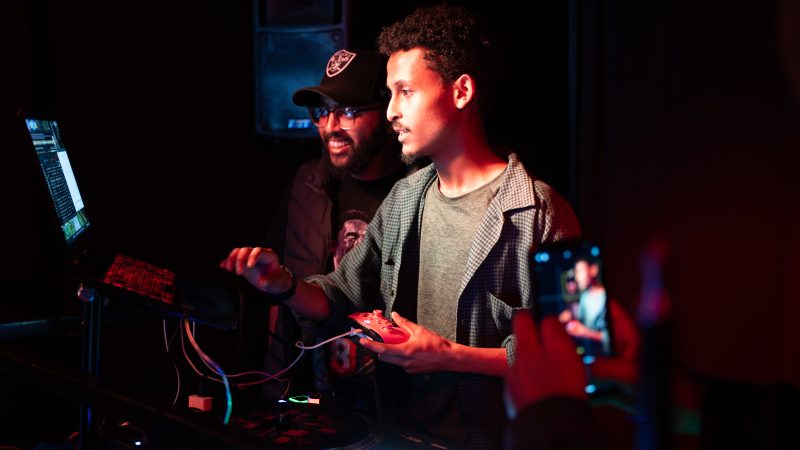
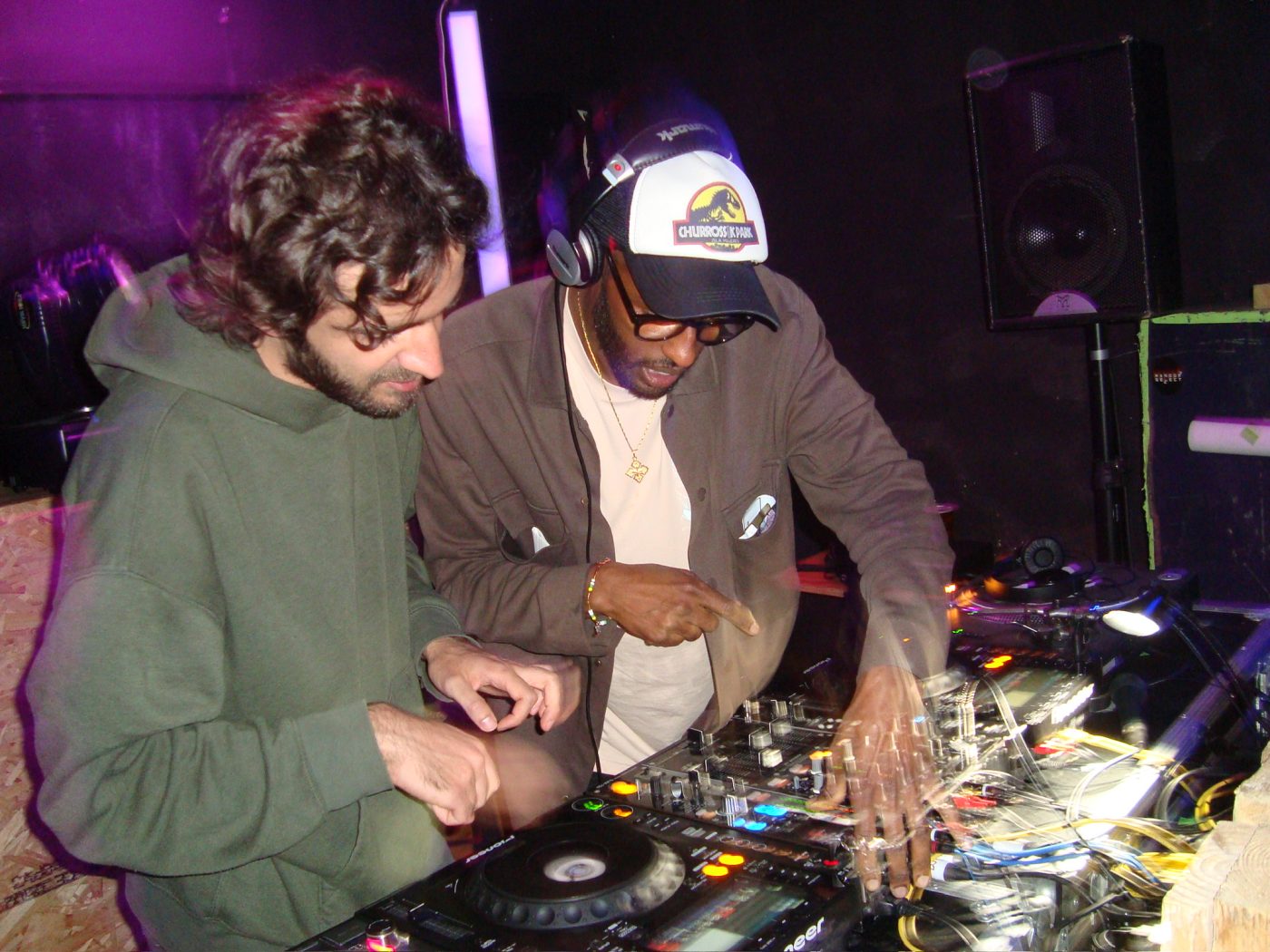
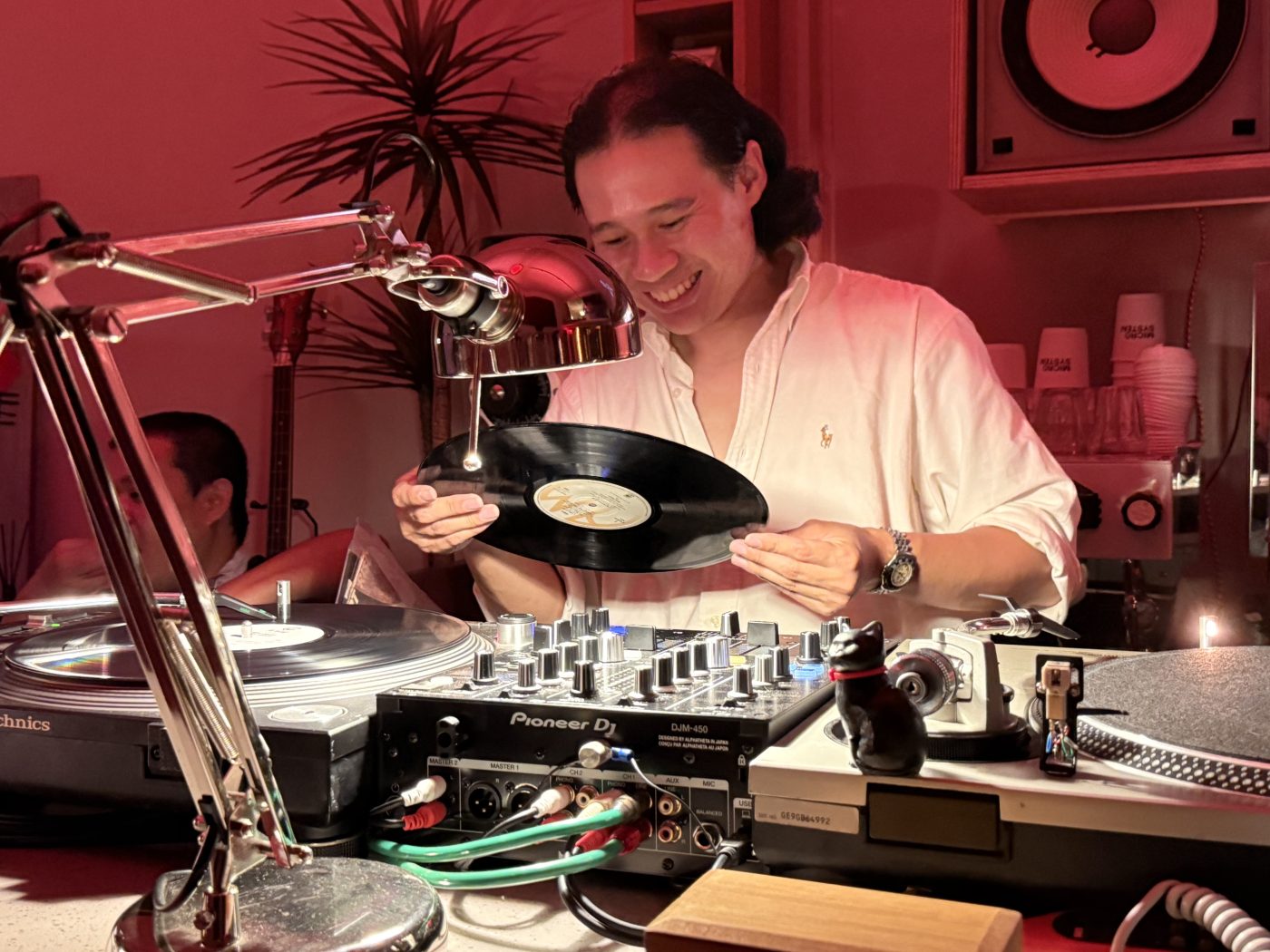
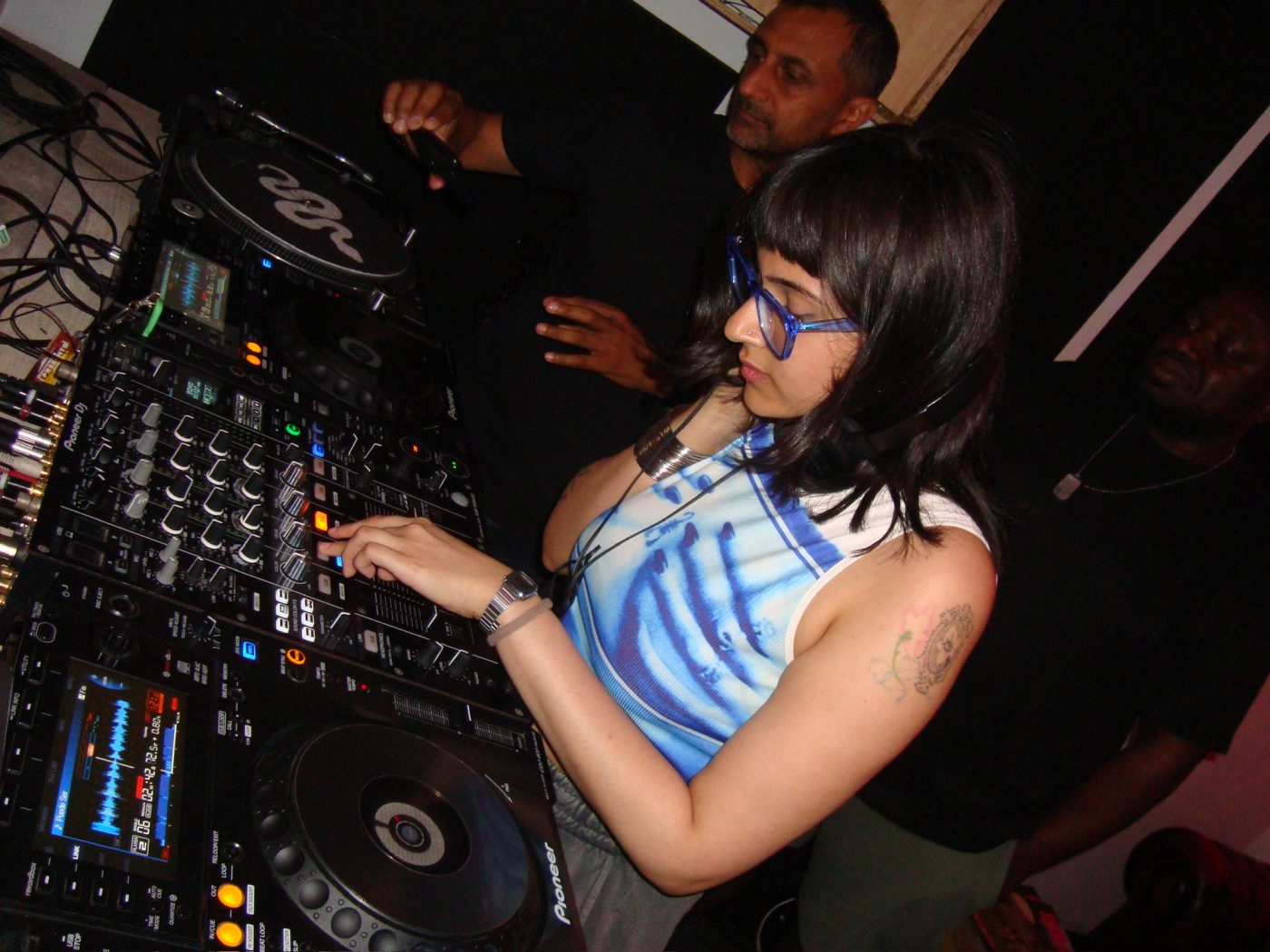
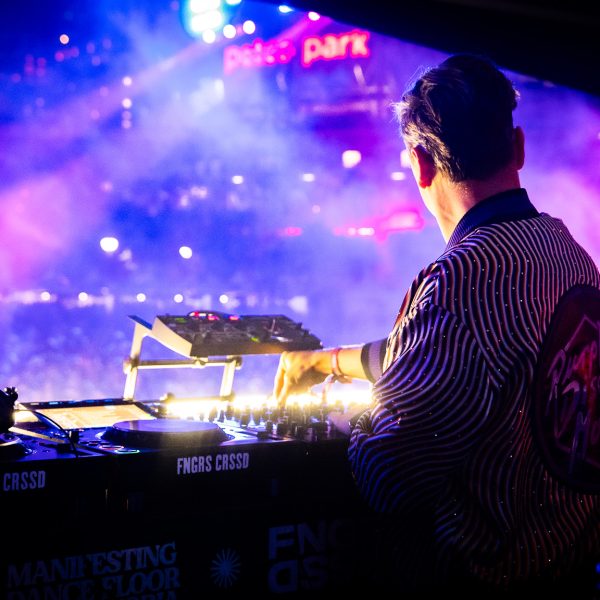
Open decks events are the DJ equivalent of an open mic, where beginners, casual selectors, and wannabe pros get to play tunes in front of an audience. Slowly but surely they’ve become known for democratising access to playing out in desirable venues on industry-standard equipment and helping people find a community of fellow music lovers. What was once considered a gimmicky ploy by venues and promoters to get punters through the door on a cold Wednesday night has emerged as a haven of underground club music culture.
At their best, open decks are run by music fanatics focussed on rekindling dance music’s roots of unity and accessibility. They have a distinctly DIY and anarchic feel to them: the lineup is often random, decided either by a first-come-first-served sign-up sheet or by a raffle where you wait for your number to be pulled from a hat. Depending on who turns up, you could be moshing to breakcore one minute and bouncing to baile funk the next. To attend an open decks is to submit yourself to this chaos. It’s the only debt you’ll pay, mind you, as these events are often unticketed and free.
Open decks are a growing phenomenon. A spokesperson for the global events marketplace Eventbrite told me that the platform has listed 400 open decks events over the past 12 months in 10 countries—US, UK, Canada, Australia, New Zealand, Ireland, Germany, Singapore, Italy, and Spain. Another ticketing company, Shotgun, sent me a spreadsheet listing 120 open decks in the USA and France in the last year. But the real overall figure is likely much higher than these two combined.
A friend of mine has just started the first-ever open decks in Abuja, Nigeria, and in this feature alone I spoke to people running open decks in Ethiopia and Thailand. My own open decks event, Pull Up, was one of the only ones on Rye Lane in South East London; now the road has four more to choose from every month, from RDV and Ghoul Dance at Four Quarters, to the Pour-In Sessions at Jumbi Peckham to SET Social’s in-house weekly one.
A Google search gives a good gauge of open-decks activity. Approximately 200,000 pages include the exact phrases “open decks” and “DJ” in their title in the past year. Although this pales in comparison to the seven million results for “open mic,” it outperforms other burgeoning post-pandemic trends like “listening bars” (90,000) and “soft clubbing” (20,000). The world of open decks is bubbling to the surface, without boiling over into the mainstream. Events are still run by people who actually care about the preservation and fun of mixing and music discovery.
Open decks come in different shapes and sizes, and this guide will show you what’s out there and how to get the most out of them.