How to navigate the thriving world of “open decks”

Events where anyone can sign up to play short sets in front of an audience have become an invaluable way to gain experience as a DJ. Here's what you need to know about open decks.

Open decks events are the DJ equivalent of an open mic, where beginners, casual selectors, and wannabe pros get to play tunes in front of an audience. Slowly but surely they’ve become known for democratising access to playing out in desirable venues on industry-standard equipment and helping people find a community of fellow music lovers. What was once considered a gimmicky ploy by venues and promoters to get punters through the door on a cold Wednesday night has emerged as a haven of underground club music culture.

At their best, open decks are run by music fanatics focussed on rekindling dance music’s roots of unity and accessibility. They have a distinctly DIY and anarchic feel to them: the lineup is often random, decided either by a first-come-first-served sign-up sheet or by a raffle where you wait for your number to be pulled from a hat. Depending on who turns up, you could be moshing to breakcore one minute and bouncing to baile funk the next. To attend an open decks is to submit yourself to this chaos. It’s the only debt you’ll pay, mind you, as these events are often unticketed and free. 

Open decks are a growing phenomenon. A spokesperson for the global events marketplace Eventbrite told me that the platform has listed 400 open decks events over the past 12 months in 10 countries—US, UK, Canada, Australia, New Zealand, Ireland, Germany, Singapore, Italy, and Spain. Another ticketing company, Shotgun, sent me a spreadsheet listing 120 open decks in the USA and France in the last year. But the real overall figure is likely much higher than these two combined. 

A friend of mine has just started the first-ever open decks in Abuja, Nigeria, and in this feature alone I spoke to people running open decks in Ethiopia and Thailand. My own open decks event, Pull Up, was one of the only ones on Rye Lane in South East London; now the road has four more to choose from every month, from RDV and Ghoul Dance at Four Quarters, to the Pour-In Sessions at Jumbi Peckham to SET Social’s in-house weekly one.

A Google search gives a good gauge of open-decks activity. Approximately 200,000 pages include the exact phrases “open decks” and “DJ” in their title in the past year. Although this pales in comparison to the seven million results for “open mic,” it outperforms other burgeoning post-pandemic trends like “listening bars” (90,000) and “soft clubbing” (20,000). The world of open decks is bubbling to the surface, without boiling over into the mainstream. Events are still run by people who actually care about the preservation and fun of mixing and music discovery. 

Open decks come in different shapes and sizes, and this guide will show you what’s out there and how to get the most out of them.
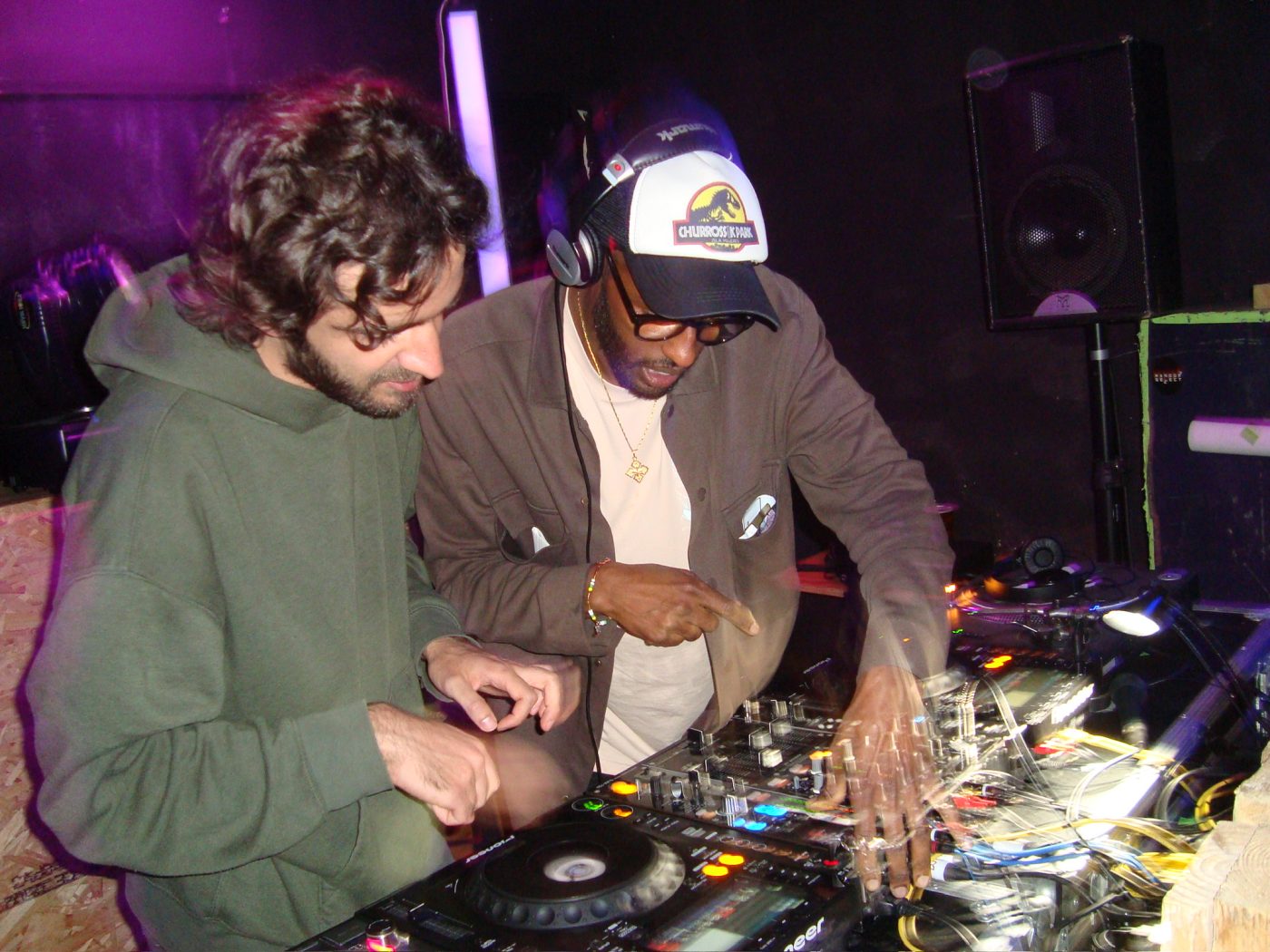
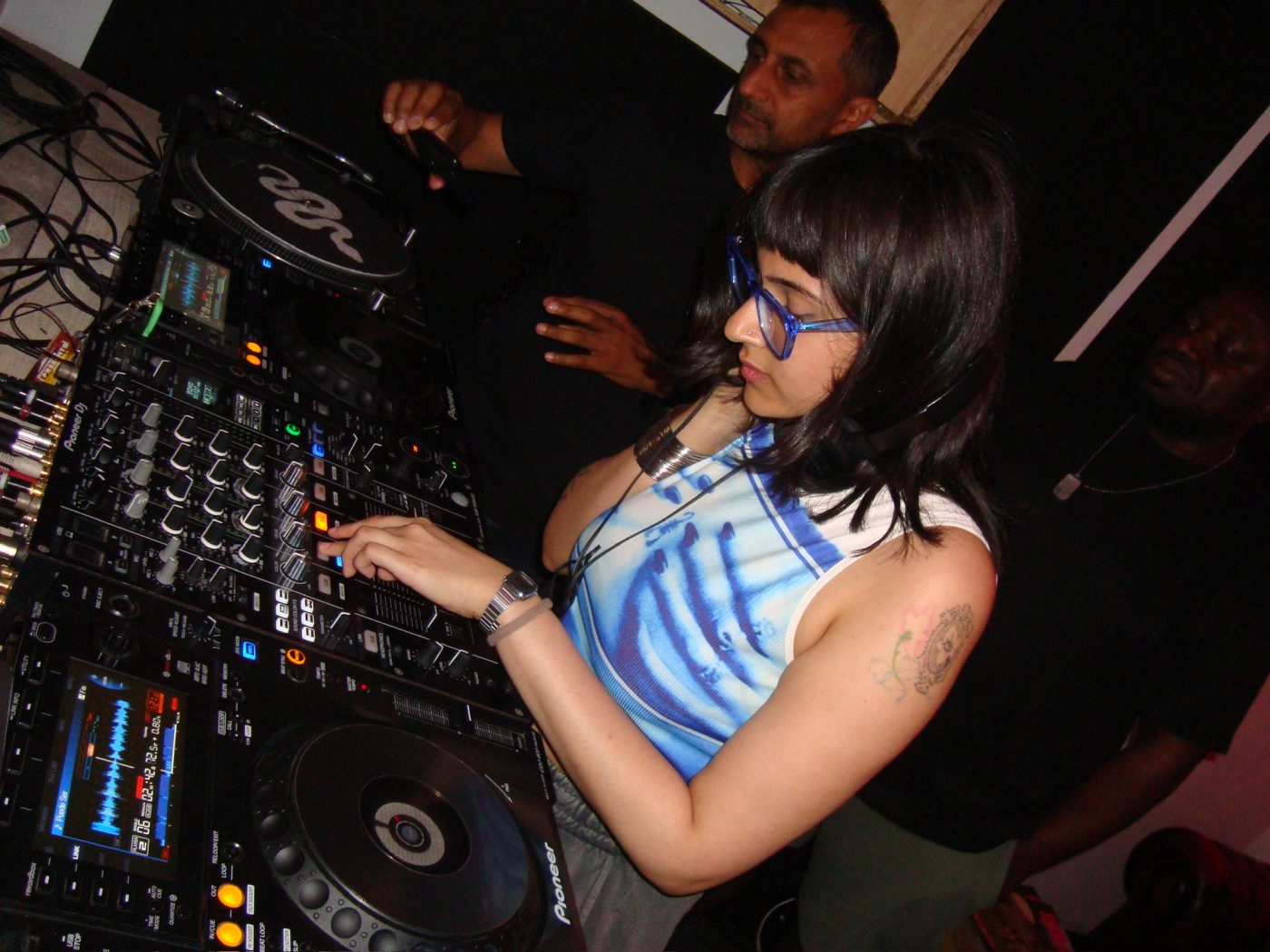
Pull Up, London. Photo: Ieva Petrauskaitė

FINDING YOUR SPACE

It’s a green flag when an open decks is run by a group separate from a venue: they’ll have a motive beyond footfall, and it’s more likely that they’re willing to pour blood, sweat and tears into the event. BBG in Brighton is one of those. In a DJ Mag feature I wrote two years ago, Ruth Smart told me she was inspired to start BBG after attending an open decks in Sheffield at Gut Level. She explained how she wanted to “emulate that space where you can try out the equipment and it’s really low stakes.” 

BBG is now a DJ collective for LGBTQIA+ people and they run workshops, BBG Basics. One attendee told me that the workshop demystified DJing and made them realize that it’s not an exclusive boy’s club. Open decks run by a collective or organisation offer more than a one-off experience; they become like an institution, bringing a holistic approach to the craft that includes lessons, mentoring, and other ways to immerse yourself in the world of DJing that doesn’t involve being the best at blending two tracks together.

“This space values listening over performing,” said Pongpat, who in 2024 opened Hi-Fi cafe and bar Micro-System in Bangkok with his partner, Bune. “People genuinely pay attention to each other’s selections and are curious about what others bring. So even if someone isn’t confident in mixing, what matters is the music they choose to share.” 

Open decks are a great way to discover music since the barrier between DJ and dance floor is thinner: you can go up and ask what they’re spinning, or chat to them later because the atmosphere is generally more sober. 

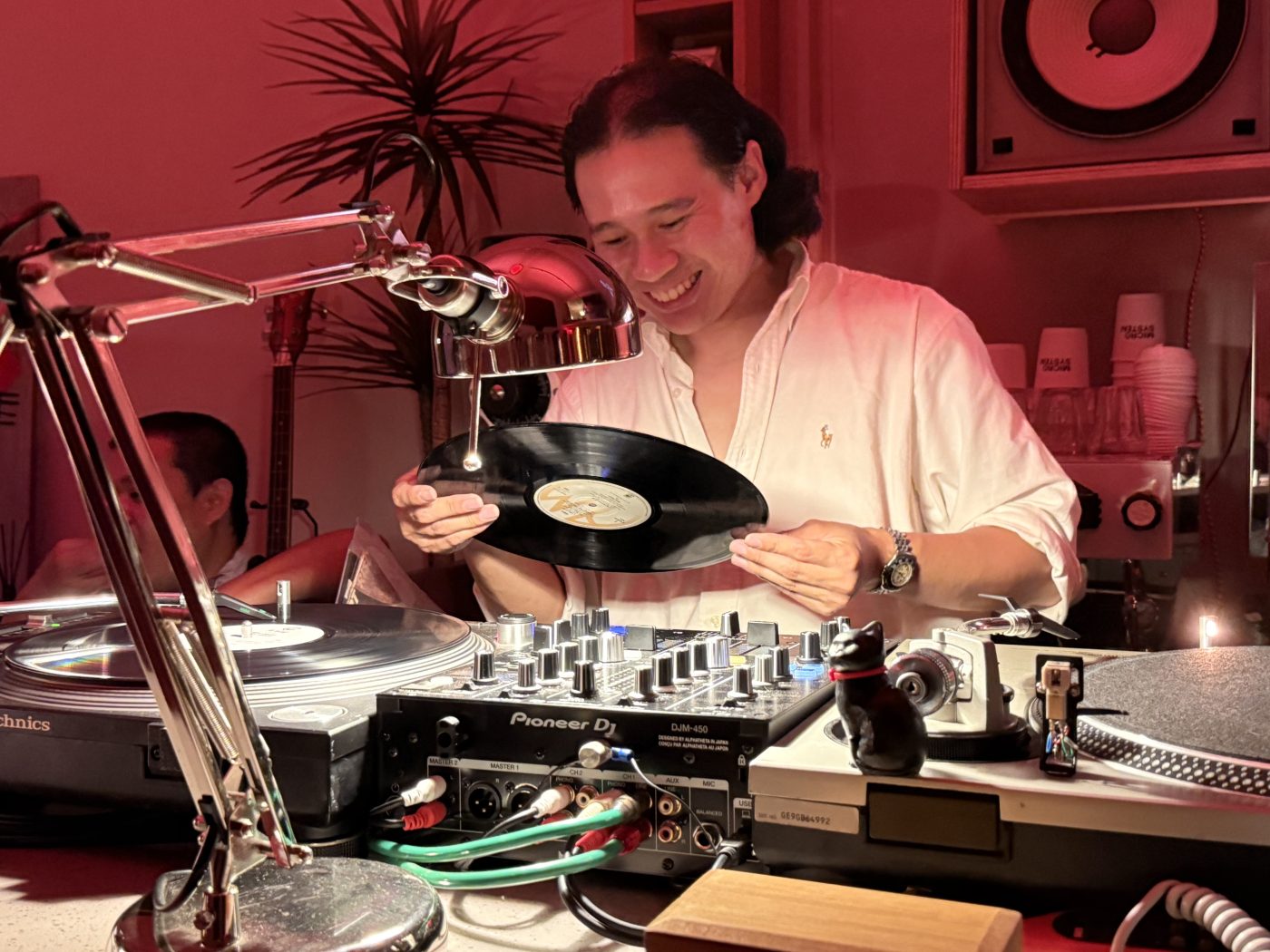
One of the attendees at Micro-System, Pitchayut Chaicharoen (AKA 14Street), thinks a vinyl-only open decks encourages deeper listening and “the vibe feels more collaborative than competitive.” Posts on Instagram show selectors at Micro-System playing in front of state-of-the-art JBL speakers with the record’s sleeve displayed on the counter for all to see. 

Hi-fi bars also offer an intimacy that welcomes softer genres like folk, jazz and pop that are less bass-driven than club music. Vinyl-only open decks sometimes ask DJs to write down what they’ve played on a piece of paper, a neat touch that I saw at Jumbi Peckham’s recently launched Pour-In Sessions. By the end of the night you had a list of records that reflected the harmony between the selectors that night and a playlist away from the algorithm.

Micro-System, Bangkok.

BUILDING BRIDGES 

In some cases open decks can fill a void. “We started our open decks because not a lot of the young DJs in Atlanta were playing drum & bass,” said DJ Ree De La Vega over the phone. “I know drum & bass has had a resurgence all over the world; it’s just not really happening in Atlanta so I was like, maybe we just need to create community around these genres.” 

In 2024, she took over Atlanta’s Sound Club after it was shut down and reopened it as Pisces. De La Vega chooses a new style for the open decks each week and relishes the conversations that crop up around niche subgenres. “I remember someone telling me there’s a thing called ‘tear out’ and I was like, ‘What is this?!’” she laughed. “People were like, ‘This is what kids listening to drum & bass are into!’” 

Pisces regular (and now resident DJ) Anti Ella also noticed how each genre-night attracted different demographics to the club. The crowd were predominantly Latino on her first open decks of Latin house; at the Baltimore / Jersey club one, everyone was mostly Black and in their mid 20s to 40s; and with hyperpop apparently no one looked older than 24. “Ultimately, after going from open deck to open deck, I realized that for so many music is a bridge for connection. Some individuals build their bridge with baile funk, and others with trance. When people saw others who shared the same passion for a particular genre, they felt inspired to reach out or build their bridges with that much more vigor.”

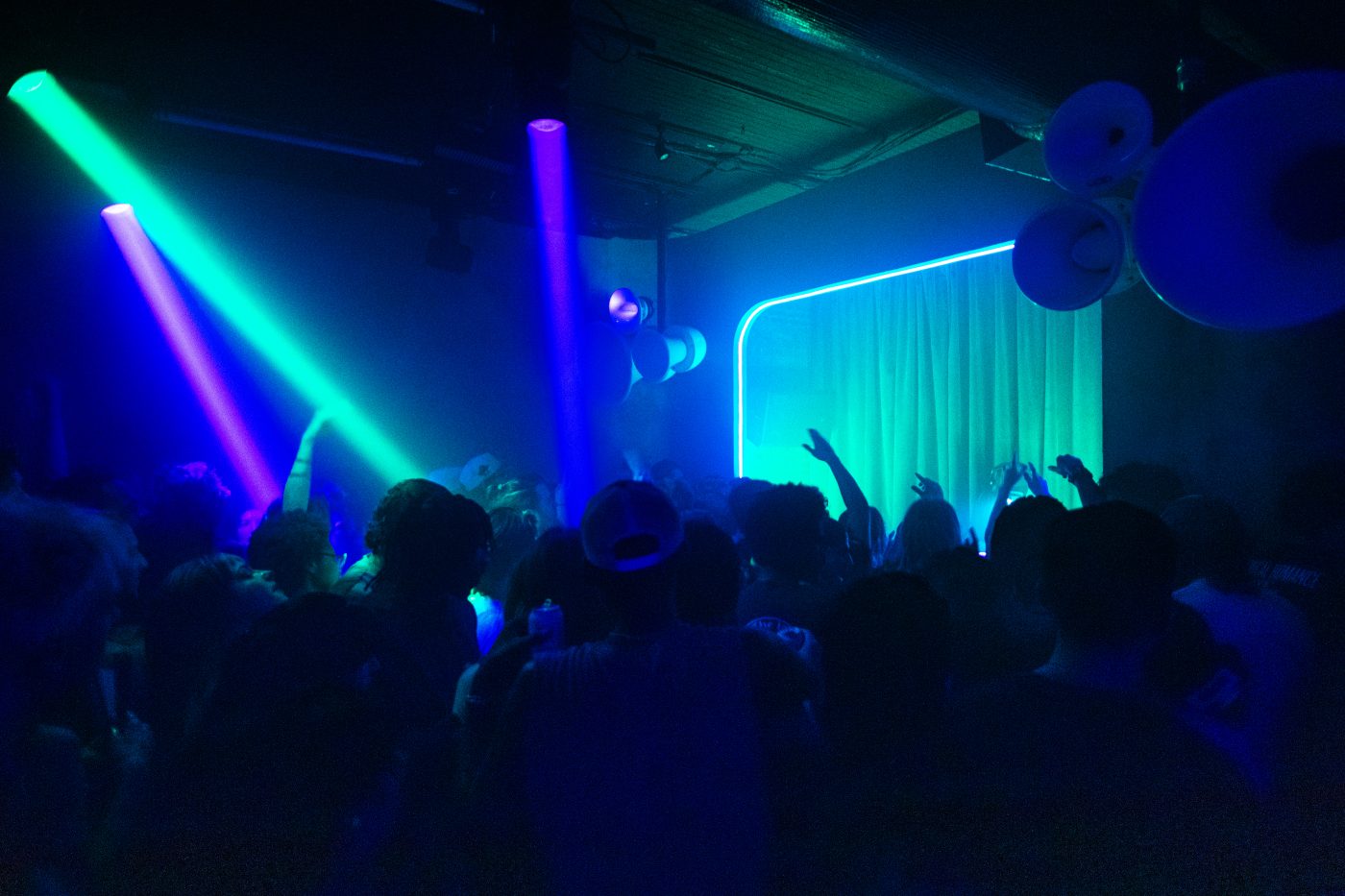
Pisces, Atlanta

MULTI-PURPOSE 

“Connect, collaborate, create” is the slogan for The Social Addis in Addis Ababa, a multi-purpose venue set in a villa in the Chichinya neighbourhood of the Ethiopian capital. While a club setting can be austere for some, when you walk into The Social Addis there are sofas and a fireplace and “it’s cosy,” said Nitia Schendar who started the open decks with the help of Yohannes Aychew, Binyamin Yosef and DJing agency Out Cast Artists.

“The space is so versatile: it has a very mainstream vibe because we sell traditional food and drinks. Lots of people in that sphere, who would never come to a club, are made to feel welcome at the open decks.” Throughout the week, people drift into the Social Addis for workshops, food markets, film screenings and live shows in one of the villa’s many rooms. “The open decks could be on while someone is playing the krar (an Ethiopian/Persian instrument) in the other room and there’s anskista (an Ethiopian traditional dance) going on.” 

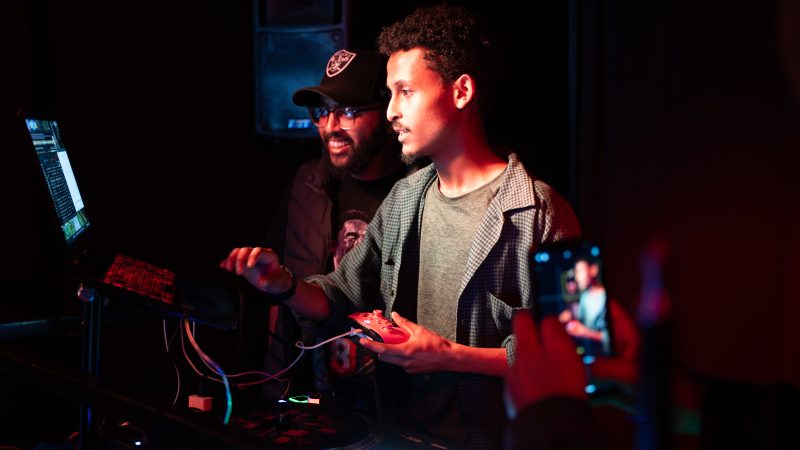
At multipurpose venues your DJing might not be the main event; this can take the pressure off and encourage people to take risks and experiment. Joté, for instance, played a whole set on a games console controller. With the help of a scripting app called AntiMicroX, he mapped the same shortcuts he was using in Virtual DJ onto his Xbox controller. “I’ve got pitch control on the sticks, play/cue on the face buttons, and a couple stem pads and saved loops mapped to the back buttons and triggers. Surprisingly, that was enough to carry a whole set,” Joté told me over text. “I know my setup doesn’t give me the same level of control as a full DJ setup, but honestly I feel like what the music scene in Addis needs right now isn’t really flashy transitions but more interesting, diverse selections.”

SOME TIPS 

Open decks can affect positive change in dance music. They are truly communal in spirit and open a world for you to learn, share passions and meet people from different walks of life. To help you get the most out of attending an open decks, there are a few things to bear in mind. I asked attendees of my own open decks what advice they would give to anyone coming along for the first time—be it as a complete beginner or as a seasoned selector—and below are some of their tips, along with a couple of my own.

Always Sign Up
“If you don’t buy a ticket, you won’t win the raffle” is an apt saying for open decks because 1) Many of them literally run like a raffle and 2) You might not be feeling up for it today, but who’s to say you’ll be picked when you are feeling up for it? Put your name down every time and see what happens. 

Style It Out
“If you make a mistake don’t show it,” said Bambi “A lot of the time the crowd doesn’t care or notice.” And if you’re not going to laugh it off, pretend like it was planned. Forgot to turn the filter off? Leave it down for another 8-count and then take it away. Call it teasing the listener.

Selection Over Perfection
This should be DJ gospel. As wonderful or as terrible as that last blend was, do you even like the tunes you’re playing? “Remember that 95% of being a good DJ is picking good tunes and having fun,” says Zac (AKA Face-esc). “Playing cool songs you love and clanging into the next tune will be better than a technically perfect set with dead tracks.” 

Play And Stay
In the same way you wouldn’t get up and leave a dinner party after you’ve had your fill, you shouldn’t leave an open decks straight after you’ve played. One punter at Pull Up who’s often first one in last one out put it nicely to me: “If I’ve just subjected everyone to my shit, the least I can do is listen to their shit.” 

Be Flexible
You might be playing on industry-standard equipment but that doesn’t mean it’s in industry-standard condition. This is the harsh reality out in DJ land: it’s unlikely things will go as smoothly as they do on your home setup. See open decks as a chance to experiment and to play. Even the worst case scenario, like your music isn’t loading on the players, shouldn’t be an excuse not to DJ. “Sometimes it’s fun to play with other people’s collections,” said Nimo, who once rocked the dance floor at Pull Up using a stranger’s USB.

Go Alone
The more the merrier, sure, but meeting new people is one of the best things about open decks. Unlike the people you met in the smoking area of a nightclub at 4 AM, these are names and faces you’ll actually remember.  Of course bring friends if they’re keen to meet others, too, but go alone if no one’s free.

Pull Up, London. Photo: Ieva Petrauskaitė

THE RIGHT FIT

Open Decks is a bit like dating: you need to shop around, try before you buy. If you do have the luxury of multiple open decks nearby, attend as many as possible. Best case: you’ll find one that it pains you to miss. My heart sank the last time I missed an After Werks open decks at AAJA. I knew I’d have to wait at least another four weeks until I could be mingling and dancing with that group again.

But it might not always be love at first mix. Maybe the collective running the open decks doesn’t align with your tastes or the venue is cold—figuratively and literally. Don’t lose heart. As long as you consistently show up and approach each event with some of the tips outlined above, you’ll meet new people and gain vital confidence DJing in front of an audience. 

Text: Joseph Francis 

Lead photo: The Social Addis, Addis Ababa