Here's a three-step process for online digging, better listening, and building a music collection that feels like your own.

How to read a crowd
Eight DJs offer their thoughts and advice on this crucial skill.
Here's a three-step process for online digging, better listening, and building a music collection that feels like your own.
Listen to to this article, written by Bridge contributor Will Lynch
The article below looks at how I approach digging for music, an activity that has no rules and lots of room for personal style. So think of this guide as a starting point. If you feel an itch to dig deeper but aren’t sure how, try some of these techniques. Before long you’ll have your own unique way of doing it.
The most important thing is that you do it for yourself. Dig not for music that’s cool, or obscure, or even that you think would make a party go off. What you find may be all of those things. But, simple as it may sound, the main challenge is digging for music you love, in a way that you love.
*
I’ve collected music all my life, often in an obsessive and time-consuming way, but I’ve never called myself a digger. That might be because to me “digging” can feel like a weighty claim, a byword for a self-serious approach to music discovery that in some cases can lead to odd forms of gatekeeping and elitism.
I’ve heard self-described diggers trade tales of “blind-buying” dozens of records based on a hunch. Listening to literally everything on Discogs in a particular genre and year (say, “trance” and “1999”). Or returning to the same obscure record shop three days in a row to flip through the bins. Some guard their finds obsessively, never offering track IDs, even covering their record labels or the screen of their CDJs. Part of me respected their hustle and wondered about the odd pearls they found; another thought the whole thing looked like a slog.
At some point I realized this monk-like dedication is not the only way to do it. In fact, I’d argue it gives digging a bad name. No doubt, there was a time when combing through hundreds of dusty 12-inches in a poorly lit basement somewhere was the best way to discover music. (It was precisely this method that gave us one of DJ culture’s most extraordinary artifacts: DJ Shadow’s Endtroducing….) But this is no longer the case.
Today, anyone with an internet connection has access to something close to the entire history of recorded music. Navigating this virtually infinite expanse takes strategy and skill. But with a few simple methods, whether online or offline, it becomes not a task but a day-to-day pleasure, something you can do for hours at a time or for just a few minutes, bouncing your knee to a banger from some era and style you knew nothing about two minutes earlier.
It also might be the single best way to up your game as a DJ.
I recommend dividing your digging practice into three parts. Trawling, as you cast a wide net and pull in whatever seems interesting. Listening closely to the best things you found. And Culling, which is when you decide what to buy and what to cast aside. Treat those as separate practices and you should relish the process and love the music you play. Here’s a rundown of how it all works.
Years ago I spent an afternoon with a few diggers who I think it would be fair to call unapologetically purist. We were listening to a mix they held in high esteem (dancetrippin.tv’s recording of Ricardo Villalobos and A:rpia:r at the 2013 Circo Loco closing party at DC10 in Ibiza, if you’re curious). One of them shared something he found shameful to the point of being disturbing. Did you know, he asked the room, that some people just scan the comments on this YouTube video for track IDs, then copy and paste them into new tabs and look up the records? His fellow diggers scowled.
It was as if they’d sworn a solemn oath: never be too thirsty for another DJ’s records. Or, to quote a line that pops up sometimes when people ask for IDs online: find your own records. (Whatever that really means.)
Personally, I thought this comments ID scan thing sounded pretty fun, and wasted no time tucking in. The mix was not entirely to my taste, and I wasn’t looking for anything specific. But by exposing myself to a dozen or so artists and labels I’d not previously heard of, I began a trawl through a new corner of the musical universe that in some ways continues to this day. I also just had fun listening to all those loopy minimal house records, even if there were none I couldn’t live without.
There are three morals to this story.
The first is to be shameless. As long as you’re not ripping anyone off (imitating another DJ’s blends, choosing the same first or final track in a mix as someone else, etc.), don’t deny yourself music you like in deference to a vaguely defined notion of digger ethics.
Another is simply to absorb music in whatever way presents itself to you without thinking too hard about it. Music is all around us, hiding in plain sight in incredible quantities. Scoop up the good bits wherever you find them. Focus not on where and how you found it, but on how much you personally vibe with it.
The third is to simply relax and have fun while you dig. Don’t be preoccupied with thoughts of “Would I play this? Is this my style? Is this interesting enough?” Just follow your nose through the ones that make you go “meh” till you find a “hell yes.”
Diggers like to use the term “rabbit holes” to describe the winding paths they slip down as they search for new music. It’s easy to see why. In a good session, you’ll start in one place then burrow through an ever-splintering warren of digital paths toward new frontiers. To make it into the unknown, though, you’ll need to start with something you know—an entry point to the rabbit hole.
One way to do this is to establish a regular diet of what we’ll call music recommendation channels. The “new in stock” section of record shops that suit your taste is a good option. There’s also the Bandcamp feed, which shows new releases from artists and labels you like, as well as recent purchases from other users you follow. Dedicate some time to honing your feed, following users, artists and labels that really speak to you, and it will quickly become an invaluable resource. Instagram is full of accounts that do little else than recommend music.
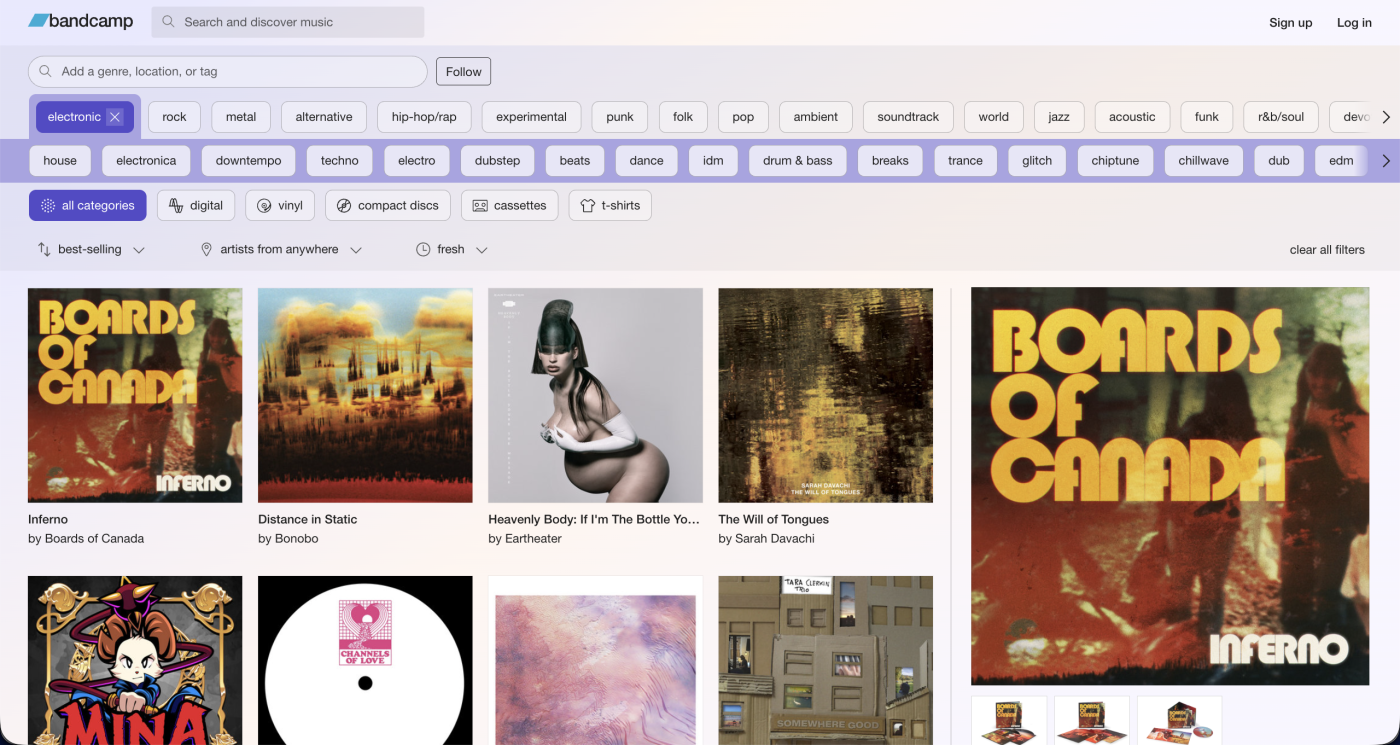
Follow any you stumble upon that seem cool; the algorithm will soon recommend more in that vein. Same goes for YouTube. There are now countless channels that are lovingly curated playlists spanning all eras and styles. Find some you like and follow them. While it pains your author to frame this as an old-fashioned method, it’s still very much worthwhile to read music reviews. Find a writer whose taste clicks with yours. Find them on social media. See if they have a newsletter.
Check back on these channels regularly. Set aside anything you really like in some kind of semi-organized way. You can bookmark them on your browser, copy and paste links onto a doc, use in-app functions (the Bandcamp wantlist, saved posts on Instagram, and so on). If you’re using your phone, take a screenshot and save it in a folder for your digs. However you choose to keep track of your finds, keep it simple enough that you can do it quickly and easily, but organized enough that you can return to your finds without feeling daunted. (For this reason, I don’t recommend the common and naturally seductive Million Tab Method. Maybe there are people out there who eventually get around to processing the hundred-plus browser tabs they open while digging. But why subject yourself to such a slog?)
Spend a week or two with this kind of music recommendation diet and you’ll find lots of great stuff you can’t live without. By all means, take the best bits and absorb them into your library. Resist the temptation to dismiss a record simply because other people know about it—it was reviewed in a widely read publication, say, or a DJ revered in your scene put it in a mix. If you like it, you like it, and you’d be doing yourself (and potentially others, in the case of a hypothetical audience) a disservice by passing over it.
Bear in mind, though, that the really juicy discoveries happen when you take these finds and use them not as the end goal, but as a starting point. You’ve found the entrance to the rabbit hole. Now it’s time to dig in.
Take a piece of music you’re really feeling, whether it’s a fresh find from one of your music rec channels, or something that just popped into your head for reasons you can’t explain. Look it up on Discogs. Open new tabs for the artist, label and any collaborators or remixers on the record, then another set of new tabs for all the records linked on those pages. Scan all those records using Discogs’ embedded YouTube player.
Close the tabs for any record that doesn’t immediately grab you. When you stumble on a record you really like, run the process again. Open new tabs for the label and all the artists involved, scan those records, rinse and repeat. Set aside your top picks to review later on.
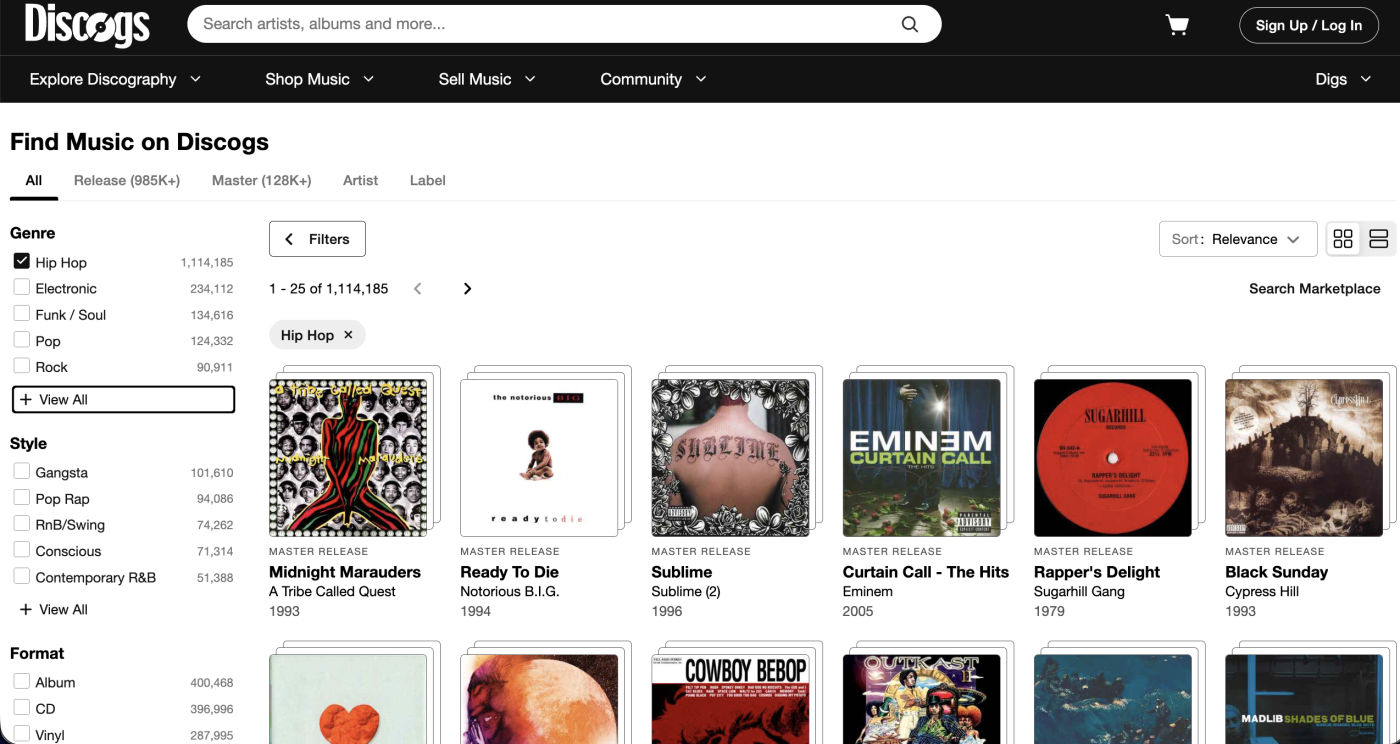
We’re starting with Discogs here because, beyond being a marketplace for used records, it’s an impressively comprehensive and perpetually updating database—basically a Wikipedia for music, unbeatable as an information resource even if you don’t buy vinyl. If you do buy records, you can do the lion’s share of your digging and shopping right there. If you don’t, you can use the database to discover music you like, then check which of your finds are available digitally on any of the many retailers selling the kind of music DJs would be after (Beatport, Bandcamp, Juno, Traxsource, and Boomkat, for starters).
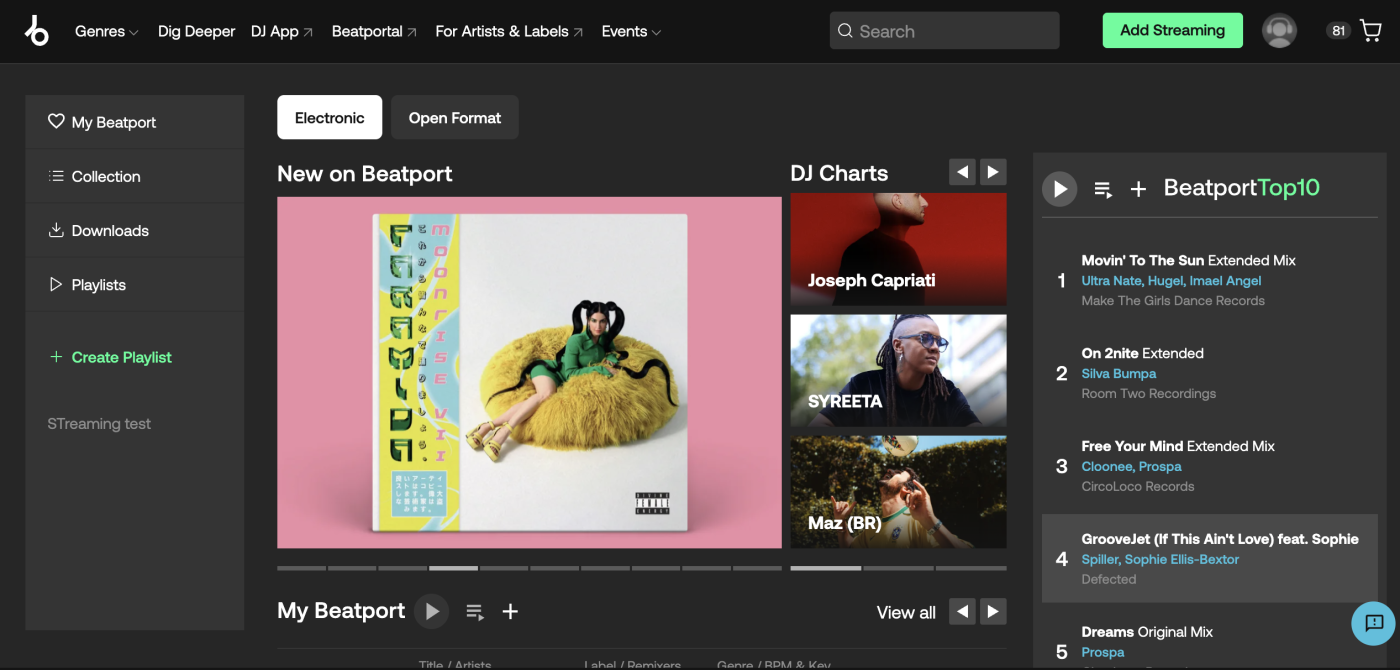
Some of these online shops are excellent digging channels in their own right. Bandcamp and Beatport can be explored with a similar method, hopscotching from one record to the next via links in artist, label or genre. Bandcamp also has the benefit of showing you who else bought a release (their profiles are linked beneath the artwork). This opens another rabbithole: you can scan those users’ collections, check out discographies by the artists and labels you find there, and so on. You can also follow these users and see what they buy in the future, provided they allow their purchases to be public. Follow a few users whose tastes closely match your own and your feed will reliably fill up with juicy recommendations.
Beatport is perhaps the best existing online archive for club music, with a truly vast collection spanning basically every era and style from disco to techno to EDM. You can spelunk this matrix in more or less the same way as Discogs. Hot tip: Look up an artist or label that interests you and organize their discography by “Tracks,” so you see everything in one long list. Organize the list from “old” to “new” and work your way through it. (You can also specify a BPM range if you’re looking for a specific tempo, or filter the results by genre.) This is especially fun with big or influential artists that until now have passed you by—in just a few minutes, you can sample dozens of tracks, getting a feel for their sound and how it evolved over the years. And you’ll almost certainly hear lots of killer music.
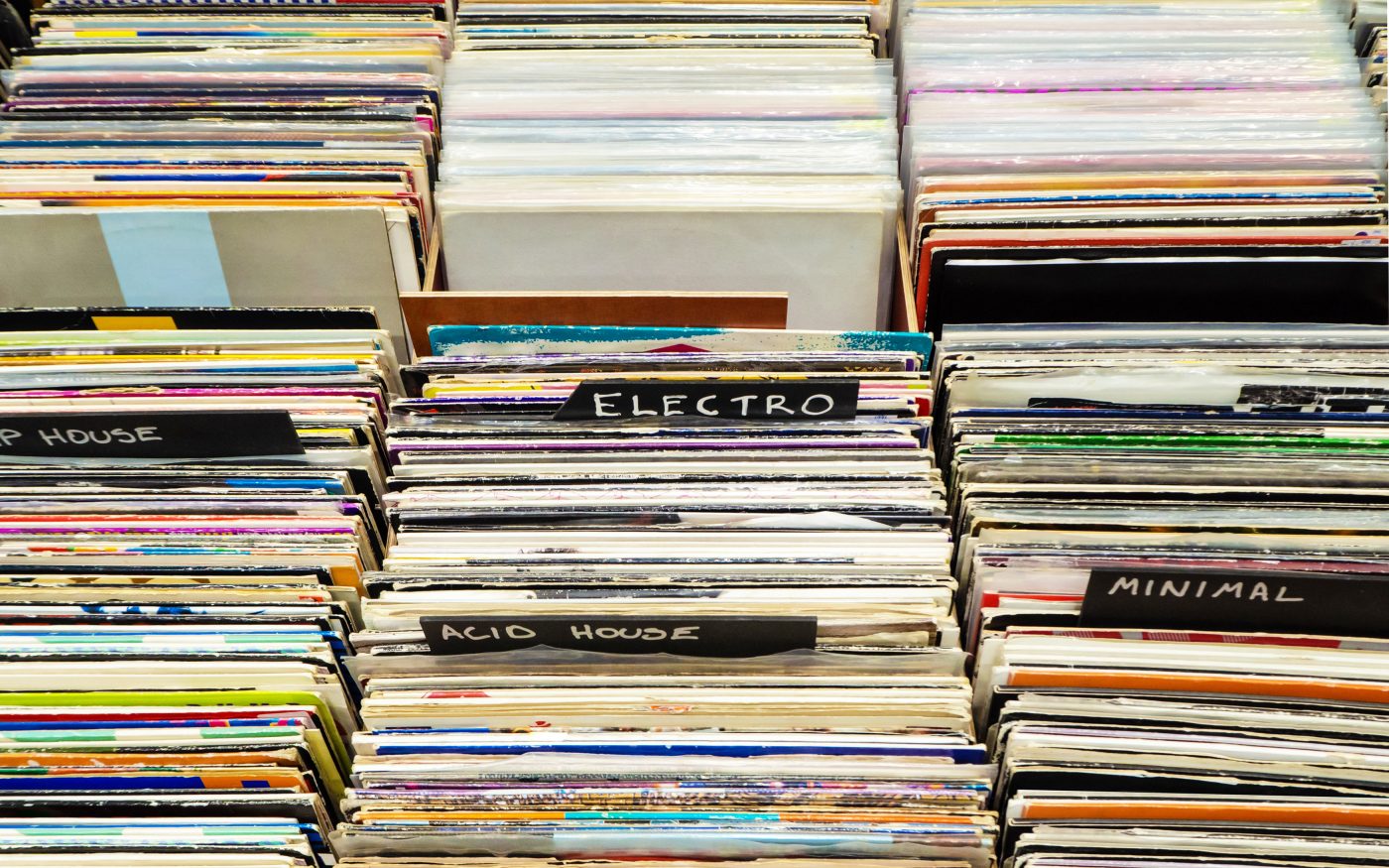
Some diggers become obsessed with finding paths least travelled, the rabbit holes mostly untouched by others. The purest way of going off-piste is by flipping through the bins in a used record shop, whose contents are guided only by the random odds of who’s been selling records there lately and what kind of stuff they were into. For sure, I have found some weird and wacky stuff this way—for instance, a bootleg techno compilation called LSD #2 that includes both the unhinged Moby track “Thousand” and Bubbles’s “Bidibodi Bidibu,” an Italian trance number I’d never heard outside the 2001 stoner comedy Super Troopers (and which, in my humble opinion, slaps).
In my experience, though, you can get a similar result using two online methods. One is YouTube. Some accounts closely curate their channels with a specific goal of thoughtful recommendation. These are valuable resources, especially if you find one aligned with your own tastes or focusing on a sound you want to know more about. (YouTube has become one of the key ways people discover music before supporting artists through official streaming services, downloads or physical releases.)
When the common thread is simply the honest preferences of one person, without regard to how interesting or credible the result looks to others, you get something realer than anything curated with an audience in mind. So: look up a track you like, click on the username of the person who uploaded it. Check out other stuff they uploaded, and so on.
Another source in this vein is Discogs lists, which are created by users and cover an incredibly broad range of themes. You can find them in the bottom right corner of any Discogs page for a record someone has included in a list (or on the dedicated section of the Discogs website). Most are genre-specific, but many are less straightforward. One of my personal favorites, sadly no longer online, was called “UK Garbage,” and contained 50 or so truly bizarre UK garage records, all available for less than one pound.
Another, which I’ve been working through for years, is “Masterpieces of synth-pop and new wave,” a 280-strong collection of albums and EPs put together by a user named Hysteric. This is distinctly different from the kind of closely considered “best-of” listicles you get from traditional publications. It is, as Hysteric puts it, “a loose interpretation of the genre(s) and by no means intended to be an all-inclusive list, however I personally recommend all records listed here.”
Modest as it is, that description contains a kernel of something essential to both digging and DJing: not trying to say what’s good and what isn’t, not claiming to know everything about any particular style, but feeling completely confident in what you personally like and are eager to show other people. This brings us to the phase of digging that is less technical, more personal—you might even say more spiritual.
This is perhaps the most overlooked and underappreciated part of the digging process, and it’s not nearly as simple or natural as it sounds. When we say “listening,” we’re describing something more honest and open-minded than what most people typically do. It’s not quickly sampling 10 or 20 records in a row while thinking specifically about whether you would DJ with them. It’s also not having an hours-long playlist running in the background while you work.
To figure out how you really feel about a piece of music, you need to listen to it in a way that, in this day and age, may seem quaint: purely for your personal pleasure, without picturing yourself playing it to an imaginary crowd, without wondering what that crowd would think. The best way to DJ with depth and authenticity is to limit yourself to music that you love. And the only way to do that is to weed out any music you only think you like, or think you should like, but would never actually choose to listen to on your own.
How do you do this? The main thing is learning to relax your mind and, as George Michael famously put it, listen without prejudice. We’ll get to that in a bit. Let’s start with practical methods.
Crack open whatever digital bucket you’re using for your recent finds. If you’ve been trawling lately, this should be full of stuff, much of which you may not remember very well in the days or weeks after you flagged it. In any natural occasion where you’d normally put on some tunes—on the couch after work, hanging out with friends, making dinner, exercising, whatever—turn to these records and see what looks appealing.
As you listen, try to be as undistracted as possible. (My personal favorite is lying in bed with headphones on, looking at the ceiling.) See which records beg to be played again, which ones sound just as good or better the second time around, and which ones have you reaching for the skip button. If you’re around other people, take note of which tracks you’re excited to share. It’s all about examining what moves you and what doesn’t.
That may sound simple, but the strange truth is that your honest connection to a piece of music can be clouded by the task of digging. Often as we look for new music, we fall into a game of swipe-left / swipe-right: “yes” to the cool tracks, “no” to the bad ones. This thumbs-up / thumbs-down binary ignores something deeper and more important: how much you personally vibe with this stuff. Contextual info can make this even more difficult. A critically acclaimed new record by an artist you’ve always loved might seem like buy-on-sight material. But it’s very possible that, for whatever reason, this one just doesn’t do it for you, and if you buy it it will just sit unplayed, making you slightly sad every time your gaze passes over it.

It’s happened to me many times that I’m record shopping, have agonized over my final selection, and have one that I keep changing my mind about. Something about it speaks to me, but for whatever reason I’m just not sure—maybe it’s in a style I rarely buy, or can’t really picture myself DJing. If I end up buying the “maybe” track, when I get home, to my surprise it’s this one I’m most excited to put on.
My point here is that taste is a mysterious thing, something disconnected from logic and conscious thought in a way that can be hard to get a handle on. But the more you learn to follow your honest intuitions, the better your collection will be.
One caveat: there is without a doubt the phenomenon of the grower, a track that doesn’t grab you at first but that you learn to love over time. Indeed, growers often provide deeper pleasure and a longer shelf life than music you like right away. How do they fit into the process described here? In my experience, growers, while not delivering the immediate “hell yes” of other tracks, rarely seem boring or simply no good. They just offer a subtler, more mysterious call. If you encounter a piece of music that’s somehow both intriguing and mystifying, set it aside with the rest of your maybes and see if it lingers in your mind over time.
The final part of this process is choosing which music to buy and which to either bin or set aside for now. Ideally by now you’d be combing through music that’s already made it through two other phases of selection: the records you found and flagged, and the fraction of those you liked enough to listen to them again. Now you’ll distill this pool down into an even smaller, more elite category: music you like so much that you need guaranteed access to it. This could mean you need to own it, either as a physical item or as a digital file. It could also mean you save it on a streaming playlist, especially one you can listen to offline, and, ideally, mix from. The main thing is you have it on speed-dial, in your personal collection, ready to go at all times, whether in your headphones or in the mix.
There are a few things to consider here. The biggest is cost. It doesn’t make sense to shell out for all good music you find, doubly so if you’re regularly trawling reams of new tunes. That a piece of music is totally badass does not mean you need to buy it. That you keep coming back to a piece of music also does not mean you need to buy it, especially if it’s available via streaming. You only need to buy music that meets those criteria and that, for practical reasons, you actually need to own—presumably for DJing, or possibly because you like to keep a collection that’s accessible off the grid.
Be as brutally selective as you can. Kill your darlings. If any part of you thinks something might not be worth buying, don’t buy it. If after a week or so you really wish you had, well, now you know. (Make an exception for holy grail vinyl you find at a good price serendipitously. In this case you might as well go for it, given you’d probably have no trouble reselling if needed.)
It can help to only buy records on the same day every week, separated by a day or two from the other phases of this process. This way you keep track of how much you’re buying, and your influx of new music is manageable enough that you actually get around to listening to all of it. One dedicated digger who uses this method told me they never buy more than two records at a time, even from a pool of 50 or so candidates. Often, their buy the following week will be something they’d passed on previously, but more often those “maybe” records slip into the past, never to be thought of again.
This is important not just for your budget but for the strength of your collection. Even if you can afford it, it’s just not practical to haul in dozens of tracks every week. Your library will quickly balloon to a size that’s impossible to get through, and will likely be full of music that, a month later, sounds good-not-great or simply boring. The more brutally selective you are, the better your collection will be. When it comes to DJing, you’ll always play better with a smaller crate full of music you know inside and out—and music that earns the repeat listens needed to get there.
Text: Will Lynch