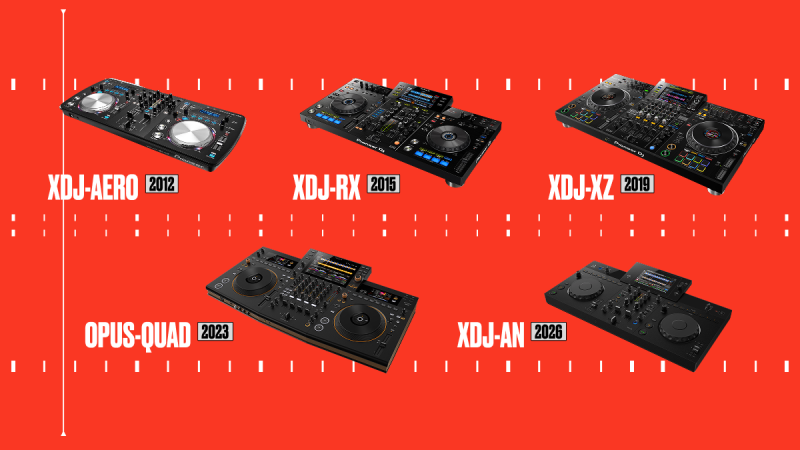
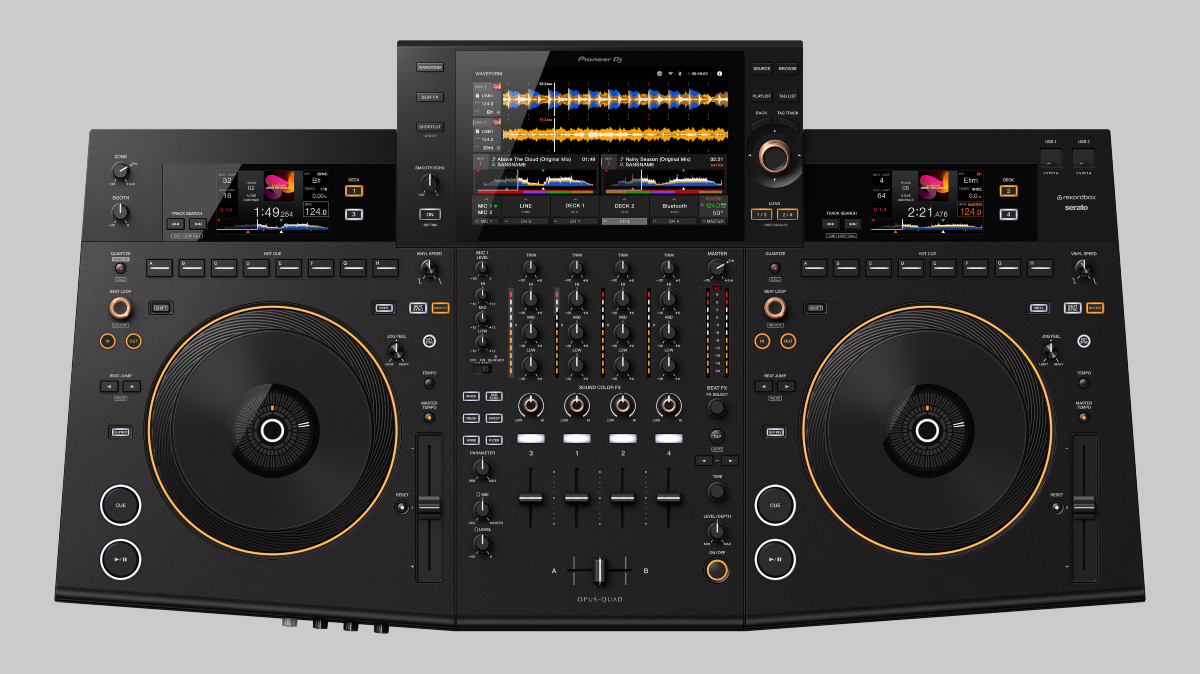
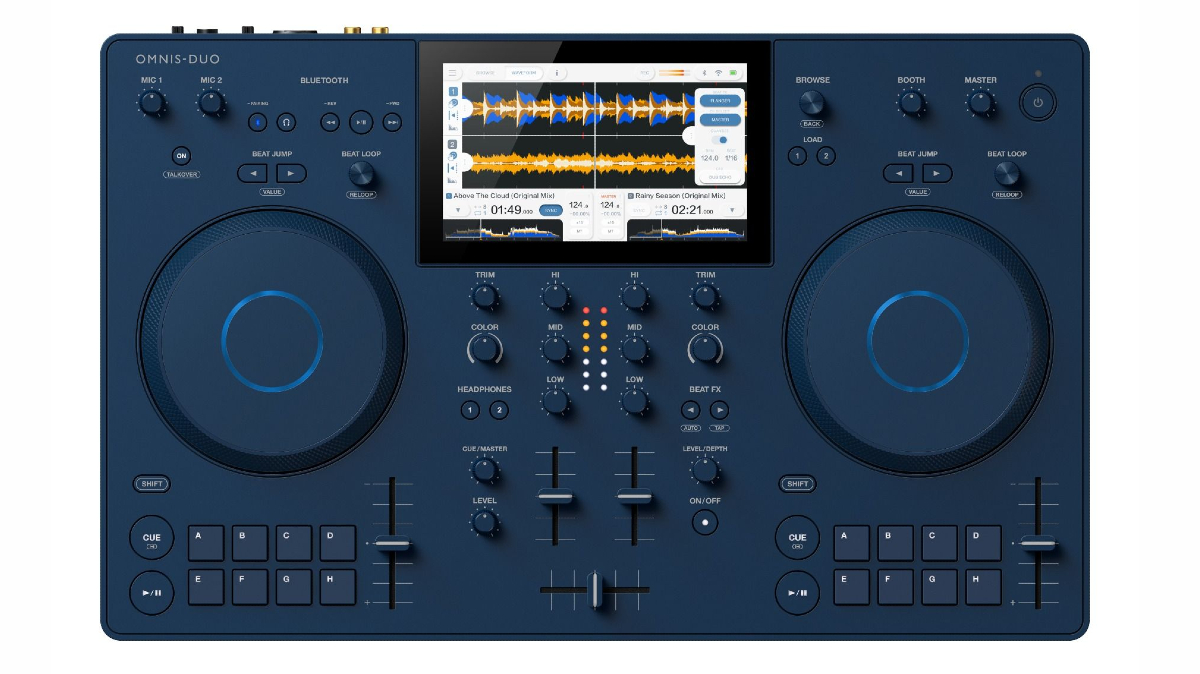
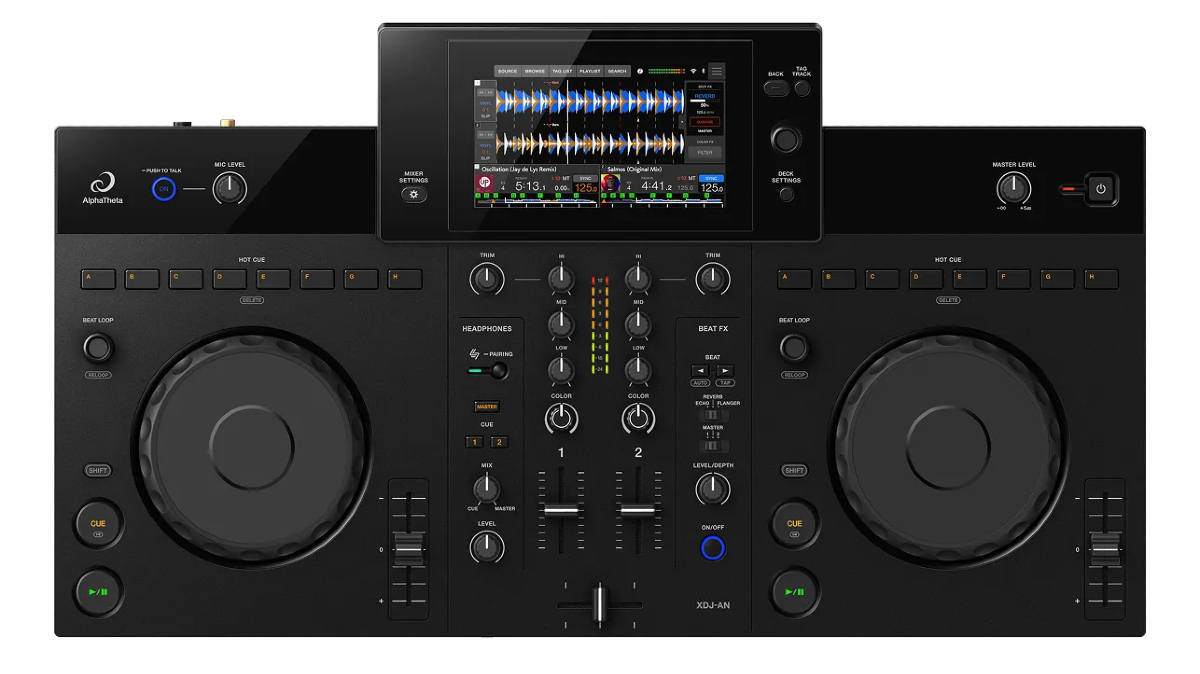
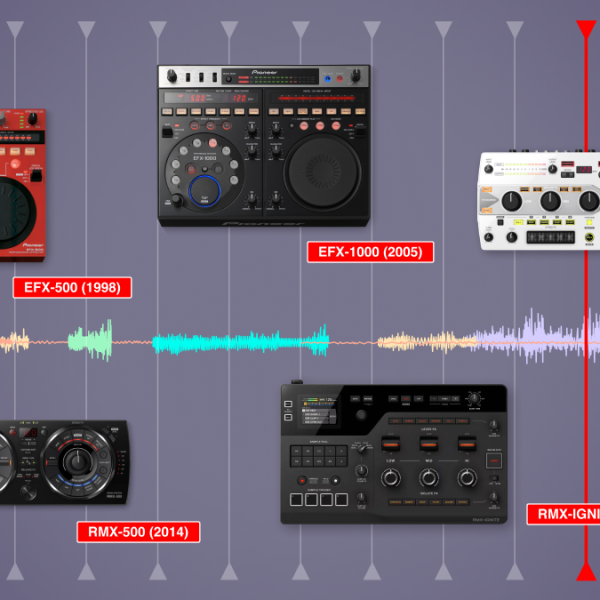
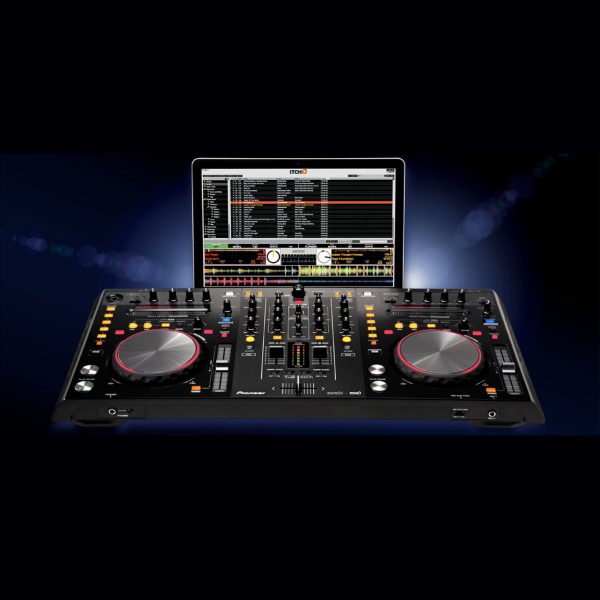
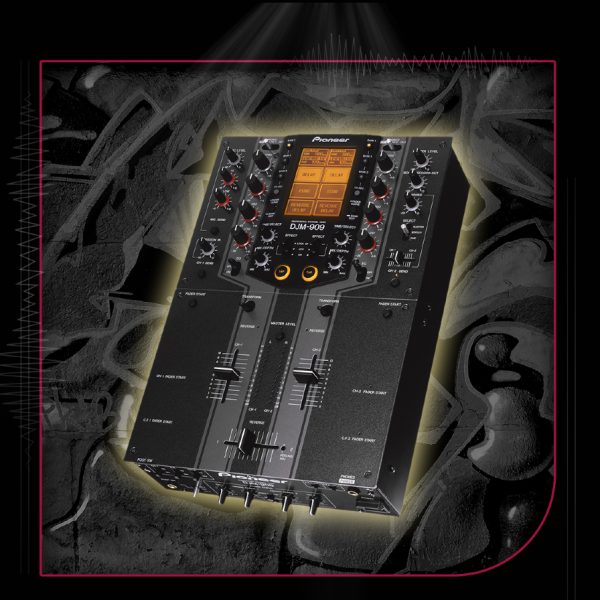
“We had not released an all-in-one unit yet, and we had only just released controllers,” says Atsushi Watanabe. “At the time, our controllers were not yet selling particularly well. Other companies had also released controllers and they were selling well, so the thinking was that we should expand beyond the single-player and single-mixer setup. That was the flow that led us to start developing both all-in-one units and controllers.
“When we thought about file music, the devices ordinary people used to listen to music at the time were shifting toward iPod and iPhone. File music was moving away from being something you cut out onto a USB drive, and more toward directly using an iPhone.
“Rather than making an iPhone controller, the idea was to allow people to use the tracks on their iPhone directly on actual hardware. That was the concept: a new kind of all-in-one unit dedicated to file music.
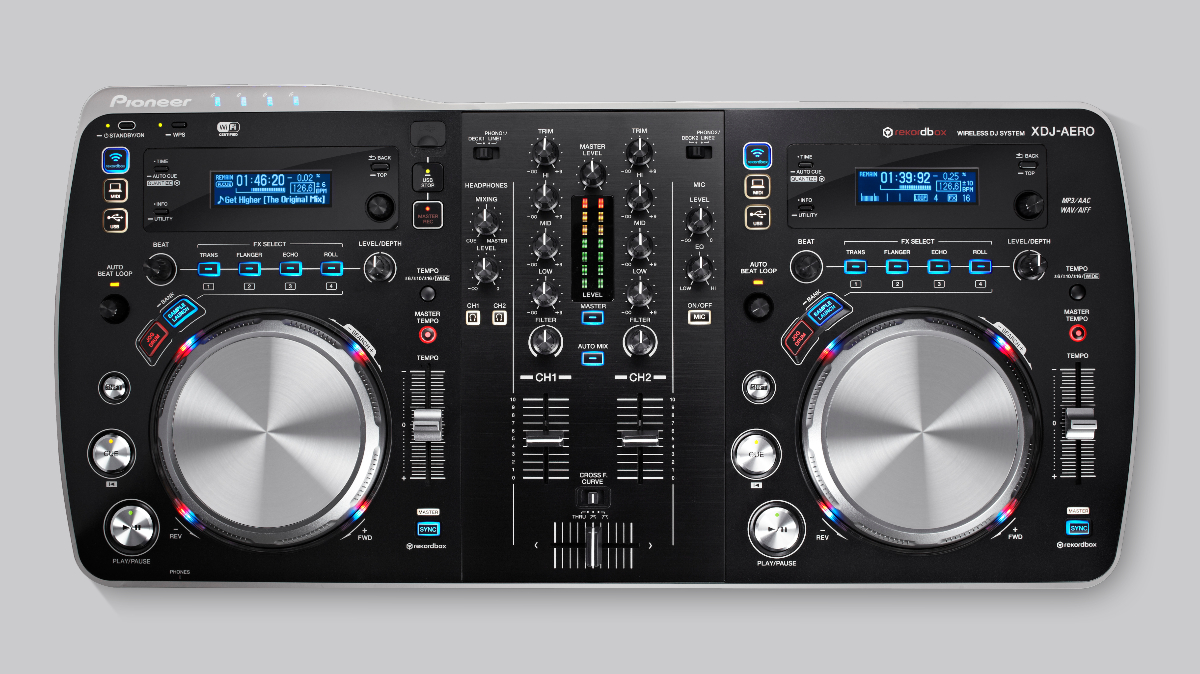
“In terms of newness, Wi-Fi was a major element. The iPhone was something people kept in their pocket, so instead of taking it out and connecting it with a cable, we considered whether the all-in-one unit could read and play the music over Wi-Fi. We discussed it with the technical team, and they said there was potential, so we positioned it as a product that let you DJ with an iPhone.
“The main difficulty in planning and development was whether to include CD or remove it.
“For me personally, the first thought was that I wanted to do something new. I wanted to present something that felt more advanced than previous DJ equipment.
“There was another point as well. rekordbox mobile exists now, but we created it for the first time around this period. The idea was that with rekordbox mobile, you could prepare tracks anytime and anywhere, such as on the train or outside, then connect that to AERO and perform on the actual hardware.
“Rather than preparing at home, exporting to USB, and then using that USB, the idea was that you could prepare anywhere and then connect directly to the hardware. You could connect wirelessly. That convenience was something we were thinking about at the same time.
“The phrase ‘anytime, anywhere’ came up among the planning members even back then. We made this model thinking that it could make that kind of thing possible, at least to some extent.
“We were also conscious of making the unit thin, like an iPhone. It had a playback engine inside, but we wanted it to be thin like a controller, or rather to give it an atmosphere similar to an iPhone.”
“With AERO, the idea was not simply that two players and one mixer had been combined into one unit,” says Yuji Murai, an executive manager in our product planning team. “It was more that DJing could be completed with this one device.
“I remember that the design concept intentionally avoided making it look like one thing had been attached to another. The UI layout was designed so that users would not get lost, while preserving the basic mannerisms of DJing.
“As the model name AERO suggests, we were conscious of air, of wireless rather than wired connection, of convenience, smartness and being cordless. We wanted to show that the media used by DJs was changing. Rather than following professional equipment, the manufacturing concept was that this was a completely new product format. That was reflected in the design and also in the model name.
“The target customers were not necessarily people aiming to become top club DJs. They were people who wanted to try DJing using the devices they already had in their hands. I think the target was a new kind of DJ experience for people who valued being able to use what they already had.”