Going digital
Moving to digital presented challenges.
Takeaki remembered there being DJs at the time who were wary about using a digital mixer. Matching the perceived sound quality of analog equipment was therefore an important part of the project.
Behind the scenes, that meant tackling basic issues like latency, smooth changes in volume, EQ design, and overall sound quality.
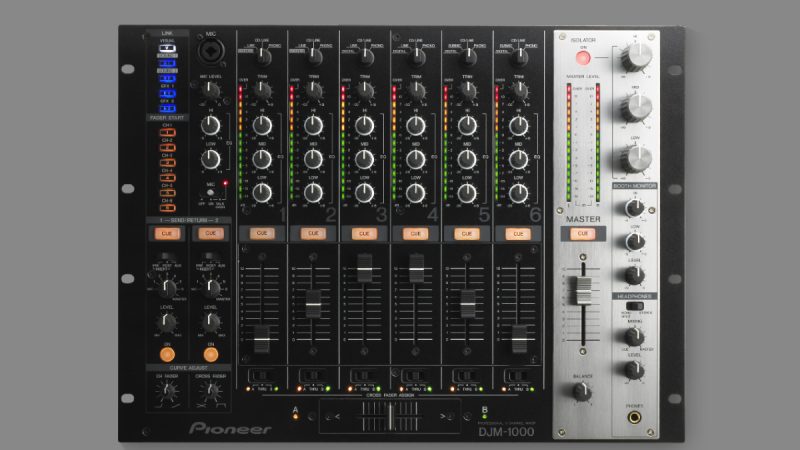
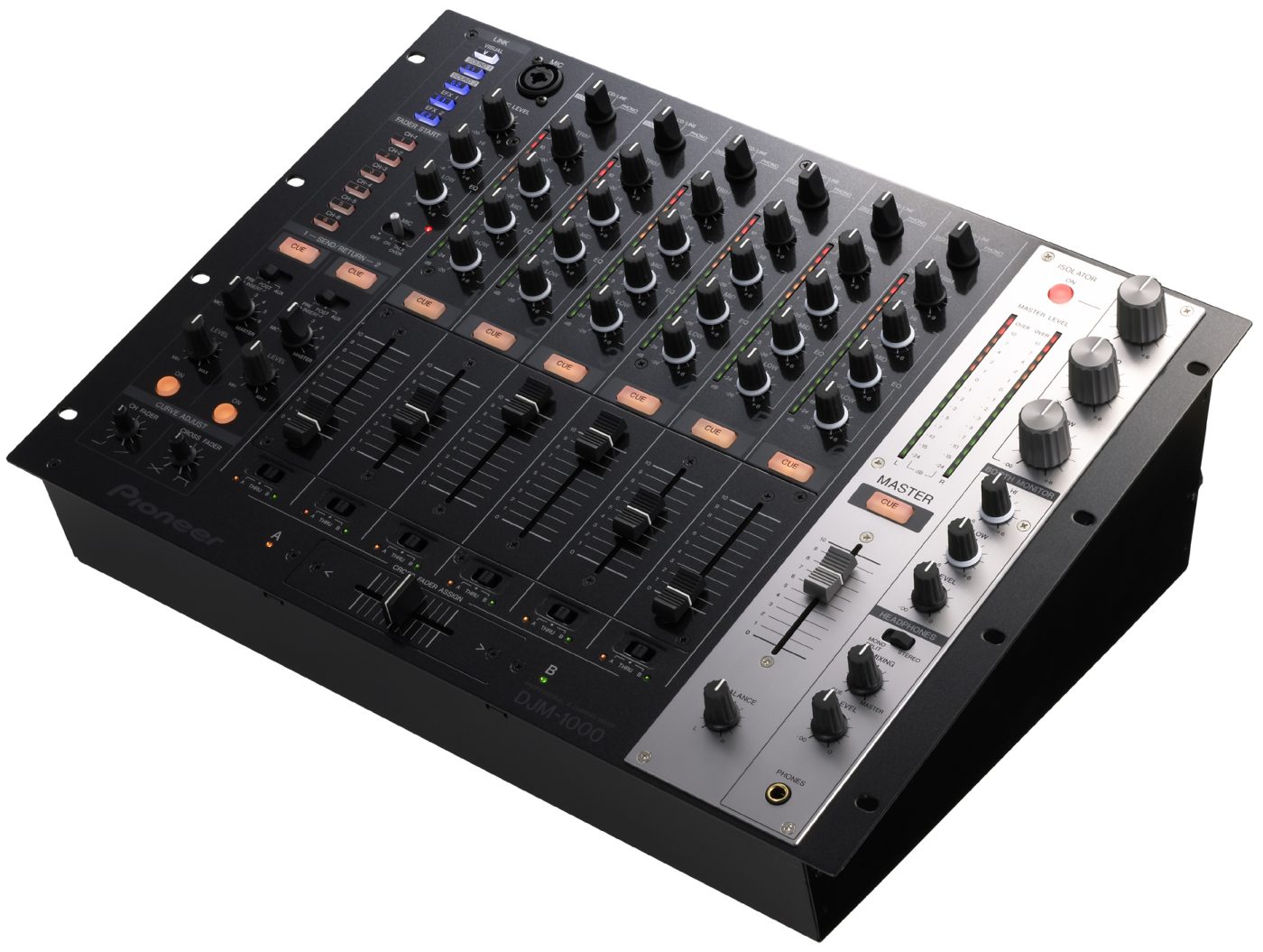
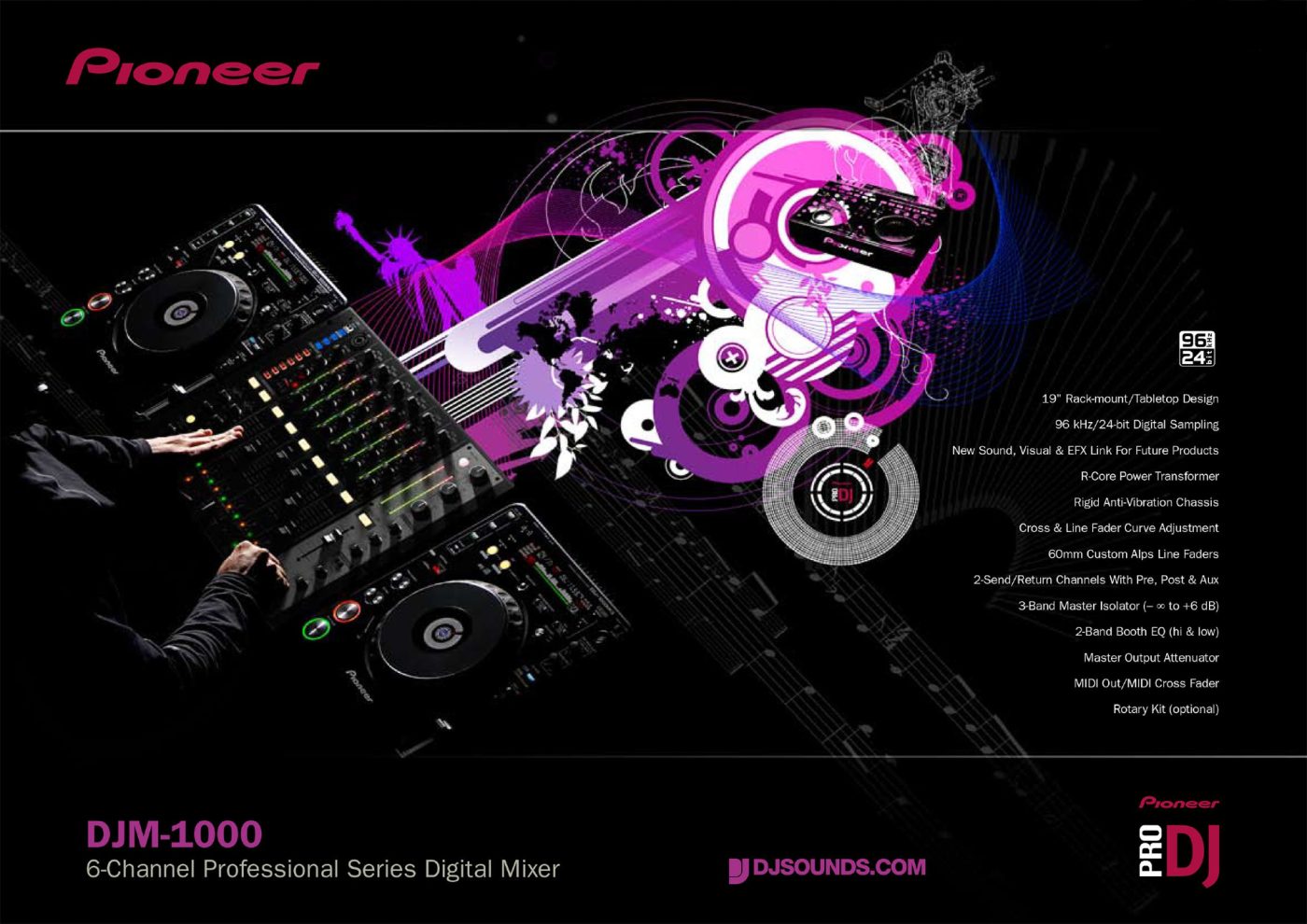
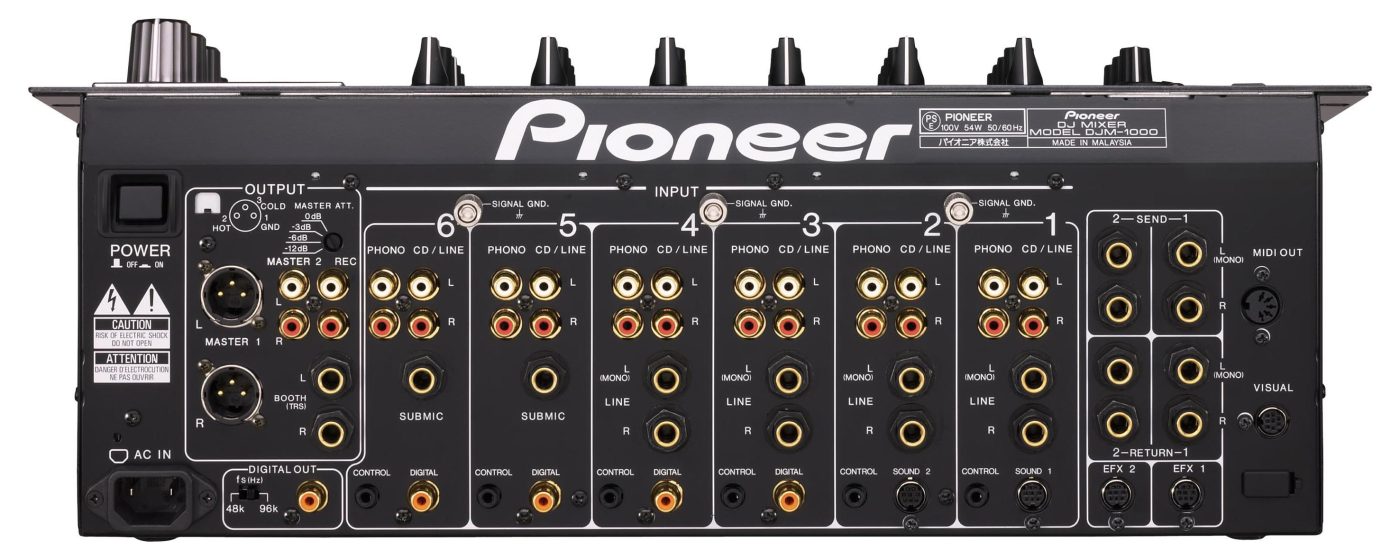
The headline spec was 24-bit/96 kHz processing, with digital connections allowing compatible players to feed audio directly into the DJM-1000 without first converting it to analog. Analog sources, such as turntables, could also be converted and processed inside the mixer.
But the experience of actually using the DJM-1000 said more than those numbers.
“I remember playing on it for the first time, and I remember having to change the way that I mixed because of the openness of the top end,” said Dan.
Coming from older setups, where musical elements would blend together more indistinctly, the amount of separation in the stereo field was revealing.
“I was like, ‘Oh, wow! I can hear all these hi-hats… I can hear the shuffle and these shakers over here, and I’m not mixing them in time,’” he said.
For Dan, the DJM-1000 felt like a statement: “A proof of concept. Like, yes, digital can sound good.”
The equivalent mixer in today’s range is the six-channel DJM-V10, and it’s certainly interesting comparing its sound with the DJM-1000. Where words like “full” and “rich” come to mind with the V10, the DJM-1000 comparatively sounds quite brittle and a little harsh.
But this says more about overall advancements in audio technology than it does the limitations of the DJM-1000. When we demoed it alongside the DJM-500, which was released in 1995, the DJM-1000 sounded much more capable, with the instruments in the mid-range better defined and the bass sounding more present.
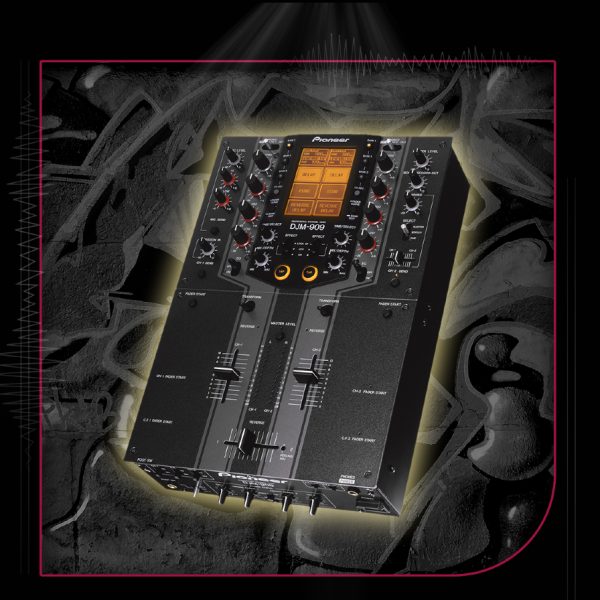
“Before the DJM-1000, the general DJ would have had the DJM-600 as a benchmark for sound quality, and it had some room to improve,” said Jeroen Groenendijk, an AlphaTheta business development manager and product specialist. “The DJM-707 and 909 were launched a bit earlier, in 2004, and they already improved in sound quality a lot. The DJM-1000 was designed to bring the best possible sound quality to the booth and it surely did fulfill that promise.”