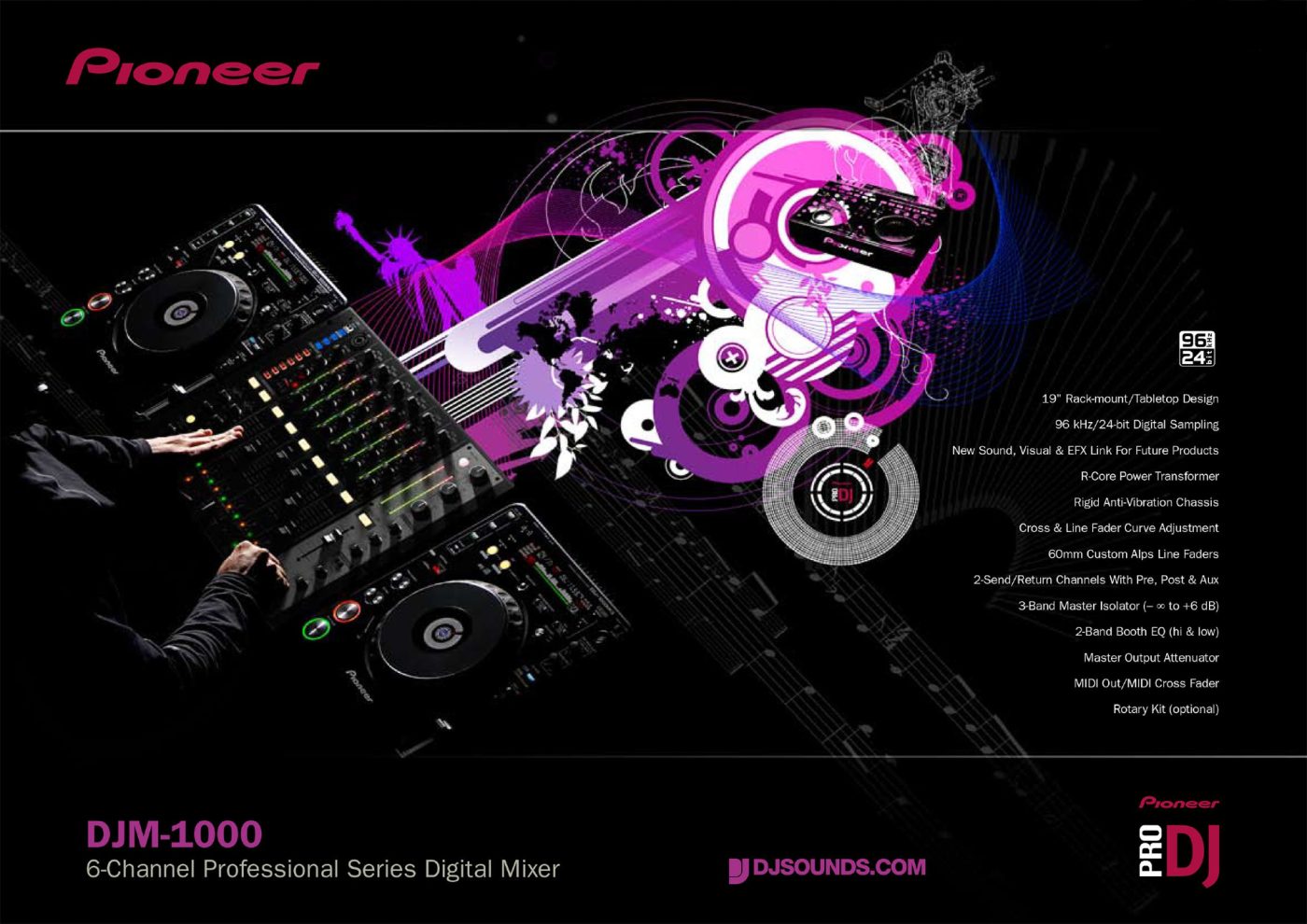
The DJM-1000 was unlike any Pioneer DJ mixer before it

In 2005, we released a six-channel digital mixer with a strong emphasis on sound quality. Even to this day, the DJM-1000's features make it an outlier in our history of mixers.

Listen to this article, written by Bridge editor Ryan Keeling

When the DJM-1000 appeared in 2005, it felt a little different.

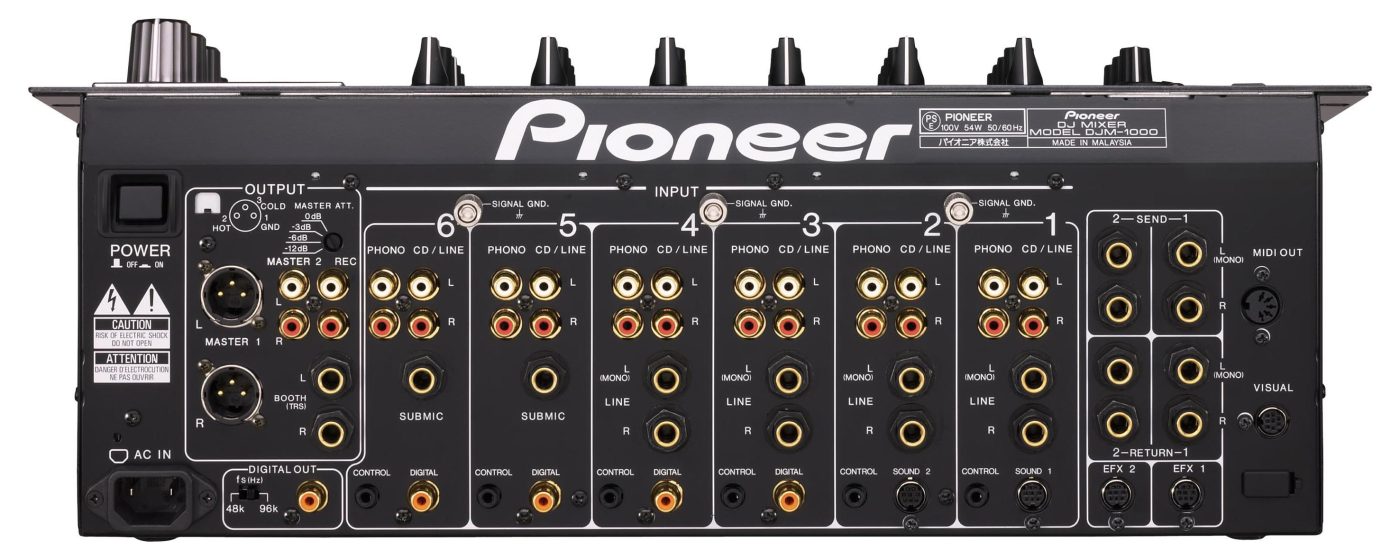
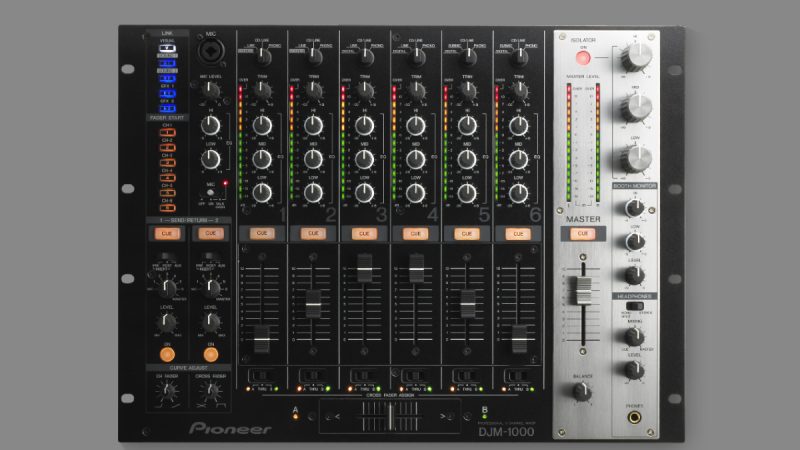
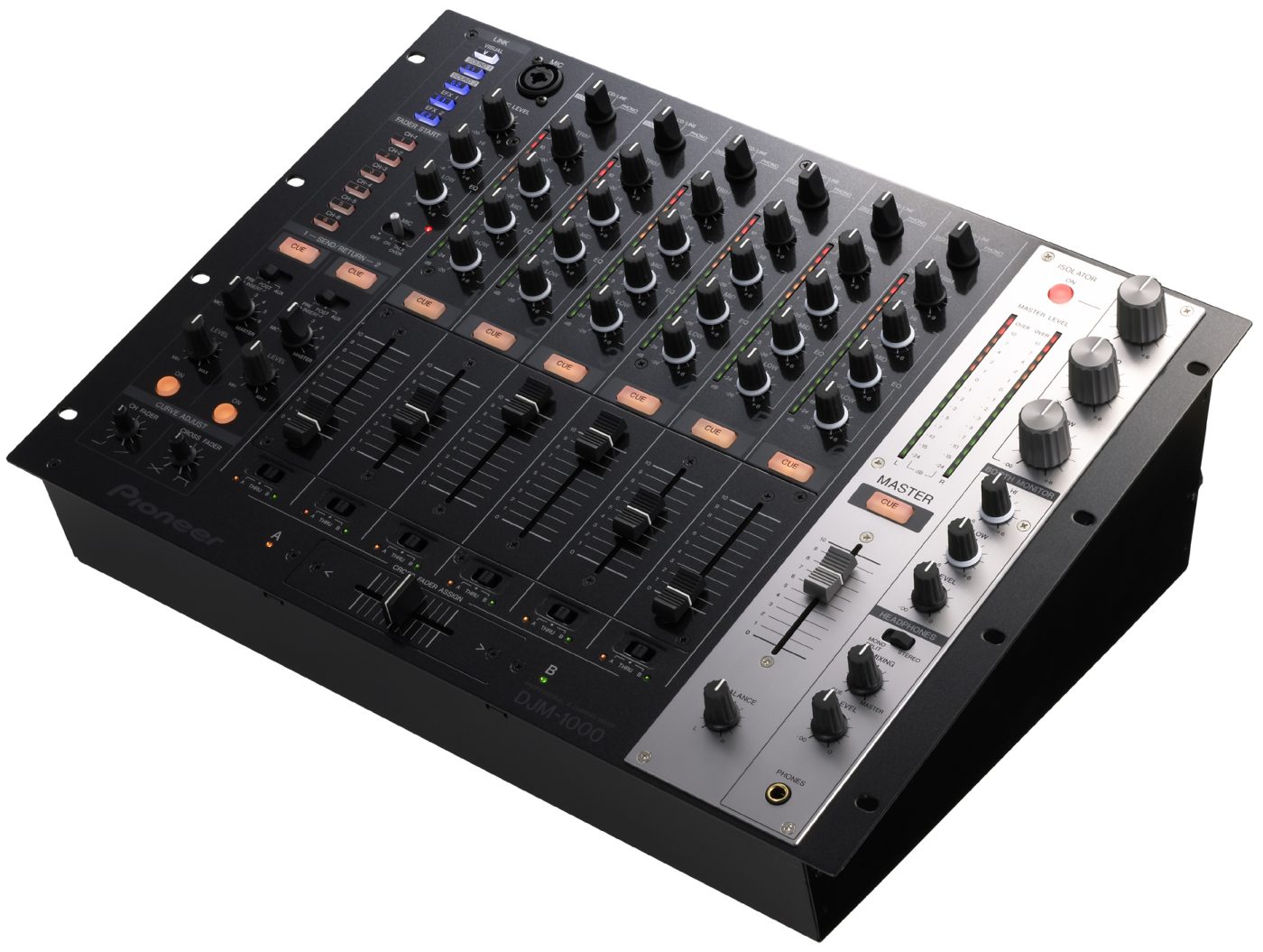
First off, it was enormous. It had six channels, a master isolator, and enough connections to sit at the centre of a sophisticated club setup.

But it was missing what had become the signature of Pioneer DJ mixers until then: FX. 

Instead, the DJM-1000 moved the mixer’s core from analog to digital and focussed on high-quality sound above all else.

According to Takeaki Funada, who managed firmware for the DJM-1000, analog mixers (like the DJM-500 and DJM-600 that preceded it) came with limitations. EQ design involved compromises. FX could only be inserted at fixed points in the signal path. And changing the behaviour of the channel faders was difficult.

“I remember hearing that a digital mixer was necessary to address the limitations of analog mixers and make it possible to pursue future ideas,” Takeaki said.

“It was meant to be very stripped down, no FX, entirely focussed on sound quality,” said Dan Tait, head of artist relations for EMEA. “The chassis and the way that it was built—no compromises.”

Going digital 

Moving to digital presented challenges.

Takeaki remembered there being DJs at the time who were wary about using a digital mixer. Matching the perceived sound quality of analog equipment was therefore an important part of the project.

Behind the scenes, that meant tackling basic issues like latency, smooth changes in volume, EQ design, and overall sound quality.

The headline spec was 24-bit/96 kHz processing, with digital connections allowing compatible players to feed audio directly into the DJM-1000 without first converting it to analog. Analog sources, such as turntables, could also be converted and processed inside the mixer.

But the experience of actually using the DJM-1000 said more than those numbers.

“I remember playing on it for the first time, and I remember having to change the way that I mixed because of the openness of the top end,” said Dan. 

Coming from older setups, where musical elements would blend together more indistinctly, the amount of separation in the stereo field was revealing.

“I was like, ‘Oh, wow! I can hear all these hi-hats… I can hear the shuffle and these shakers over here, and I’m not mixing them in time,’” he said. 

For Dan, the DJM-1000 felt like a statement: “A proof of concept. Like, yes, digital can sound good.”

The equivalent mixer in today’s range is the six-channel DJM-V10, and it’s certainly interesting comparing its sound with the DJM-1000. Where words like “full” and “rich” come to mind with the V10, the DJM-1000 comparatively sounds quite brittle and a little harsh. 

But this says more about overall advancements in audio technology than it does the limitations of the DJM-1000. When we demoed it alongside the DJM-500, which was released in 1995, the DJM-1000 sounded much more capable, with the instruments in the mid-range better defined and the bass sounding more present.

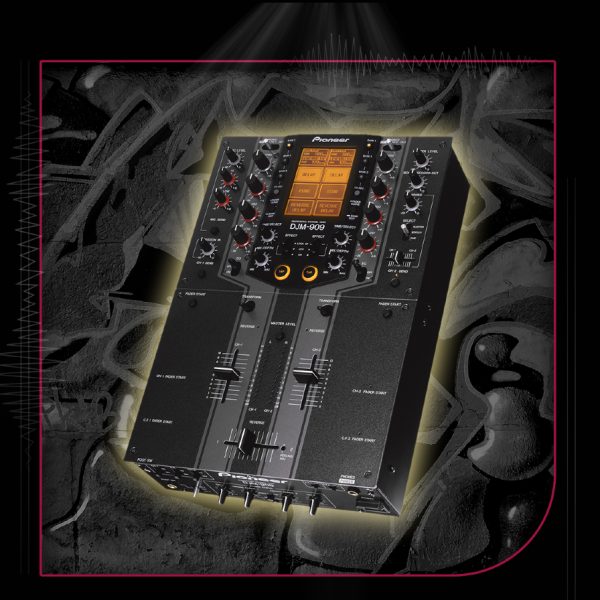
“Before the DJM-1000, the general DJ would have had the DJM-600 as a benchmark for sound quality, and it had some room to improve,” said Jeroen Groenendijk, an AlphaTheta business development manager and product specialist. “The DJM-707 and 909 were launched a bit earlier, in 2004, and they already improved in sound quality a lot. The DJM-1000 was designed to bring the best possible sound quality to the booth and it surely did fulfill that promise.”
Built to do more

The move to digital also gave Pioneer DJ room to experiment.

The six channels could accommodate turntables, analog equipment, and digital sources, while two independent send-and-return sections allowed external FX to be incorporated in different ways. Pioneer DJ described the DJM-1000 as a central hub for decks, samplers, effectors and other devices, rather than simply a mixer for two conventional sources.

“I think that we were basically just saying that this could be like a workhorse,” said Dan. “But even the thought of having four CDJs at the time was pretty novel.”

There were other experiments too. The mixer could send MIDI information, while its new Digital Link system was intended to connect Pioneer DJ audio and visual products. With compatible equipment, even the crossfader could be used to control video transitions.

Another new idea was physical rather than digital. The DJM-1000’s six extra long channel faders could be removed and replaced with an optional rotary-control panel.

Ideas for the future

The DJM-1000 never became as ubiquitous as some of the Pioneer DJ mixers that followed it; Takeaki expected its six-channel format to limit its appeal. But he remembers being surprised by how widely it was adopted overseas and says it received a decent response.

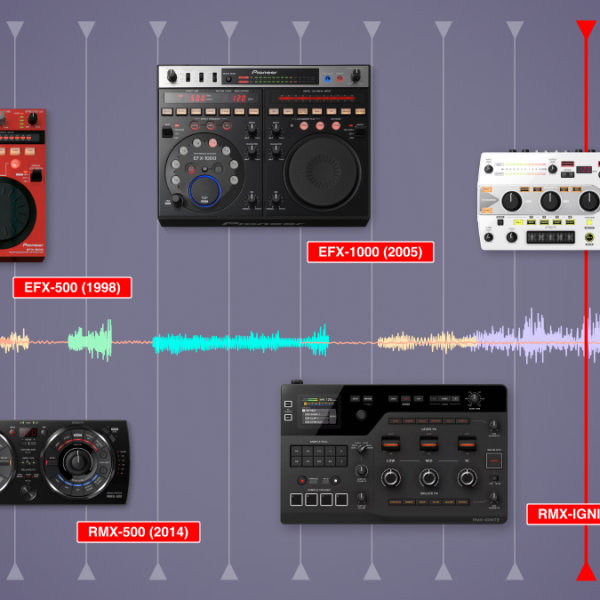
It also found its way into some notable setups. James Zabiela would combine the DJM-1000 with the EFX-1000, while Carl Cox and Sander Kleinenberg were also users. “The DJs interested in the DJM-1000 were the ones playing at the top that did not want any compromise in regards to sound quality,” said Jeroen. “The DJM-1000 was not the cheapest mixer but it brought a lot of quality to the table in the form of sound quality and mechanical durability. The DJs who did have the mixer, requested it on their rider and praised it.”

But perhaps the DJM-1000’s most important legacy was less obvious.

“I think it was a worthwhile product because we learned a lot that could be applied to the design of later mixers,” said Takeaki. 

Seen that way, the DJM-1000 was a chance for Pioneer DJ to move beyond some of the constraints of analog design. It proved what digital mixing could do, and shaped ideas that informed what came next.

Text: Ryan Keeling