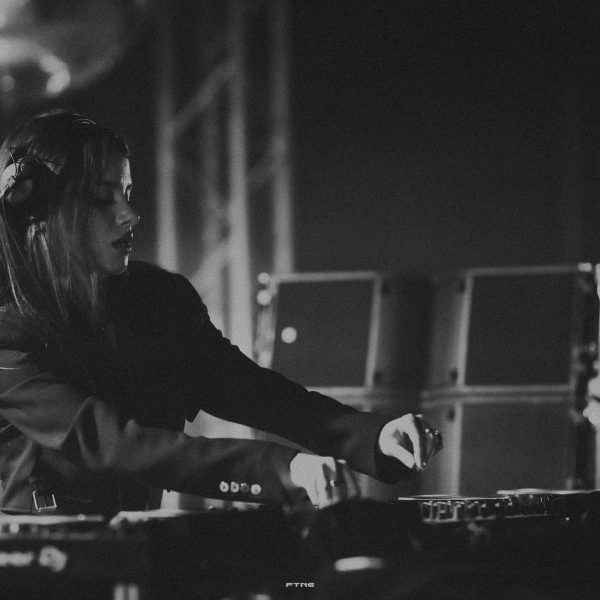
How careful preparation shapes Lee Ann Roberts’ explosive DJ sets

The South African artist tells us how psytrance, sobriety, and a tight preparation process each play a role in her high-intensity performances.

Listen to to this article, written by Bridge editor Ryan Keeling

We sometimes have complicated relationships with the music we loved when we were young. You might enjoy memories of the powerful emotions it stirred in you, but also feel a little embarrassed by your adolescent tastes. 

Thankfully for hard techno fans around the world, this isn’t how Lee Ann Roberts sees it. The South African artist is not only still in love with the psy trance she danced to in her youth, the sound is now integral to her DJing and productions. After a couple of evolutions in her style over the past 10 years, Lee Ann says she’s now landed on “the most honest representation of who I am [as an artist].”

In order to deliver the full intensity and emotion of her style, Lee Ann likes to thoroughly prepare. She examines, edits, and maps her tracks in rekordbox so she always knows how to quickly and efficiently reach their most impactful parts. Lee Ann will sometimes rip through 30 tracks in an hour, and she carries huge quantities of music, which makes building a watertight preparation process vital.   

Sobriety has also sharpened Lee Ann’s craft. As we learn below, she feels that having a clear head in the DJ booth has upped her game in basically every respect. “It’s funny because a lot of people think they play better under the influence but I think that’s often because they’ve never really experienced DJing sober, so they assume they’re better,” she says. 

As you’ll sense from the interview below—which covers mixing at speed, reading crowds, and switching musical lanes—Lee Ann is someone who thinks deeply about her DJing and is always looking to improve.

You came up through South Africa’s psytrance scene. What was the dance floor energy like at those parties?

What I loved about the South African psytrance scene was that it was never really about the DJ. It was about the experience, the music, and the community. Most of the parties were outdoors, often in beautiful natural settings, and people were there to connect, dance, and lose themselves in the moment rather than stand facing a stage.

There was definitely respect for the DJs but nowhere near the level of focus you see in some dance music scenes today. The dancefloor itself was the focal point. Looking back, I think that had a big influence on me. It taught me that the music should always come first and that creating a shared experience is far more important than being the centre of attention. 

Did you learn anything from radio DJing that you carried into club DJing?

Absolutely. Radio taught me the importance of flow, pacing, and taking people on a journey. Even though you’re not physically in front of a crowd, you’re still responsible for holding someone’s attention and creating a mood. It also taught me how to think about track selection more deeply and how to build energy over time rather than just chasing big moments. Those lessons have stayed with me and definitely influence the way I approach DJ sets today.

Do you remember the first setup you learned to DJ on? What was difficult at the beginning?

The first setup I learned on was a pair of Pioneer CDJ-800 MK2s and a Numark DM950 mixer. CDJ-800’s still had CD inserts and it definitely felt like the real deal. I think learning on that kind of setup teaches you the true art of DJing. You had to understand phrasing, timing, track selection, and beatmatching on a much deeper level because there was far less technology doing the work for you.

You established yourself as a DJ and producer playing deeper, minimal sounds. What led to your decision to make a pivot to another style? How difficult did you find this transition? 

I never really saw it as a conscious decision to pivot as much as a natural evolution of who I am as an artist. The deeper, more minimal sounds were a huge part of my journey and helped me develop my identity but over time I found myself wanting to express a wider range of emotions and energy through my music. My roots actually come from South Africa’s psytrance scene, so in many ways the harder, more driving sound I make today feels like a return to something that was always part of me. As I grew as both a producer and performer, I became more interested in creating music that combined power, emotion, and storytelling while still maintaining the hypnotic qualities that first drew me to electronic music.

The transition wasn’t without its challenges. Any time you evolve, there’s a risk that some people won’t come with you. But I think authenticity is the most important thing. I’ve always tried to follow what genuinely excites and inspires me creatively rather than chasing trends or expectations. Looking back, it was absolutely the right decision because the music I’m making today feels like the most honest representation of who I am.

Do you have any advice for DJs who are thinking of making a similar lane change?

My biggest piece of advice would be to make sure you’re doing it for the right reasons. Don’t change direction because it’s fashionable or because you think it’s what people want to hear. Do it because it’s a genuine reflection of where you are creatively. 

It’s also important to accept that not everyone will come with you on the journey and that’s OK. Every artist evolves. If you’re growing and challenging yourself creatively, some people will connect with the new direction and others may prefer what came before. 

Most importantly, trust your instincts. The artists who inspire me most are the ones who weren’t afraid to take risks and follow their own path even when it wasn’t the obvious or popular choice. If the new sound genuinely excites you and feels authentic, lean into it fully and commit to it. People can feel when something is real and that’s ultimately what creates a lasting connection.

How would you describe your style these days?

These days I’d describe my sound as psy-techno with a mainstage edge. It combines the hypnotic energy and driving rhythms of psytrance with the power, groove and intensity of techno while still maintaining an emotional and melodic core. I’ve always been drawn to music that creates a strong connection on the dancefloor and my current sound is built around that feeling—high energy, powerful drops, hypnotic textures, and a sense of momentum that keeps people locked in from start to finish. It’s music designed for big moments and big stages but without losing the storytelling and journey that have always been important to me as a DJ.

You’ve talked before about having a kind of stage character when you DJ. Are you always able to slip into that role, or are there times where it’s more difficult? 

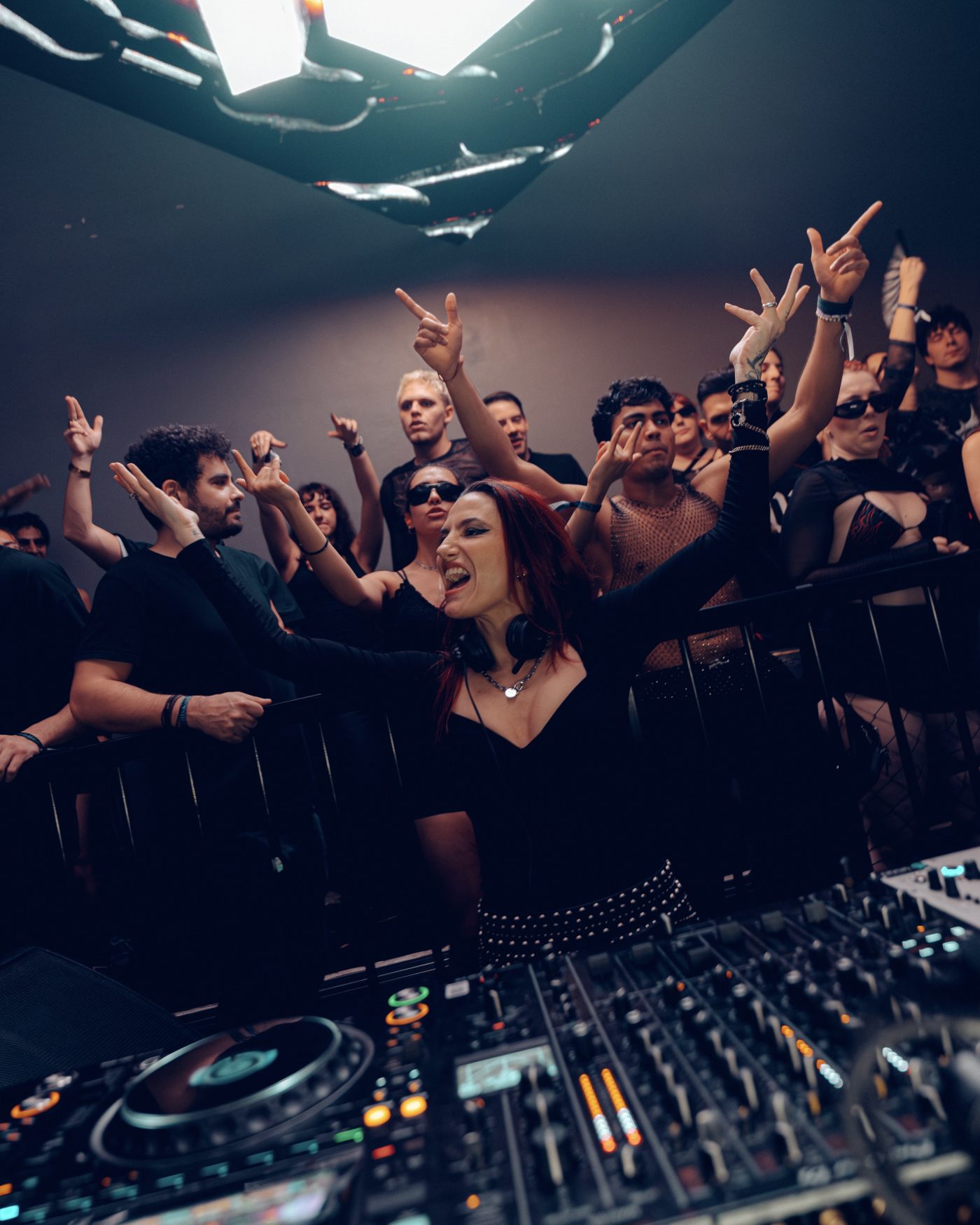
When I get on stage I don’t feel like I’m becoming a character, I actually feel like I’m becoming more myself. It’s not something I consciously switch on or try to create; it just happens naturally. Sometimes I even think I should tone it down a little but I honestly can’t help myself. The energy, the music, and the connection with the crowd bring out that side of me. I’ve never forced it or treated it as an act. It’s simply a very authentic expression of who I am in that moment.

You’ve previously mentioned switching to DJing sober. Is this still the case? And if so, how has it affected the way you play? 

Yeah, I play completely sober. I was sober for two years and although I’m not completely sober these days I still never drink when I’m DJing. Honestly, I feel like I DJ much better sober. It’s funny because a lot of people think they play better under the influence but I think that’s often because they’ve never really experienced DJing sober, so they assume they’re better. For me, it’s the opposite. I’m much more present, focused, and connected to what’s happening on the dancefloor. I’m able to move between different ideas in my head, think a few steps ahead, and make better decisions about where I want to take the set.

I also find I’m far more creative and precise. My mixing is tighter, my timing is better, and even the technical side of DJing feels more natural. I trust my instincts more and can fully immerse myself in the music and the crowd. For me, being sober behind the decks has made me a better DJ in every way.

You’ve said that you sometimes play around 30 tracks in an hour. What do you like about playing this way?

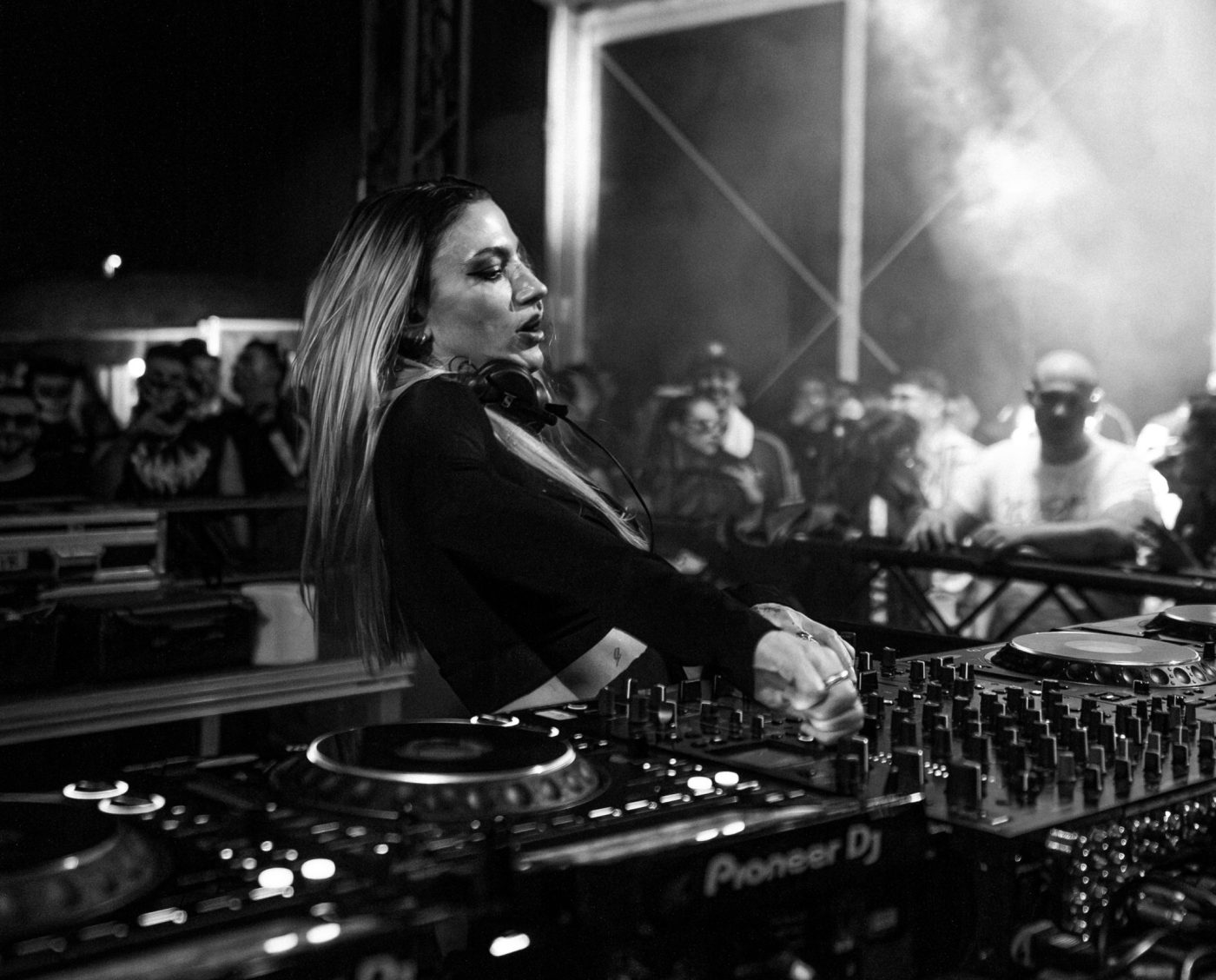
I like playing this way because it allows me to maintain the exact flow and energy I’m aiming for throughout a set. I’ll often use Hot Cues, skip certain sections, and jump between different parts of tracks, which means I can keep things moving and introduce more music without losing momentum.

For me, it’s not about fitting as many tracks in as possible, it’s about keeping the journey engaging and dynamic. If I feel a track has delivered what I want it to deliver, I’ll move to the next idea rather than letting it play out for the sake of it. It’s also just very natural to the way I DJ. I enjoy being constantly involved, making decisions in the moment and reacting to the energy on the dancefloor. It keeps me fully locked into the set and in the zone. That’s where I feel most creative and I think that energy translates to the crowd as well.

Preparation is a big part of how I DJ. I spend a lot of time setting Hot Cues and familiarising myself with the structure of tracks so I know exactly where the key moments are. Because of the way I mix, I’m often looking for specific sections rather than playing a track from start to finish. If there’s a great groove, a powerful build-up or a particular moment that creates the energy I’m after, I’ll jump straight to it.

Likewise, if there’s a long breakdown that doesn’t fit the flow of the set at that moment, I’m not afraid to skip past it. I see tracks more as collections of moments and tools for storytelling rather than something that always has to be played exactly as it was produced. Of course, some records deserve to breathe and be experienced in full, but in a high-energy club or festival setting I’m constantly editing in real time to keep the momentum where I want it.
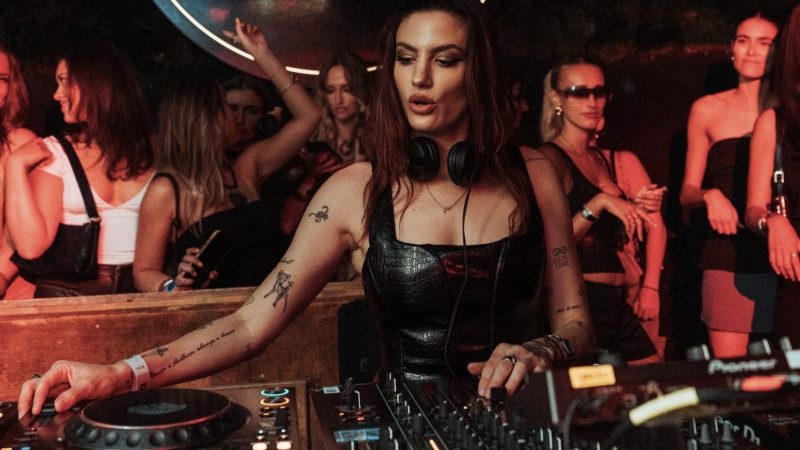
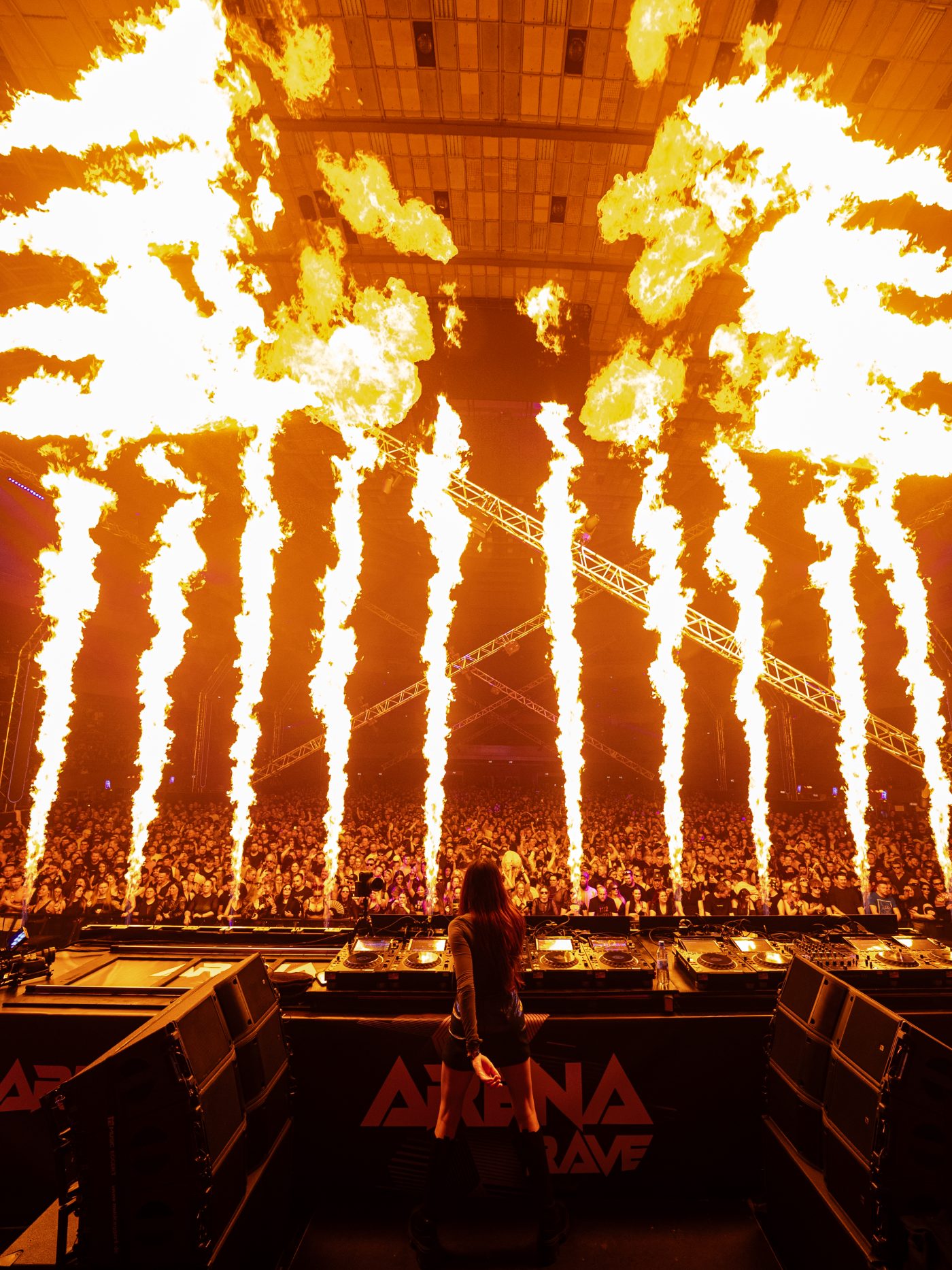
How do you build a peak-time techno set without it becoming one long plateau?

It’s all about contrast. If everything is at 100% the entire time, then nothing really feels powerful anymore. Even in a peak-time set, I’m constantly creating tension and release. That doesn’t necessarily mean dropping the energy; it can be as simple as changing the groove, introducing a different texture, pulling elements away for a moment or creating a sense of anticipation before bringing the crowd back into the next big moment.

I think that’s one of the reasons I play the way I do. By using Hot Cues, jumping between sections, and constantly evolving the set, I’m able to keep introducing fresh ideas and stop the energy from becoming predictable. People often think peak-time means harder and harder and harder, but for me it’s more about taking people on a journey while maintaining intensity.

What are you reading from the crowd when you decide where to go next?

I’m constantly watching the crowd and looking for small shifts in energy. It’s not just about whether people are dancing, it’s about how they’re dancing, how they’re reacting to certain sounds, whether they’re fully locked in and whether the energy feels like it’s building or starting to level out. Sometimes a crowd wants more intensity but other times they need a moment to breathe before you can take them higher again.

I pay a lot of attention to the emotional response as well. A lot of it is instinct at this point. After years of playing clubs and festivals around the world you develop a feel for when to push, when to hold back, and when to surprise people. Every crowd is different, which is what makes DJing so exciting. You’re having a conversation with thousands of people without saying a word and they’re constantly telling you where to go next through their energy.

Do you always know what track you’ll play first before you step up to the booth?

Sometimes I know exactly what I’m going to play first but most of the time I don’t decide until I’m standing in the booth. A lot depends on the event, the time slot, and the energy in the room. Even if I’ve got a few ideas in mind beforehand, I like to take a moment to suss out the vibe, see how the previous DJ has left the dancefloor, and get a feel for what the crowd is responding to. I’ve always preferred to leave room for spontaneity. The first track sets the tone for everything that follows, so I want it to feel right for that particular moment rather than forcing something I’d decided on hours earlier.

What role do FX play in your performances? 

I use FX quite a lot but always with intention. For me, they’re there to enhance what’s already happening rather than become the focus of the performance.

What features of the RMX-1000 do you tend to use the most?

I’d say the feature I use the most is probably the X-Pad. Whether it’s snares, kicks or other percussion elements, it allows me to add energy in a way that feels natural and complements what’s already happening in the mix.

What drew you to using the DJM-V10?

What initially drew me to the DJM-V10 was honestly curiosity. I was seeing more and more DJs playing on it and hearing people talk about it, so naturally I wanted to understand what made it so special. I also spoke to a few friends whose opinions I trust and who also moved from the Xone to the V10 and asked for their feedback and the response was overwhelmingly positive.

Once I started spending time on it myself, I quickly understood why so many people had made the switch. Beyond the sound quality, I really loved the creative possibilities it opened up. Having six channels gives me a lot more flexibility and it suits the way I like to DJ with Hot Cues, loops, layering, and constantly shaping the energy of a set. It feels very intuitive and allows me to be more creative and spontaneous in the booth, which is something I really value.

Do you have a specific system for collecting and organising your music?

I use rekordbox to organise my music. That said, if you looked at my library most people would probably say it’s not the neatest or most organised system in the world. But it makes sense to me and that’s what matters. I’ve developed my own way of organising playlists, tracks, and ideas over the years and it works for how I prepare and how I DJ. I spend so much time with my music that I tend to know where things are and how they fit together instinctively.

How has your music discovery process changed since you became a professional DJ?

It’s changed quite a lot. When I first started, discovering music was really just about finding tracks that I personally loved. These days, I’m still looking for music that excites me but I’m also listening through the lens of a DJ and thinking about how a track will work on a dancefloor, where it might fit in a set and what kind of emotion or energy it creates. I also receive a lot more music now than I did in the beginning, whether it’s promos, demos, or unreleased tracks from friends and producers, so there’s a lot more filtering involved. You have to become quite selective. That said, I still genuinely love digging for music. There’s nothing quite like finding that track that gives you goosebumps or discovering an artist you’ve never heard before. Even after all these years, that feeling hasn’t changed.

You’ve said before that you like to pack a lot of music for your gigs. How do you get the balance right between having lots of choices and feeling overwhelmed?

I’ve always preferred having more music than I need. I’d rather be overprepared than find myself wishing I had brought a particular track or direction with me. A lot of the way I DJ is quite instinctive. I often describe it like playing chess, I’m constantly thinking a few moves ahead but at the same time reacting to what’s happening in the moment. Sometimes I’ll suddenly have an idea and think, “I want to play that track next.” If I can’t find it because I didn’t bring it with me, that can kill the creative flow.


For me, having a large selection available actually gives me more freedom rather than making things overwhelming. It allows me to stay spontaneous, follow my instincts, and adapt to the energy of the crowd without feeling restricted. I’d much rather have too many options than not enough, because that’s when I feel most creative behind the decks.

Do you have goals as a DJ that you’re still working towards?

Absolutely. I think the moment you feel like you’ve achieved everything is probably the moment you stop growing. Of course there are still venues, festivals, and milestones I’d love to achieve but these days my goals are about more than just playing bigger shows. I’m constantly looking for ways to evolve as an artist, improve my craft, and push myself creatively.

A big focus for me is continuing to develop my sound and create music that feels authentic and true to who I am. I’m also passionate about growing NowNow into something bigger than just a record label—a platform and community that helps support and showcase artists. More than anything, I want to keep challenging myself. Curiosity has always been one of my biggest driving forces and I think there’s always another level to reach, whether that’s as a DJ, producer, label owner or simply as a person.

Text: Ryan Keeling