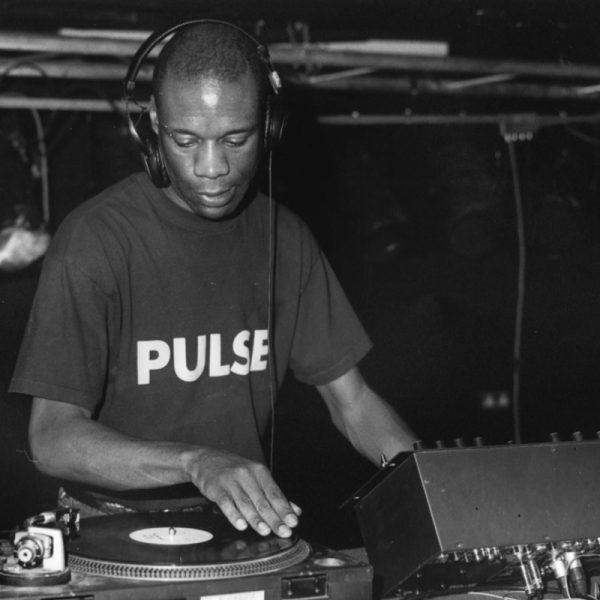
Shimza on the DJ gear and techniques that shape his renowned sets

The revered South African DJ tells us how fiddling with FX, healthy competition, and travelling the world have all influenced his signature style.

Listen to this article, which is written by Bridge editor Ryan Keeling

The past five or so years have been a boom time for Shimza and his fellow South African DJs.

Propelled by the soaring popularity of styles like Afro tech, Afro house and amapiano, they have become major players in the global electronic music scene. South Africa had long been home to one of the world’s healthiest national dance music scenes. But until relatively recently, the country’s biggest DJs were not well-known beyond its borders. 

Illustrating just how much this reality has changed, when I called up Shimza last month he was sitting in a barber’s chair in Ibiza, preparing to begin a six-week residency at Pacha, the island’s oldest and most famous club. (Pacha’s other residents this summer include Vintage Culture, Solomun, Chris Stussy, and Mau P, who all placed on DJ Mag’s latest Top 100 DJs list.) I assumed that Shimza would be basing himself in Ibiza during the residency, but apparently he has so many bookings this summer that he’ll be living on the road, with no permanent base. 

We could say that Shimza was well-prepared for his international success. Across the past couple of decades in South Africa he’s built a thriving DJ career, a loyal fanbase, a busy studio schedule, and, since 2020, a label and event series called Kunye that brings African electronic music to the world.

Perhaps the only downside to his international ascent is that he doesn’t often get to hone the DJ techniques he became famous for. 

“The reason why I’m so technical is because I used to literally sit down in my room with one CDJ and a mixer and just fidget around to discover new ways in which I can use the features to enhance my performance,” he tells us. “Over the years, as I haven’t been able to practice or sit down with the equipment because I’m always on the road, I need to find creative ways through what I learned in the past.” 

As we discover, Shimza comes from a South African DJ culture that’s fuelled by a strong emphasis on developing a personal style and healthy competition. “I think South Africa has some of the most technical DJs in the world, and very competitive at that,” he says. “In terms of mixing music, knowledge, building a set, I think South Africans are up there… and it’s because of that edge of the competitiveness of the market at home. That’s how we were brought up, man.”

Do you remember your first-ever DJ setup? 

The first setup that I played on was two belt-drive turntables and a Gemini 626 mixer. That was like the standard gear that I had. Then when I upgraded from that I had Citronic turntables and a Citronic mixer, which was getting it right in terms of the feel of the turntable wheel, it was heavy, like a Technics SL wheel.  

Then I moved on to Technics 1210s and then from that I moved on to CDJs. The first CDJs that I played on were CDJ-100s. And then from there, I moved on to CDJ-200s. And then to CDJ-400. Then I moved to the CDJ-800, the CDJ-1000 and then the CDJ-2000. 

How did you learn to mix? Was information available? Did someone teach you?

There was a friend of mine called KHOMZA. We used to DJ every day at his place, and he taught me a lot of what I knew when it comes to beat matching. But we literally practiced every day. So it didn’t matter if you gave us a belt-drive turntable or like a faulty SL… Because our training ground was the belt-drive turntables, it was easier for us to navigate with anything else. 

So you think that even though they were unreliable, the belt drives were good to learn on? 

100% because with CDJs they would hold the pitch; if you were on zero, it was on zero, you know? But with the belt drive you would constantly have to work the turntable. So you can’t really relax, you would always have to go back to the mix. So when we got to turntables that were fully functional, it was quite easy for us to beatmatch, even take off our headphones. When you got into the world of good equipment, you would flourish. 

And who were the DJ figures in your world, who you kind of looked up to or wanted to learn from? 

There were local guys from my community, like DJ Fingers, who was on a national radio station. He was the guy who had the turntables, was collecting the music, who was on the radio.

Then we had local guys like Dor Santos, who had the local community on lock. They used to host the parties. He also had a 9-to-5, so he could afford to buy new vinyl and new music every week. We would go to all his gigs every weekend to listen to the new stuff that he had.

And then the local guys who were playing with me, like KHOMZA, Thende, Mphikzo, who were the people that were very competitive around collecting music, beat matching, timing, just making sure that you’re a full-on good DJ. 

That really helped me because I had the people that I was looking up to who were on radio, who were playing the new music with new equipment. And then I had the local guys who were doing it at the local level, but at a good level. Then I had the underground guys who were still coming up, but who were very specific about the DJing side of it.

You mentioned the affordability of records. Was vinyl pretty expensive for you guys? I was just thinking about import taxes and such. 

Yeah, comparing it to what’s happening now, it was quite expensive, because at the time, a vinyl was about 100 rand, which is, maybe I can convert it to about, let’s say $10 or €10 euros per vinyl.

If you’re playing at shows and you’re getting paid $100, or maybe even less, you have to factor in everything that you’re doing, like the transport, the food, all of that. Meaning you would only be able to afford to buy one vinyl. Another week, if you’re lucky, about two or three. But that would come at the sacrifice of a lot of things.

When I was in high school, I used to get 20 bucks a day for my lunch, right? So 100 bucks per week. I came up with a way to sell cookies at school. That would mean I have the 100 bucks from my lunch money from my parents, and then the cookie money was for the transport fare for me to go to town to buy the vinyl.

It always seemed to me like South African DJs take the technical side of DJing really seriously. It feels competitive, like you have to be on top of your game. Is that accurate? 

100%. I think South Africa has some of the most technical DJs in the world, and very competitive at that. As I’ve traveled, I realized that a lot of other people don’t take DJing very seriously. In terms of mixing music, knowledge, building a set, I think South Africans are up there. We’re really up there, and it’s because of that edge of the competitiveness of the market at home. That’s how we were brought up, man. 

How has your DJing evolved across the past decade or so? 

I think traveling has shaped me a bit—from being a rough diamond from South Africa, playing what I was playing, and not really exposed to what the world is doing. It gave me an identity that was very unique compared to what the rest of the world was offering.

Being able to come into the world like that, a kid with wet ears, you don’t conform to what’s happening, but you start learning.

That experience for me has helped me shape the way I play, which was a bit confusing for some markets, but also helped me to be different. But with the learning, it also helped me make more sense to the people that I’m playing for now.

The difference in how I approach DJing and my music was very unique, but as I traveled more, I understood that I can’t be too different, so that I can make sense to people that I want to appeal to. Because if you’re too different, you then become a bit lost. But if you’re different, and you make sense, then people start gravitating towards you because they try to understand you, because you are meeting them halfway.

And what you’re talking about specifically, did it have to do with the way that you were mixing, the way you were presenting the music? The tracks that you were playing? 

I think it was the tracks that I was playing and the mixing style. Because sometimes in South Africa what we tend to do is play too Afro house. Too drummy. And then you lose the European and American market, because that’s not something that they are used to.

But if you bring in those elements, plus a little bit of what they are used to, it sort of balances out and makes sense to them. That’s where I think the approach of what we are playing started forming. Because you have these elements in this music but also have the tech house influence, with some sounds that make sense to certain people’s ears.

So that balance helps it make sense to a much wider audience of people. That balance was needed to also help the sound move beyond what it was known for. Now you’re seeing Afro House having other elements that make it more viable to the European ear. Because the era of the music shocking the ear is a bit over. Now they are used to it, so it doesn’t shock them anymore, it has become a bit of a norm.

Now it has opened up the music to it being a bit more soulful and not as hard, and also now being able to be played on radio, which is a good thing that stretches the music into different audiences.

If it just sounded South African, it would just be for South African or for Africans. I always preach this. If we are going to be all, “Let’s keep this to ourselves,” it won’t help the sound grow. But because we are letting other people play in that space, it also grows the way the music sounds, so that it doesn’t get boring for people that have been listening to it for a long time.
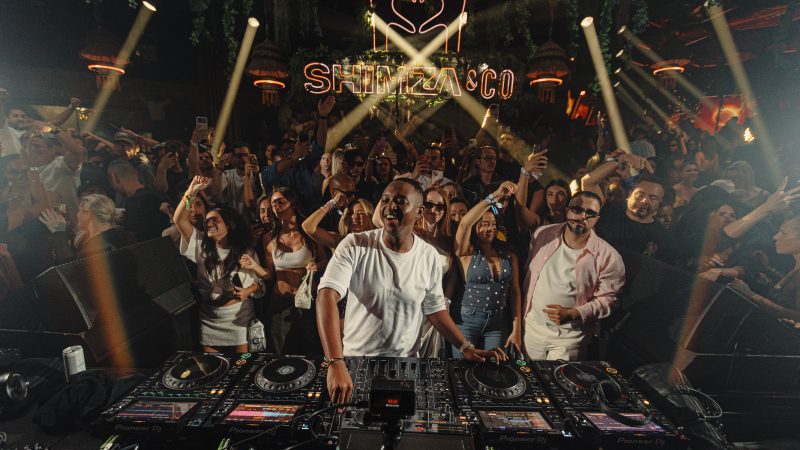
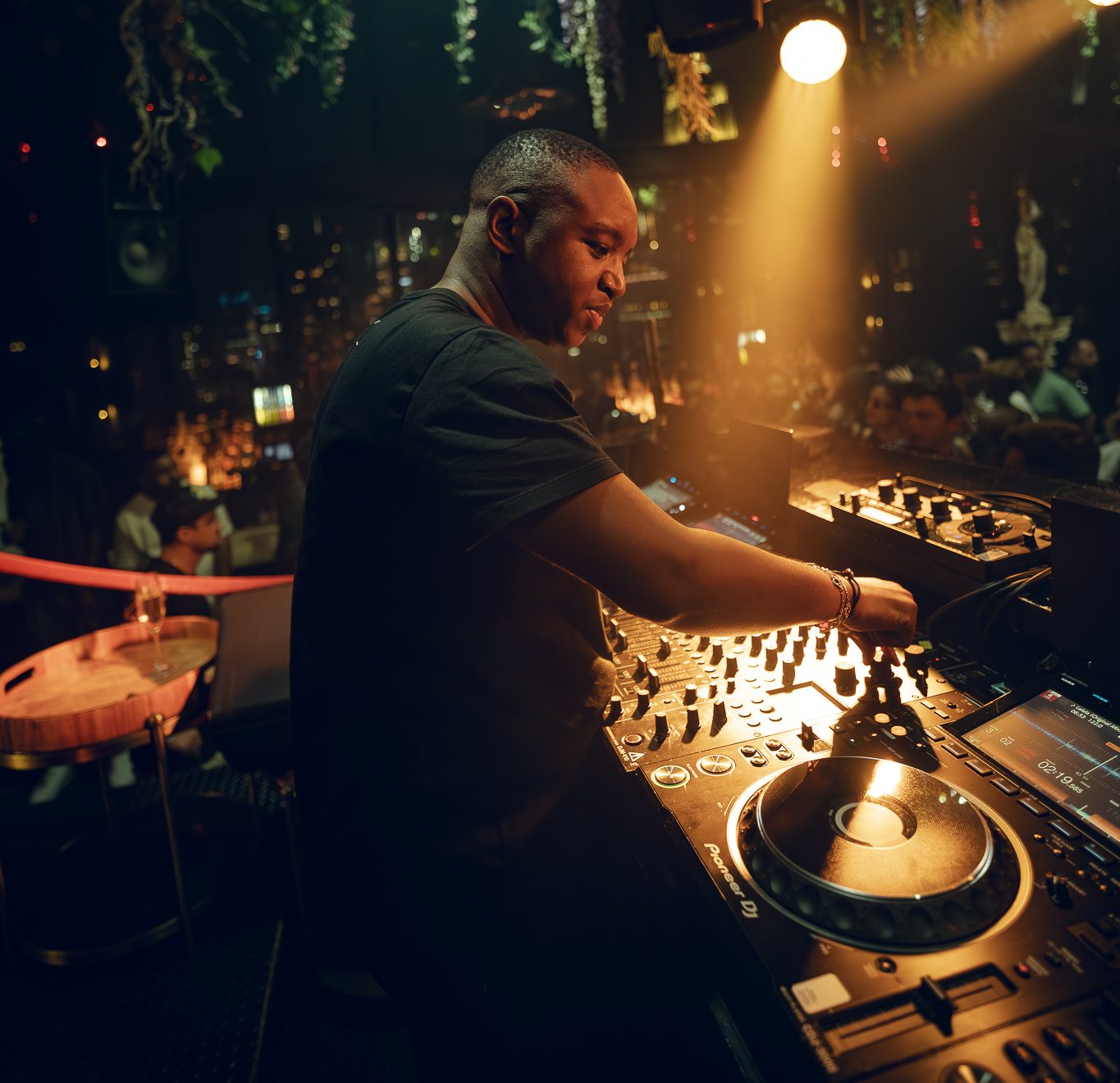
Let’s talk about the technical side of things. You mainly play with a DJM-V10 mixer, right? 

Yes, the DJM-V10. I’m comfortable with it and enjoying it right now. It’s got some new features that I’ve gotten used to using. The reverb is wide. It’s much better. You’ve got two reverbs. 

I don’t really like the A9 mixer because of the echo effect. The echo has the 1/3 that I think was unnecessary, and that confuses me a lot. It makes it a bit difficult for me to be comfortable when I’m using the mixer. So the V10 is the best mixer for me.

And this mainly comes down to the sound and the feel of the FX? 

Yeah, I’m a very fidgety type of DJ, so the effects play a big role in my performance. I was literally messing around with the mixer today, and I figured out another effect that I’ll be using for my set. It’s called the Helix. I found a way to make it work for me in my set.

The reason why I’m so technical is because I used to literally sit down in my room with one CDJ and a mixer and just fidget around to discover new ways in which I can use the features to enhance my performance. Over the years, as I haven’t been able to practice or sit down with the equipment because I’m always on the road, I need to find creative ways through what I learned in the past.

But I am hoping that I can have more time with equipment and be able to find different ways in which I can use it to enhance my performance.

Is it important to you to be continually improving? 

Yeah, I think as a DJ that’s what we should be aiming for: to always be different, so that there is a sense of an edge that you bring when people know that you are playing.

But what I’ve realized is that it’s hard to do anything that other DJs can’t do right now, because all they have to do is watch you DJ once or twice, and then they have the time to go back home to practice until they get it right.

So you always have to innovate, bring something different, and that all comes with caring about what the equipment is there for. Because if those effects were not tried and tested, they would not be on that mixer. So there is a need for them.

Fidgeting with the equipment has always worked for me, and the little time that I have to do that, I always see it as a benefit towards what I do.

Have there been any particular effects or techniques that have been with you since the beginning?

Yeah, the most important one for me has always been the echo. That was my go-to effect. I didn’t even use the reverb. The echo one was the go-to. Even in South Africa, that was the only effect that people used. 

I always thought that the echo effect defined the sound of South African DJs. 

I think it’s the rhythm. It gives the music a different rhythm, and the build-ups come in with, like, it’s doubling the beat. So it gives it a tribalistic feel. I think that’s why we got so attached to it.

But as I traveled, I realized that the less echo I use and the more reverb I use, I make more sense to the audience that I’m playing for. I use the echo less now, and I use the reverb more because I feel like it gives me more of a build-up feel to my sets.

And now there’s that short delay on the left of the V10. That section has, I think, four or six effects, and then with the send and return. Those, for me, help with the reverb and bring in that big energy before I drop.

How about things like Hot Cues and loops? Do they play a role in what you do?

Yeah, they’re important. For instance, this past weekend, I have a Hot Cue that I’ve set for one of my songs called “Fire Fire.” It’s literally in the middle of the song, where the song is in a break, and it comes back from a break and builds up to the final drop.

So what I normally do is I’ll play the full song during the set, and then at the end of the set, because that’s my biggest song, I’ll probably play an acapella or something. But then I don’t have to go look for that cue point in the song. I’ve already set it up, and then I can transition quicker.

So I bring back the song, but I bring it back from the middle of the song towards the end. Those types of things help with performance, because you don’t have to worry about what you’re doing.

On a turntable, you would have those stickers that you would put on the cover to show you where you would find the cue points. But also, with the needle, you’d have to move the needle forward to find that place, and it was not that easy. 

I noticed when you’re mixing you often seem keen to come away from the headphones and often put them down?

For me, it’s two things. One, it’s because I’ve figured that at some shows I’ve played, there’s a delay between the sound that you get from the headphone and what’s really playing on the PA. Normally, if you have the headphone on you would think the mix is right, but when you fade it up, you’ll find that it’s a bit delayed.

So normally what I do is I put on my headphones and then I push the fader up, depending on the sound system. If it’s on cue, I am then in a better position to hear if the mix is right. I prefer listening to the mix on the main system, because that’s what people are hearing. If I can get the feel of that I’m able to drive the room much more effectively.

You tend to roll with four CDJs. Do they each have specific roles? 

I normally use three CDJs—one on the left and two on the right. Most of my acapellas and my tools I put on the far right. I’ll play an acapella on the far right and mix the two songs in between. Sometimes I will let that acapella run, loop the outgoing track, and put in the incoming track.

So at some points I do have three faders up, with three songs going. I’m right-handed, that works better for me.

And you also use an RMX-1000? 

I got to see and experience the RMX-1000 for the first time when it was quite new in the market, not even released yet. I saw Louie Vega using it in Miami. It was during Miami Music Week. For him, it was more like an isolator, because he uses an isolator a lot.

But as I got to explore what it’s all about, I figured out the touchpad with the rolls that you can use. And that, for me now, plays a big role in emphasizing the build-ups towards breaks. That came with traveling. I saw how the snare roll gives people something to alert them that there’s something going to drop, that it’s coming.

I use that a lot, and that’s from exploring and looking at how tech house DJs have been playing, what they like, and what the crowd reacts like when they do that. That’s why it plays an important role in my DJ setup.

Tell us a bit about how you organise music and build playlists.  

Yeah, my system is rekordbox. For me, that’s the best way in which you can sort out your music. I name my playlists according to where I am or what’s happening, so that even when I play at a different show, I’m like, when I was at Coachella, for instance, there’s a song that I played that worked, that would work right now. So I just go to a playlist written for Coachella, and I’ll find the track.

So I sort out my music based on events. I know at this party, I was playing a warm-up set, so all my warm-up music is in this folder. But this worked because when I played it at that place, I remembered that it worked. I don’t really put my music according to sounds.

Are there any kind of steps that you want to take to get comfortable with the music or do any preparation or edits or things like that?

For the Hot Cues and the acapellas, it always helps to prepare that, because then it means you don’t have to try and figure stuff out at shows. Those are the small things that I do. But it’s not all the time, because most of the time my excitement comes from playing new music and having people really enjoy that.

I don’t really play the same set here and there, but there are certain things that I will do at almost every show. I’ve used the Masters At Work “Work” acapella for the longest time. That’s my go-to acapella. But even with that now, I’ve got the Hot Cues that I’ve set up.

Also what I’ve realized with the equipment is that you can store the Hot Cues on your USB while you discover them when you’re DJing. The Memory button, I don’t think a lot of people know about that.

I wanted to ask about production and the role that your own music plays in your sets. I’m wondering, on average, how much of your own music makes up your sets?

I probably play 70% of my own music. But I play a lot of promos that people send to me, because I’m like the lab rat that people use to test their music to see what works. I also give a lot of feedback to people. But yeah man, I play a lot of my productions because it helps me understand what I want to put out as a producer.

Sometimes seeing a song work on the dance floor can shape how you drop the music, how you market it, and who you think can be the best person to get the music first. I play a lot of unreleased music, whether mine or other artists’, because that also excites me. I know that these are songs that people don’t really know. It will be the first time that they are listening to the songs, and they may or may not like them. But their reaction gives me that purpose of being a DJ.

What are the circumstances where you feel like you’re able to give your best performances? When do you feel absolutely at your best?
 
The best times to play are when the DJ booth is right, the equipment is 100%, the monitors are good, and the sound system is perfect. Then you can put me in any room, in any festival, anywhere. When I enjoy what I’m doing, and I feel like I can explore, and the crowd is more open to new music, that’s the best time to play.

That’s when you’ll get the best performance from someone like me, because when the sound system is right, people get to feel the music, they don’t just hear it.

Text: Ryan Keeling