Social media experts advise what to post as a DJ

We asked four social media pros how DJs at any level can build a healthy and sustainable social media following.

Listen to this article, written by Bridge contributor Niamh Ingram

For better or worse, social media has become almost essential for modern DJs. It’s a tool to get seen, reach an (in-theory) endless audience, and establish your own dedicated following. When it works, social media can provide an ideal platform for building a DJ career. As SOFI TUKKER once told us: “People used to hustle selling CDs on the street and now they hustle on social media—it’s just a way to get eyeballs or ears on your art or your skills”. 

Some people are understandably wary of the role social media plays in the modern DJ landscape. 61% of the 2000 people surveyed recently by the Pete Tong DJ Academy believed that social media following is prioritized over musical skill these days. When you consider the number of platforms on offer and the work it takes to find your rhythm with any of them, getting started (or starting over) with social media can be daunting.

There’s no guarantee that followers = success, and it’s tricky to cut through the noise and get yourself heard. The harsh reality is that not everyone will find the traction they’re looking for on social media.  

There are, however, countless success stories out there. Crucially, these stories come in many shapes and sizes. If you want to build an international touring career or become a firm fixture in your local scene, there are many examples to take inspiration from.  

As part of our DJ Career Guide, we’re going to unpack the basics of social media, offering some principles on navigating the digital world as a DJ. While there could never be a step-by-step, one-size-fits-all approach to socials, there are certainly some loose rules to consider.

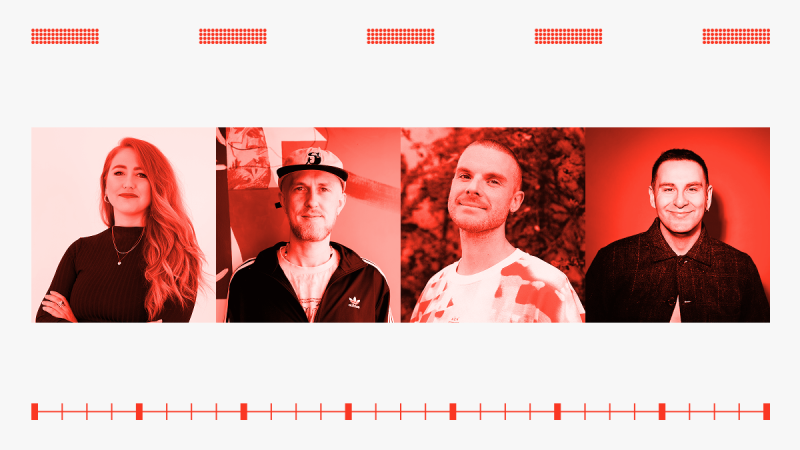
Below we’ve revisited some advice from Myradh Cormican, director of Audience & Partnerships at Frame Artists, which currently works with artists like DJ Boring, Shy FX, and Chase & Status, and Scott Halliday-Dillon, founder of FourFour Digital and, more recently, Your Culture. In his years of experience, he’s worked with artists like Fred again.., Sammy Virji, Overmono and Swedish House Mafia.

We also hear from Seb Wheeler, a music industry professional who specialises in social and digital strategy. Seb was Head of Digital at Mixmag, and now works on social and digital strategy for major and independent artists, labels and event brands, as well as running the club night, radio show, and Substack Tropical Waste.

Finally, Liam James Ward runs content strategy studio Something Something, who work with artists, music brands, cultural brands, and music festivals to tell compelling stories online. Something Something has worked with the likes of Carlita, Fred again.., Sammy Virji, Marlon Hoffstadt, The Chainsmokers, Marshmello, Diplo and others. 

Whether you’re a socials newbie or a seasoned pro wanting a new perspective on socials, there should be some great insights for you here.

What should DJs post?

There’s no set in stone answer to this big question, but a helpful starting point is to think of three or four loose topics you’d like to cover. 

“A key thing for 2026 is context,” said Seb. “We are living through the era of AI slop, repurposed clips and junk being posted relentlessly to social media platforms. In an industry that’s more crowded than ever before, using platforms that are noisier than ever before, fans and audiences are going to want context, because they will want to know what they’re being served and why it’s important. They will want to know why they should bother tapping into what you do, what you make, what you play. They’re also going to want to know that you’re a human being with real interests and knowledge and passion.”

He notes Saint Ludo, Fish56Octagon and Derrick Gee as three key examples who are offering context to what they’re doing in 2026. “As an audience we skew more heavily towards people that are making content that gives context and are going deeper into the stories behind music and music discovery; the people that present music in a more interesting way than ‘here’s a drop from my DJ set’.”

A drop video might have an instant impact by generating views, and they can have a role in your content schedule. But they can also get boring quickly. When we spoke to Jovynn, a DJ who built her career on TikTok, she said, “Try putting yourself in the audience’s shoes when you’re watching back on your content. If it doesn’t spark interest to you then that’ll require some changes to be made.”

To offer context about who you are and what you do, it helps to have a decent understanding of who you are as an artist. What’s the story you’re trying to tell? What kind of sonic and/or visual world are you trying to build? Who is the type of person you’re trying to connect with? It’s good to get a solid understanding of these things to help shape what you post.

It could also be useful to get some input from others. “Work with someone else to help you identify what your own unique qualities are which appeal to others,” Myradh said. “It can be really hard to do this on your own, so crowd source this and get other opinions.”

Try not to overcomplicate this process. Social media should essentially be an extension of what you do as a DJ or producer. “An artist bleeds tracks onto a project file or into a DJ set to really say, ‘This is who I am and this is what I’m trying to tell’,” said Liam. “Typically, imagery, artwork, a music video are all extensions of that. Why does social media have to end up being someone twerking to a Lizzo song? Why can’t it be the most immersive, interesting, worldbuilding part of your whole campaign?

“I don’t want to make that sound like a bigger and higher concept than it needs to be; if you’re that DJ who just wants to show off how hot they are and how cool they are, then cool, show that. That’s who you are authentically as an artist. Just don’t do it because that’s what you think you’re meant to do, because everyone else is doing it.”

When it comes to social media aficionados, there’s one name who immediately springs to mind: Jyoty. A DJ, radio host, and creative producer who recently sold out a headline show at Alexandra Palace, she doesn’t conform to a particular image, rather focusing on meaningful connections.

“Jyoty is the blueprint for the social native DJ,” said Seb. “I think that goes without saying. The way she promoted her Ally Pally show, where you had this blend of high quality produced hero content of her on a throne, and on the flip side, you had her to camera with a mic, explaining how much the show cost, and the intentions behind it… That was a really nice blend of produced and raw.

“It goes exactly back to the point of providing context. She said to her fans, ‘This show’s costing me X amount of money. I’m not going to make any money out of it, but this is why I’m doing it. Here’s why you should come.’ Her storylines were cutting through the noise, and she’s also positioning herself as someone who is a human being with a beating heart and a passion, interest and intention. That’s what people want to follow.”

Seb Wheeler, photo credit: Shot By Melissaa

Which platforms should I use?

Stripping it right back to begin with, it’s time to get familiar with two key platforms: Instagram and TikTok. You should consider other platforms (more on that shortly) but these two are close to essential. Why Instagram and TikTok?

“Instagram has essentially become the modern day website,” said Liam. “If you loved someone 10, 15 years ago, you’d probably Google them and go and check out their website, see where they’re touring, and so on. Instagram has become that central hub. It has so many different surfaces: stories, live, reels, carousels, broadcast channels, and so on. I think that has become the closest thing to an ‘everything app’ that we’ve got. 

“And TikTok is a bit of a no-brainer,” he continued. “Its discovery algorithm is far better than anything else I’ve ever seen in all my years of work on social media. That is why you see so many people putting so much attention into it. The space is way busier than it used to be, but it’s still incredibly important as a discovery and awareness tool. It is where people are doing a lot of their everyday scrolling, so that’s where they’re going to come across stuff.” 

“The first thing I would suggest any artist do before even thinking of setting up a channel is to spend time on it,” Myradh said, a point echoed by Scott: Becoming native to any platform is so important, probably the most important thing. The first step for an artist is to see the way people use and interact with it, learn the type of metrics—what you measure for success—and just start being active and visible on the platform.”

Aside from Instagram and TikTok, consider exploring other social media. The likes of Discord, Twitch, Substack and YouTube all offer opportunities to nourish deeper connections with an audience—perhaps an audience you’ve already established on Instagram and TikTok. These spaces could be where you dive deeper into the story of yourself as a DJ, your interests, or a blend of the two. 

YouTube might become a space to share production tutorials, for instance. You could choose Twitch as a home for an ongoing mix series via its DJ Program. Substack can be a place for essays, thought pieces, and newsletters. Or Discord might foster meaningful conversations with your audience in a space designed for exactly that.

It’s worth thinking about the social aspects of SoundCloud, too. While it’s mostly thought of as a distribution platform for mixes and original tracks, it does still feature networks of potential followers who can like, share, react to music, and send DMs. 

As a rule of thumb, look at whether or not your target music community uses these platforms. For instance, there’s no use starting a Substack if your imagined audience prefers shortform videos. 

But if there’s a clear link between the platform and the people you’re trying to reach, there’s no harm in experimenting and then putting more time into the platform if you see some results. 

As for those thinking about Facebook, the jury is out. “I just don’t know who’s there,” said Seb. “People have migrated. Anecdotally, I was using Facebook for an artist recently, and even though they’ve this huge number of followers, their engagement is still so low.”

Liam wouldn’t necessarily push a new DJ towards Facebook, but he’s still reluctant to write it off. “Fundamentally I have a problem with anyone ever calling a platform dead,” he said. “I will hear people all the time say platforms are dead and then they’ll say, ‘I scroll on there, I just don’t post’. So therefore is a platform dead? 

“I can’t remember the last time I posted something on Facebook, but every now and again I might find myself just pulled into that app scrolling a little bit, seeing what all my old school friends are doing and so on. So when I hear people saying, ‘I don’t post on a platform anymore,’ but at the same time I’m hearing loads of people saying that they’re scrolling on there all the time, I think: free real estate!”

In summary: Make a profile on Instagram and TikTok, and get to know how they work. Play around with their features, and see if any of their functionalities gel nicely with you—seeing what these platforms offer might inspire some ideas for what you can post. There’s no harm in exploring other social media, but for most DJs the majority of your potential audience will be on Instagram and TikTok, so embracing them is key.
Myradh Cormican

The importance of consistency and coherence

How much should DJs actually post? Ultimately, there’s no set amount, but the rule of thumb, according to both Liam and Seb, is as much as you (realistically) can.

“That’s not me being an evil social media strategist,” said Seb. “Platforms, especially TikTok, reward consistency and you do have to play the game if you want to cut through.”

“It’s not about frequency, it’s about consistency,” Liam said. “If you can post 5 to 10 really good quality—and by good quality I don’t mean shot on a high-res camera, I mean it has value and extends the message you’re trying to tell—if you can post 10 pieces of content a day and keep that up, go for it. But at the same time, if that’s not you and you are someone who’s going to post like a couple times a week, if not maybe even once a week, then go for it. As long as you’re consistent, I’d rather have two good posts a week than a post every day that’s really hit or miss.”

A plan can help here. It doesn’t have to be extensive, but a plan offers some structure and can keep any last-minute panic at bay. “Make a plan for your socials that includes interesting content, consistent posting, and your own tone of voice. Make a plan and stick to it,” said Seb. “So often artists will have a plan, be doing all this great work and maybe something on social doesn’t land like they thought it would, or they forget to post, or life gets in the way. Honestly, the best thing you can do is be consistent, stick with it.”

A helpful way to build your content plan is by looking at what you’ve got coming up—a key gig, perhaps—and framing your output around that. “The more cool stuff you do IRL or within a community, the more followers you’ll get naturally, because people have seen you doing cool shit and they want to follow you,” Seb said. “That makes sense. But then also you’ve then got to amplify all of that IRL activity on social. So if you’ve got loads of stuff going on, you’ll have loads of stuff to post about anyway.”

Having a consistent amount of posting going out is a lot easier on the algorithm,” said Liam. Once a platform’s algorithm notices an account becoming a regular, engaged user, it’ll naturally suggest that profile to other profiles, thus growing the account. “There isn’t a one-size-fits-all answer to how much someone should post; it’s about being very honest with yourself as to what your genuine output is. That being said, I don’t want someone reading this and going, ‘Liam said I can post once a week and that’s fine’. Ultimately, if you’ve got a lot more to say and you’re using this as an excuse to be lazy, you ain’t going to win.”

To conclude: work out a pattern of posting that feels achievable for you, and consider putting together a basic content plan of what you’d like to share over a set period of time. Committing to consistency is crucial to growth on social media.

Some thoughts on overpromotion

Post as consistently as you realistically can. Got it. But what if this comes across like you’re overdoing it?

“I do think it’s a bit difficult because you don’t have control over who is seeing your content,” said Liam. “If you’ve got an artist who is headlining a festival, but before the festival goes and does a busking set in the city just for fun, you cannot assume that posting those two pieces of content is going to be seen by the same people.

“The algorithm might determine that it’s going to show one to people who it knows loves content about busking or acoustic music, and then the stuff that’s superstar festival level content might get served to a completely different part of even your own audience. It’s tough. You could also post 10 things about your upcoming show and if one person sees that 10 times then they might start to think it’s getting a bit rammed down their throat.

“I think what’s really important is ensuring that social media is not simply a broadcast channel,” Liam continued. “You need to be listening to your audience. You need to be in the comments. You need to be looking at the analytics and the results much more than just the views and likes, visible in your account settings when you’ve got a ‘creator’ profile (which you can activate in your settings). Actually go and see what was served to x% of your existing followers. I do feel like I would rather be in a situation where people are accusing me of overpromoting than be in a position where I’m being accused of underpromoting. Once you get over your fear of being cringe, the likelihood that you will get everything you’ve ever wanted is more likely.”

Liam James Ward

Embrace trends—with caution

If you’re stuck on what to post, consider looking at current trends for some inspiration. A word of caution, though: imitation is not the goal.

“When a certain type of video is trending, think about how you can add your own unique twist on it which is relevant to you,” said Myradh. “Trends are a great starting point for creativity; they give you a template to add your personality to. Follow people outside of your niche, in different artistic disciplines. They will make you think in different ways and help you to come up with more original ideas than just following your peers.” By looking to those in other creative spaces, who will approach content in different ways, you’ll be exposed to different trends, feeding originality rather than strictly following your crowd.

Ultimately, emulating trends won’t help you stand out. Sure, you might get a quick hit of views—maybe even a viral moment—but it’s rare that a piece of viral content alone will assist in cutting through the noise in the long term. 

“Everyone’s always looking to the most recent success, and thinking how to emulate that,” said Liam. “It just doesn’t work. I’ve worked in this industry long enough now to see enough times where people go and jump on a hype or copy whatever Fred again..’s doing, or what Charli XCX does.

“I think where a lot of artists can trip themselves up is by looking at what everyone else is doing and thinking that’s what they have to do. We as a company massively pride ourselves on working with artists and never making two campaigns look the same. Of course, there’s always going to need to be an understanding of how platforms work, an understanding of best practices, and an understanding of trends to have an informed decision. 

“But the decision might be to go in the complete opposite direction. If you end up looking at what the most viral thing was yesterday, and just doing that over and over and over again, sure, you might amass a bunch of followers. But I’ve also seen people who’ve got a million followers on TikTok, I go and see them IRL, and there’s less than 100 people there. You can end up in this place where you have a bit of a styrofoam audience if you’re just constantly following the trends and not building connections.”

Status anxiety is real

Comparing yourself to others is rarely beneficial. Sure, taking inspiration from trends can be helpful, but when digging and familiarising turns into more of an obsessive behaviour, it might be worth taking a step back.

“Don’t be looking at what everyone else is doing and trying to think of how you do that,” said Liam. “Comparison is the thief of joy. If you’re thinking, ‘Oh, all my peers are blowing up, why am I not doing this? I need to just go and do what they’re doing.’ That is what you absolutely should not be doing”.

If a piece of content doesn’t land as you expected, try not to go looking for evidence of other people’s successes, or panic and delete the post.  

“Always keep it up, especially in the case of TikTok,” said Seb. “TikTok rewards consistency and volume, and I believe it doesn’t like it when you delete stuff. When you do have a hit on there, your previous posts get a nice bump in engagement, too. Stick with it. There’s ways of hiding likes and hiding engagement, or maybe archiving stuff or uncollaborating after a certain amount of time, but just keep it. If anything, it’s good for your ego. In 6, 8, 12, months, when stuff is popping off, you can always look back at your old posts and think, ‘I remember when I was only getting X amount of engagement.’ Back yourself.”

“At the end of the day, it’s not life or death, it’s just social media,” Myradh said. “If it’s damaging your mental health it shouldn’t be a priority.” If you’re in a position where you’re doomscrolling daily, and it’s genuinely affecting your wellbeing, it’s probably time to put your phone down. 

Social media is simply a canvas to showcase yourself as an artist, your creativity, and show people what you do and why you do it. “If you’re involved in music in any way, just remember that at the heart of it is fandom and passion and a love for listening to music, playing music, making music, experiencing music with other people, and by extension, your artist career should be fun,” Seb said. “When all is said and done, it should be passion. It should be love, it should be fun. So whenever you’re feeling a bit down on yourself, or you’re watching other people, bring it back to that initial love of it.”

Scott Halliday-Dillon

In summary…

The journey with social media is going to be different for everyone. To thrive in the digital space, you need to carve a unique path, rather than imitate. Your path will entail some self reflection, a bit of discipline, and appreciating the role of social media as a tool to simply extend your artistry. There will be challenges, it won’t always be an easy ride, but try to learn stuff and enjoy it.

Liam put it nicely: “You should always follow your gut and just go for it. Swing for the fences. And if someone who probably hates themselves is making comments about how you’re overpromoting yourself, or you’re cringe, or if someone who doesn’t even begin to understand the dream that you have and what you’re trying to build and achieve in this world is telling you that you’re overdoing it and trying too hard, you’ve got to brush that off. Own it.”

Text: Nimah Ingram