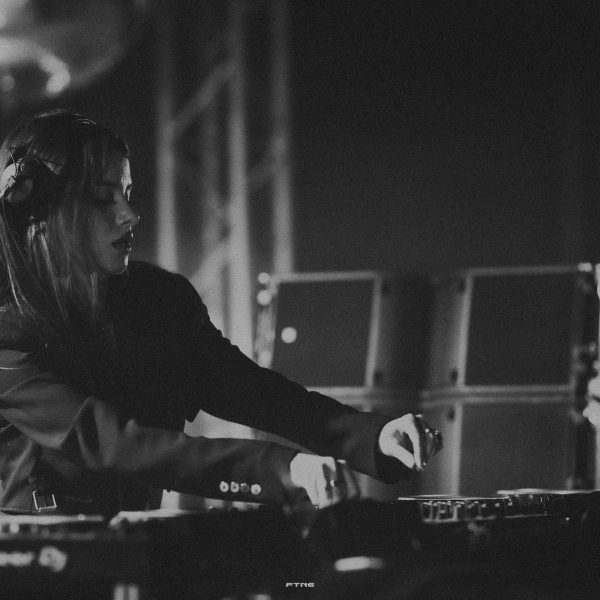
How Djrum built one of dance music’s most distinctive DJ styles

Three turntables, a record bag spanning ambient to breakcore, turntablist techniques: Djrum explains the philosophy behind his DJing.

When I spoke with Felix Manuel, the DJ and producer better known as Djrum (pronounced “drum”), he was preparing for a three-date tour of the US and was facing a dilemma that’s a bit less common for DJs these days: he was trying to decide what vinyl to pack. Not only would he need to anticipate the records that would work at all three gigs, one of those gigs, at Nowadays in New York, was an all-night set.

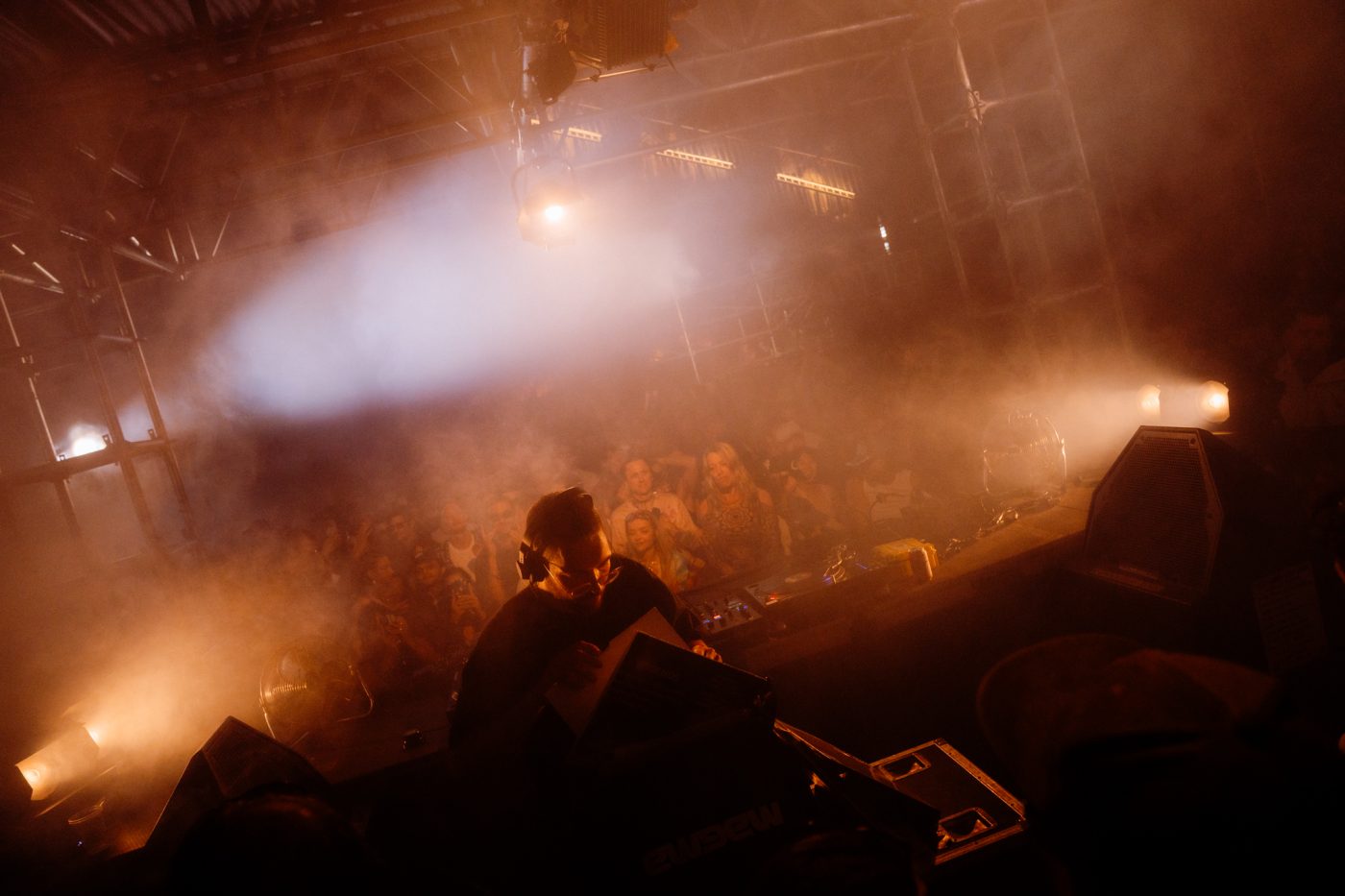
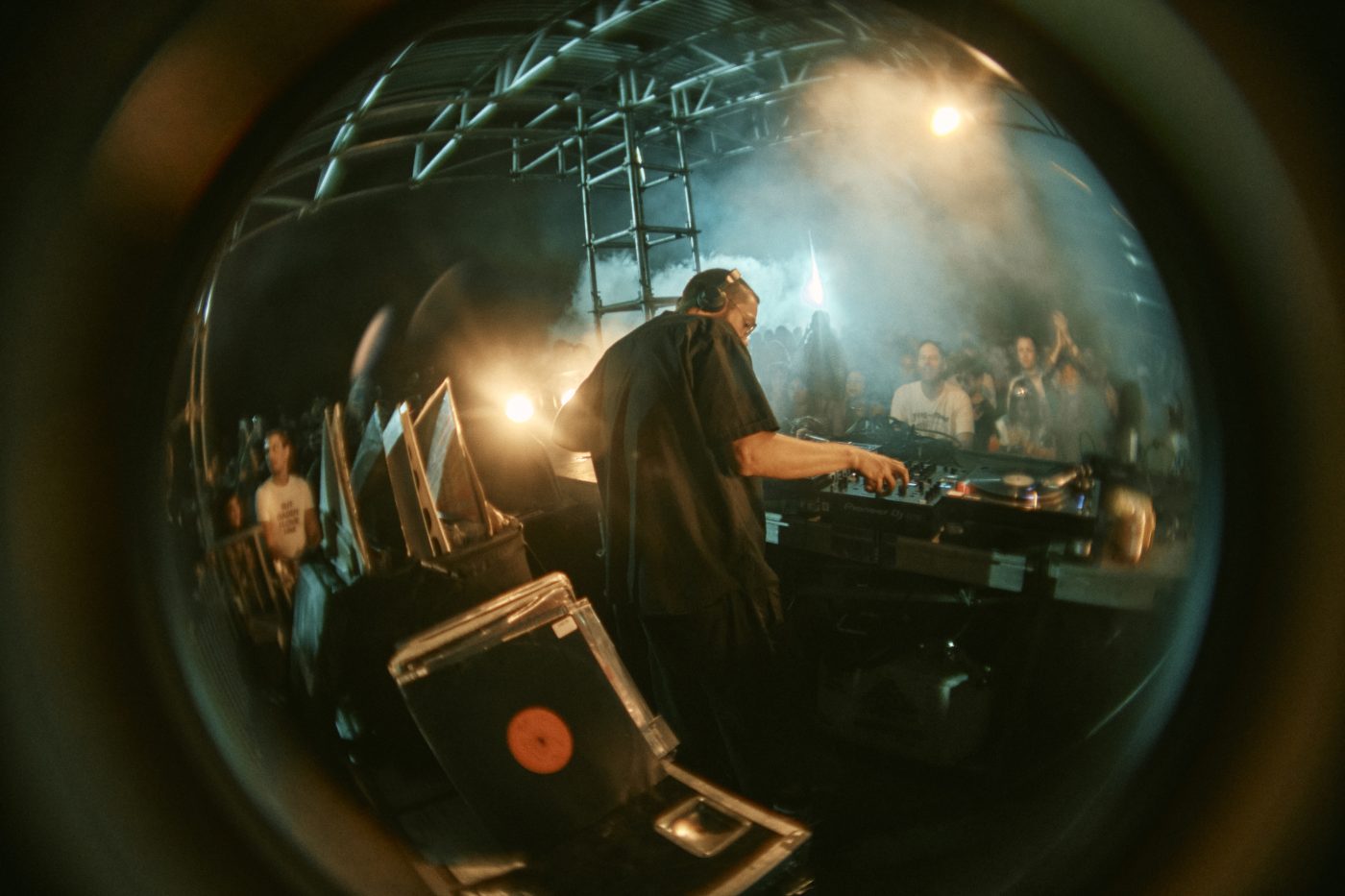
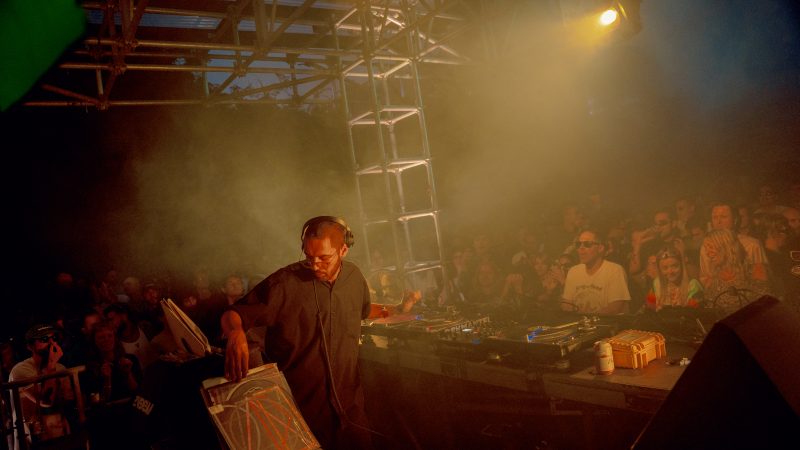
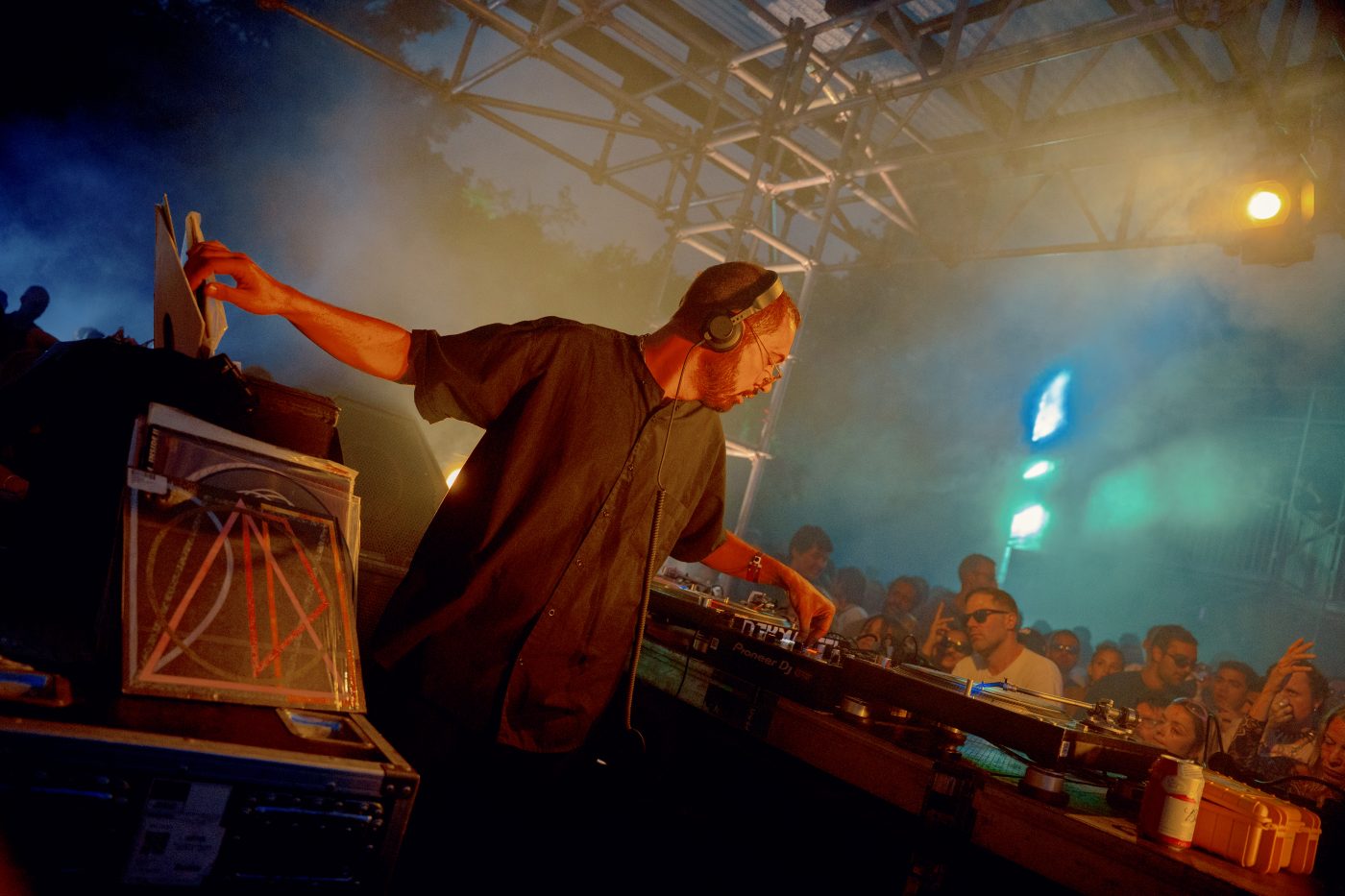
Further complicating things was the way Felix DJs. It’s difficult to neatly summarise his style, but he basically plays a range of club music (techno, IDM, jungle etc.) and non-club music (jazz, classical, ambient etc.) with the flair of a turntablist. A typical set might span 85 to 200 BPM and will be marked by Felix’s unique approach to multi-track layering and genre and tempo combinations. He uses three turntables, and when combined with FX, it truly feels like he’s playing an instrument.  

As you might expect, all of this requires lots of preparation. Scratching classical music over 200-BPM breakcore, for example, or mixing together unquantized records requires some thought. But it would be wrong to assume that Felix plans everything out; on the contrary, he adores improvisation. 

His sets are a thrilling blend of prepared transitions, improvisation, and creative choices shaped by the condition of the turntables he’s using that night. “It’s part of the fun,” he said. “This all becomes part of the puzzle of trying to fit everything together.”

You might also reasonably assume that Felix is a vinyl purist—when in fact he’s intrigued by the possibilities of playing digitally. He just sees CDJs as a “different instrument” to the one he currently plays. 

All of which makes Djrum a fascinating case study in just how far the tools and techniques of DJing can be pushed. You can catch Djrum in full flow on his entry

Plenty has been written and said about your particular style of DJing, but I was keen to hear you describe it in your own words. 

I think technically, a lot of my DJing comes from a hip-hop background. I am very crossfader-focused for that reason. There’s scratching, there’s cutting. I’ll always have the fader on cut. I have to have a crossfader in order to play. I mean, I’ve played on a rotary and I’ve played on Allen & Heath and some less crossfader-focused tech, but yeah, the crossfader is really crucial to what I do.

So whilst I’ve got that technicality from hip-hop and turntablism, I’m applying it to some more minimal styles of music, like techno and techno variants of many other genres, which have things stripped back and have things taking longer to happen. So you can’t always use those really quick chopping techniques with those genres.

I’ve learned different techniques from each genre. So, for example, with “long blend” types of music, I will apply long blend techniques like EQ and FX. 

I play multiple genres and multiple different paces as well. There’ll be some really fast-paced moments and then some more like long-blend moments. And it’s creating a kind of a dynamic flow where the pace changes a lot.

I don’t just mean BPM or pace in terms of energy level, you know, I think people often confuse BPM and energy level as if, you know, you can’t have a really mellow jungle or you can’t have a house track at 110 BPM. I’ve talked about telling a story and I think that’s very much it, like I want to go places in my set. I don’t tend to just roll along on one thing. 

Oh, and I use three turntables. That’s key to what I do. But I’ve only been doing that since 2020.

Oh wow, from your sets I’d have guessed you’d been doing it for much longer.

Yeah, so I did a three-deck set for the fabric’s lockdown series on Tower Bridge. And that was the first time I’d ever played publicly with three turntables. In lockdown I moved my studio and for the first time was able to set up three at home.

I had it in my head for a long time like sure, I could do it and it would open up things completely. But oh man, the first mix I had was just a total car crash and I was just like, this is impossible. But I just persisted. I mean, it was lockdown, so there was time to be shit for a little while. 

I’ve only played with three turntables since then and I feel naked with two. It feels wrong. Maybe I’ll add a fourth at some point or a drum machine or something like that. But for now, it’s a different craft to two turntables.

I would pack a completely different bag if I was packing for two turntables. And with three, it’s so much more about DJ tools.

From watching you it almost seems like the third deck is treated like an instrument. 

The three decks don’t have specific roles. I might pick up an acapella and it could go on any one of the decks. There’s always a kind of puzzle as well, because inevitably the decks are all behaving slightly differently on the night. Whether that’s needles or tonearms or vibrations that are different on that side of the table to that side of the table. Sometimes I get feedback issues. I have to think about not playing a 33 RPM record on that deck, or an album track on that turntable because it’s going to feed back. 

This all becomes part of the puzzle of trying to fit everything together. There might be one needle that’s not scratching well, and so I’ll reach for something that I want to scratch with, and I’m like, Oh, shit, I don’t want to put it on that deck, I better mix something else first, and, you know, that becomes part of the puzzle of what record goes next.

It’s interesting because you don’t sound stressed by this. It sounds almost like it’s part of the creative flow and the challenge of it.

It’s part of the fun. It’s wonderful when everything’s working perfectly and I get to just go from the outset. I have sets like that. And then there are other times when I have to spend about half an hour figuring things out, the quirks, OK that’s how I’m going to play and now I can start getting into fine tuning and really nailing it.

Do you practice much at home?

My practise at home is a lot of listening to the records and having little funny mixes that aren’t really mixes. I might have got a new tune and I just want to listen to that. I’ll put it on and then I’ll mix out of it, and then I would mix it back in, and then I’ll mix it into something else, and then I’ll mix it back in. It isn’t really me having a mix, but it is me practicing. You know, if I go on holiday for a week or two and don’t DJ, my beat matching is not quite as good.

My home mixing is just keeping me sharp. I have a full-on mix when I pack my bag. That’s part of the process of packing the bag. Inevitably I’ll get to a tune and I mix out of it—not to my satisfaction—and I’ll think, Oh no, what could go with that? And then I’ll have a proper head scratch about that one tune that’s difficult. Often it’s something that’s not necessarily an electronic dance tune, but it’s something a little bit leftfield and it might not keep time, it might not be quantized, and that requires a lot more work because you’re having to ride the pitch. And so there are “trouble tunes,” and they go into the bag with a companion tune—like, these ones need to go together. It’s a safety net. It’s all about figuring out how to play the difficult ones.

I was going to ask how much of your sets are improvised. But I realise now that might be difficult to actually quantify.

That’s absolutely true. When I first started playing like 20, 25 years ago, I would plan the whole set tune by tune. Maybe like everyone does when they’re starting out. But now that would be so boring for me and I can’t imagine it working, to have a fixed idea and have to do it. And so I got away from that as soon as I could, and that’s about confidence.

I think with my personality as well: I’m an improviser, I think on my feet, that’s where I’m best. So it makes sense for me to do that, planning just stressed me out.

Packing my bag stresses me out a lot. That’s a big creative question. I might have that record bag for three gigs that weekend before I come home. And they might be three very different gigs. So I have to pack a bag that’s going to work for all three. I go on tour sometimes and I’ll have a month’s worth of sets coming from the same bag. Bag-packing is an art in itself.

Credit: Yan Yango

Does the stress come from decision paralysis?

Oh, totally. I’m having to guess what’s going to happen and what the crowd’s going to be like. Like, for the first time going to a new country, I won’t really know what the scene’s like there, I always ask the promoters a lot of questions.

I think of it like a balance between an artist and an entertainer. I think an entertainer is like, what the crowd want, they get. That’s pure entertainment. It’s for you. It’s about the crowd. And an artist is more like, I have a vision, I have this story I want to tell, and I’m going to tell it. If you don’t like it, fine. But I’ve got my thing I want to say.

And I think as a DJ, sometimes I’m more on the entertainer side and sometimes I’m more on the artist side. I’m trying to strike a balance. Sometimes I can see the crowd is maybe not as comfortable with a certain genre and so I’m not going to push it. If they’re struggling with it—calm down, cool it off, bring it to something that you think they can connect a little bit better with. That’s the conversation. I want to entertain people. I want them to go away feeling good about the set. And so sometimes I sacrifice the artist in me for that.

But if I’m doing a headline show, I know people are there for me, they want to see me do my thing and I’ll just play what I want, you know.

Might you go up and down this entertainer-artist scale during a single set?

Yeah totally. That’s just being responsive as a DJ, particularly if I have enough tunes to be responsive. Whereas if I’m in a situation where I’ve got to play the whole bag, because I’m playing for four hours or whatever, then yeah, they’re getting the whole bag. I made my choices when I packed.

With all of this in mind, are you ever tempted to switch to playing digitally?

I’m tempted all the time, of course. I first need to say that I’m not a purist at all about turntablism. It’s not about it being the original and the correct or real way to DJ, any of that stuff. I started out on turntables and I fell in love with that artform. But I think that the many alternatives are wonderful in their own right. They’re different instruments. You know, it’s like saying to a cello player, why don’t you play the piano?

I started on two decks and I took a while to get the hang of that. I’ve just got the hang of the third. And so the idea of totally switching it up? It’s like a whole other thing. I’d love a million lives to learn a million things. I’m quite a detailed person and I’m still working on this setup. I’ve still got a lot to learn. So when I’ve completed this one then maybe I’ll look at another setup.

I wanted to ask you about scratching. I feel like it’s come in and out of fashion in dance music. I remember, for example, lots of techno DJs scratching in the ‘90s and early 2000s. But in later years it felt like scratching was somehow passe. How do you see it now? 

If you listen to the style of scratching that you’re talking about in techno in the 90s, it was very directly the same techniques that had come from hip-hop. They sounded like hip-hop scratching. And I know a lot of those people were grabbing battle records with the fresh! sample and actually using the same sounds as hip-hop guys as well. And so it was very directly like a hip-hop-techno hybrid. And it died partly because no one was coming up with new techniques and no one was coming up with new sounds. It wasn’t kept interesting.

I’ve got loads of battle records, and I use them a lot at home, actually I don’t really anymore, I learn on them, I guess, but I never get them out in sets. Instead I’m working with what’s there in my tunes. And so I’ll scratch them. If I’m playing techno and there’s like a breakdown or something, I’ll scratch with that. I’ll scratch with the sounds in the techno tune and I’ll use it as a way to tease things before I mix the tune in, or to tease things out after I’ve played the tune.

A lot of the time you don’t even necessarily know it’s scratching because I’m doing a subtle technique. And then other times it is more direct, but I’m not really scratching in a very hip-hop-sounding way. I’m using it a lot more to make sound effects. I’m running it through delays.

I’ve been doing some scratching quite a lot recently with the looping on the DJM-A9. You’ve got the touchscreen on the looper and that’s wild for scratching. I don’t have one at home, so I’ve only been practising this out at gigs. It sounds very glitchy.

When I started playing more dance music genres, I didn’t scratch. I didn’t know how to make it sound good on what I was playing. It did sound really like pastiche hip-hop over the top of whatever I was playing. It sounded cheesy, so I didn’t want to do that. But then it crept in because I figured out ways to make it sound different and interesting. But that took time. It was years.

A lot of the time it’s just doing background atmospheres, there might be just like a wind sound in a breakdown of something. And now I’m using that with a bit of delay to just make swoops over the top of the track playing. If you have a wind sound or a sound that’s like a rush—then just a bit of crossfader work and it sounds like a riser or a swoop effect, which can really be useful to indicate a change in momentum.

Credit: Karl Magee

You’re one of the only people I’ve heard talking about mixing in terms of tracks’ complimentary frequencies. Could you explain that? Did this approach stem from any particular experiences?

No, I think it’s more about wanting to layer things up and wanting to have more creative control over what I’m doing. It started with having tunes that felt really danceable but just had no low-end. I play bass-oriented music. If I then drop a percussion tune, which is all hand drums and singing over the top and no electronic subbass it’s going to sound really out of place. So I was like, I need tunes that just do bass.

From that, then thinking about tunes that I wanted to add into the mix that I like: classical music, some jazz, maybe a tune that’s just a solo saxophone or something like that. It’s great and it will layer really nicely, but like it doesn’t have a beat. So I need tunes that just have a beat.

And then some of these bass tunes don’t have hi-hats. There is nothing at the top. And if you’ve had no hi-hats, you can bubble along on bass alone for a while. And when you do bring in a hi-hat, it can just be the tiniest little hi-hat, and everyone goes, Woah!

So then OK, what are the hi-hat tunes? Do I have tunes that are just up there? That’s maybe a harder one, but it’s maybe thinking from the perspective of being a producer, and kind of understanding how they need to fit together.

Do you have a process for digging for music? Is there a routine that you follow?

No, I’m not very good at routines in general. And I’ve made that work for me. So I’m always switching it up and I think I’ve used that to my advantage. I like record shops. I love record shops and that is still the best place to find something. I love browsing online as well, but I will find different stuff that way to what I’ll find in record shops—because of the funny little label that someone in the record shop wrote about it or whatever. That’s precious to me, and I enjoy it.

In terms of my philosophy of digging, I’m very open-minded. I try stuff that I don’t know but I think I might like because it just looks like it’s the right label and the right era. I push myself, and particularly if I’m in a record store, I’ll definitely push myself to not just grab the stuff I know.

I probably couldn’t even articulate to you a lot of the instincts that I have on records in a store. It is very intuitive. But I don’t think that anything is lost shopping online. I just think it’s a matter of what you gain and what you don’t gain.

I wondered if you would be able to frame a couple of top level strategies that you use for moving between genres and tempos.

There are definitely tunes that start out with just melody and that melody could be any genre until the beat comes in. So at that point, the world’s your oyster and it could mix with anything. That’s broadly how changing genre works, just spotting the parts of the tune that are less within a genre. It’s modular thinking—thinking about tunes as collections of parts that you can use.

In terms of techniques for tempo shifts, same thing again. You might have a tune that has a beatless bit at the beginning, where it’s pads and you can’t fully tell where the pulse is. Or if there’s a melodic intro that has a sense of a pulse but it’s not really obvious, you can blur it with effects like reverb or delay to make it non-specific in tempo until the beat comes and you’re committed to that tempo. But at the beginning, that could layer over anything.

Really sharp changes in tempo have to be very carefully navigated, and I will often use halving to make that work. I might be at 170, and then I halve it to 85. And then from 85, 120 BPM sounds like an uplift in pace but I got there quite smoothly from 170. So you can go back around and I’ve been doing that a lot with 200 BPM recently, getting faster and faster up to 200 BPM hard techno, gabber stuff, breakcore, and then and then coming out to 100 BPM and then back up again. You can kind of loop around like that.

It’s about what the crowd can follow. With other ratios, you get into some of this polymeter and polyrhythm stuff and that can really spin a crowd out in a way that’s not necessarily good. But I’m finding more and more people can get with that. But with some of these tempo shifts, you see people uncomfortably adjusting to the new tempo, so it needs to feel like it makes sense.

Some people think of a dance floor as being a place that has to be popping the entire time. If I get a sense that people are moving in and out of the dance floor a lot then I may be more inclined to keep it rolling. But if I feel like I’ve got a captive audience, I can give you a bit of a break. We don’t have to go hard the whole time. We can have some little moments and we can go up and down, we can change our energy levels together

I guess there’s a nervousness that DJs feel about people not vigorously dancing.

We’re here to have a good time but that doesn’t necessarily mean shaking our limbs as fast as possible all the time. I think it’s naive and restrictive to just judge it by how hard people are dancing. And I’ve also learned this by travelling to different countries and different cultures, not everyone responds in the same way.

Credit: Atacan Tutulmazay

Tell me about your choice of mixer.

I exclusively use Pioneer DJ for mixers. It’s a crossfader thing. The Pioneer has a great crossfader. I’ve been using the DJM-A9. That’s specified on my rider at the moment. With the other DJMs, I’ve just gone through the evolution really, and I’ve generally been using whatever’s the latest one.

Now we’ve got the V10, this is a whole other interesting thing. Oh, the only exception to that is when they started taking out phono from some channels. So there are some models that don’t have phono all the way along the channels. So the V10 is a little bit of a problem there. I’ve been doing these back-to-backs with Skee Mask where he’s on the right with three, or sometimes two, CDJs, and then I’m on the left with my three turntables. But we can’t assign the three turntables to one, two, and three. They have to be one, three, and five. So we have to label it all up because it’s not in order of how they’re laid out on the table, which is a nightmare.

But I really like the V10, particularly for back-to-backs. The dual cueing is amazing, and that is really important. That’s just changed back-to-backs. I don’t like the idea of it’s your turn, my turn. We can just play at the same time, can’t we?

Like with what I was talking about with modular, frequency mixing—I’ll handle the bass and you handle the tops or whatever. If you’re mixing like that, you don’t have to take it in turns. You can just be doing different parts of what’s going on. It’s a bit more like a live jam. I’ve done some wicked sets where we’re just flowing, we’re both just on the entire set.

I wanted to ask you about FX. It seems like delays are a massive part of what you do. Would that be fair?

Yeah, it would. It varies and there are sometimes technical reasons why I might use a lot of delay, because I’m struggling with one of the turntables or something like that. Or I’m having a lot of situations where I’m missing cues because the needle’s jumping and then I’m having to do really quick mixes and the delay really helps with that.

I love it, though. I love dub and I love the sound of those delays and just being able to complement the tunes like that, it’s super useful. I’ve been using the looping Roll FX in some mad creative ways. I’ve been using it texturally, like having quite textural stuff and just using it to break that up. Kind of like scratching atmospheres but not using the crossfader; it gives a crossfader-y sound because it jumps in and out. I’m going deep on that at the moment.

Let’s talk about your DJ-Kicks mix. How did you approach the project?

So because of the various technicalities of how the mix has to be put together as a compilation and so on, it’s not a start-to-finish DJ mix that happened one day. It’s a crafted album that I’ve put together in the studio involving recordings of me mixing on vinyl. And I’m putting it together as an album that exists as a mix. I’ve approached it as an album. Have you listened to it?

Yes, it’s fantastic.

Oh, thank you. I really wanted it to have a lot of the character of my vinyl DJ sets as well as the character of my productions. I’ve always felt a sort of a disconnect between who I am as a producer, the way I am in the studio, versus who I am as a DJ in clubs. And people are often surprised when they’ve heard my productions and then they come and see me play and it’s quite different. It’s a lot more club-focused, and it’s not necessarily what you’d expect. I don’t play my own stuff often enough, for sure. I should play it more, actually. Anyway, the DJ-Kicks is a real opportunity to put together something that bridges the gap a bit between those two quite different things, particularly as it’s an opportunity to put exclusive tracks in and there, three or four tracks that I’ve composed specifically for the mix.

In the last few years, I’ve really gotten a name for myself as a DJ, and I was like, Oh shit, if I go all the way to the production side of things for DJ-Kicks, I think I might disappoint some people that are interested in me as a vinyl DJ. And so I wanted to bring both together. I recorded a bunch of takes of me doing vinyl mixes. With the way it works, you have to pick out all the tunes first and make sure you can get the licence for them, and so I tried to treat that process a bit like packing a record bag.

I worked with what I had, did a bunch of mixes, recorded them, took them into the studio, slotted in the tunes that were exclusives or not on vinyl yet, that kind of thing. And then I went back and forth a couple of times—OK, now I’ve got a better idea of the mix, now I’m going to rerecord some different stuff. And I did the overdubs and stuff like that.

I think some people have this idea that an approach like that is kind of cheating—you shouldn’t mix vinyl with production techniques. But for me, I wanted to tell a certain story and wanted it to sound a certain way. Thinking like that, I would have put a restriction on myself. I feel I’ve proven myself as a DJ in other ways. In terms of vinyl, I don’t feel the need to kind of show off, “Oh, I did this in one take.”

If you want to see me in one take, watch a video. Come and see me live. That’s me in one take, and there’s plenty of opportunities for that. This is a studio album. You’re not seeing me do it. You’re not witnessing a moment. This is about telling a certain story and creating a narrative and exploring a sound world.
Text: Ryan Keeling
Header photo credit: Yan Yango