What was it like to DJ in the 1980s?

The 1980s was a pivotal decade in DJ culture. With the help of five venerable DJs, we look back at the musical developments, gear, and techniques that shaped the era.

Listen to this article, written by Bridge contributor Marcus Barnes

In the first installment of this series, we learned how DJs of the 1970s created the foundations for modern DJ culture. It was a pioneering decade in which record collectors began to emerge from obscurity and become more prominent. Across radio, clubs and bars, DJs of the ‘70s began to shape the earliest archetypes of the DJs we know today.

In talking to various DJs from the 1980s, it’s clear the early part of the decade was similar to the ‘70s. However, as the ‘80s progressed there were monumental shifts, which can be traced back to the advent of hip-hop (which itself was originally influenced by Jamaican sound systems), the birth of house and techno, and technological advancements in DJ gear. What began in the ‘70s spilled over into the ‘80s and began to truly flourish, driven by incredible new music.

By the end of the ‘80s, the DJ had gone from the person in the corner no one cared much about, to the centre of attention in what was becoming a global movement. 

The evolution of DJ gear

For much of the early 1980s, the equipment available to DJs was a far cry from the standardised setups found in clubs today. Some began with all-in-one consoles, with two turntables, a mixer and an amplifier housed in a single unit. They were practical for home use but also cumbersome, even if they offered an accessible entry point into a world where specialist DJ equipment was not always easy to find.

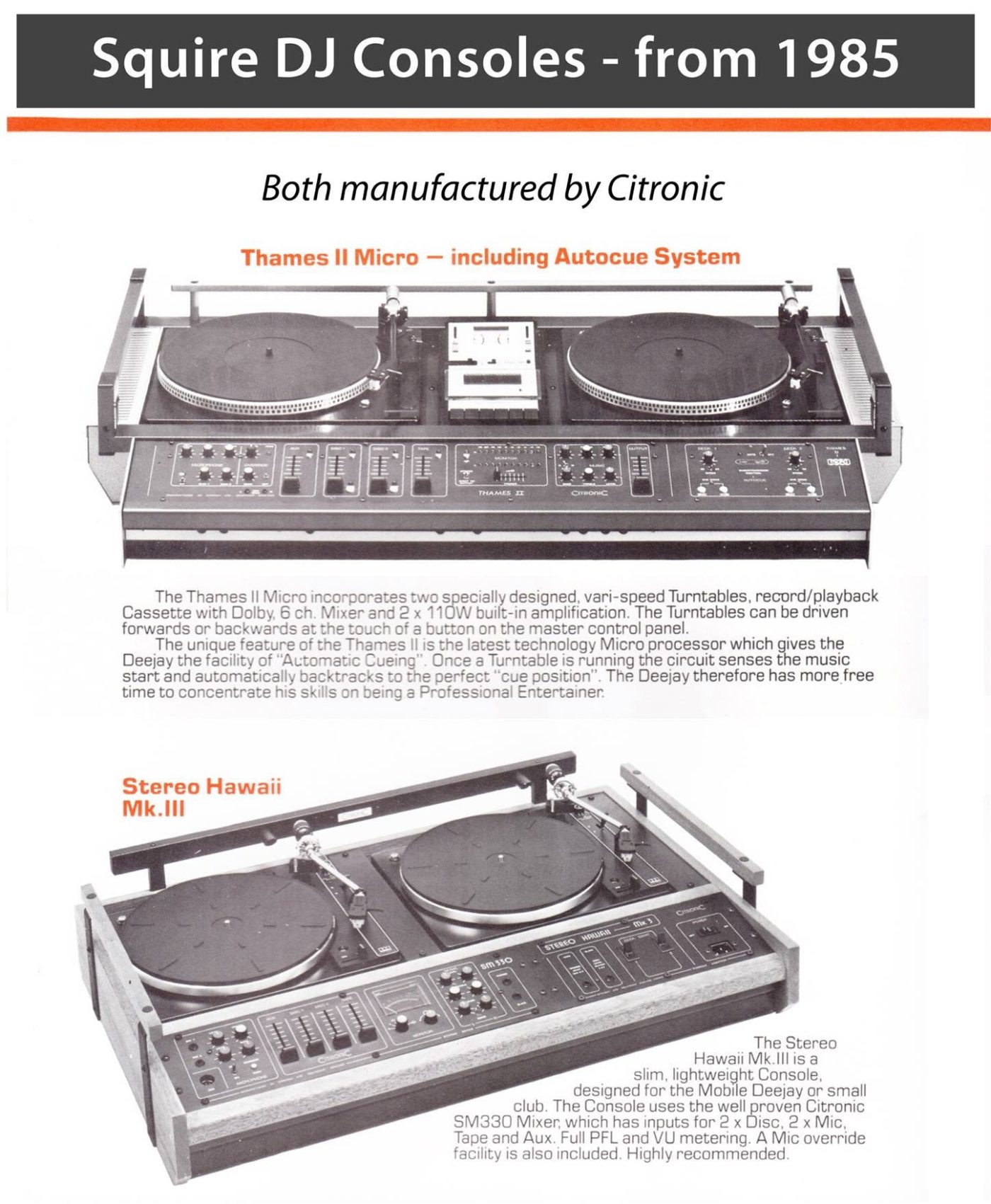
“My first proper setup was a Citronic Hawaii console,” recalls Trevor Fung, who’s been DJing since the ‘70s and was instrumental in shaping the Balearic sound. “A classic Garrard double-deck rig built into a flight case with a built-in mixer and amp.”

Source: Roger Squire

The Citronic Thames MK2 introduced autocueing. It had an internal microprocessor that allowed for automated vinyl cueing, which was a highly advanced concept for mobile DJs at the time. When a DJ placed the needle at the start of a record, the console would detect the audio signal, and adjust the belt-driven platter to the correct cue point.

Colin Dale, one of the UK’s original house and techno DJs, remembered similar equipment. “They were an absolute godsend because everything was all in one,” he said. But the belt-driven turntables were difficult to mix on, with far less precise control than the direct-drive models that would eventually become the professional standard.

“There weren’t loads and loads of equipment you could go and buy, and there weren’t many shops either,” Colin explained. Aspiring DJs often learned by visiting clubs, watching more experienced selectors and finding out what equipment they were using. In London, Tottenham Court Road was a hot spot for hi-fi and technology shops, so most DJs from the capital went there to get their equipment.

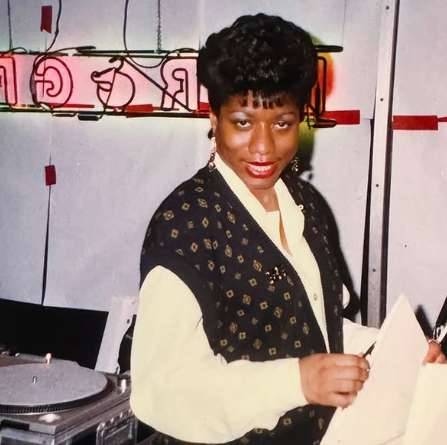
Stacey Hotwaxx Hale, who’s known as Detroit’s first female house DJ, remembered buying equipment from a shop called Highland Appliance, which sold everything from stereo systems to domestic appliances. Her early setup included a Numark mixer and belt-driven Technics turntables. Even direct-drive models initially differed from the equipment DJs would eventually adopt wholesale. Rather than the familiar pitch control slider, some early decks used buttons to change between speeds, with a separate control to adjust the rotation.

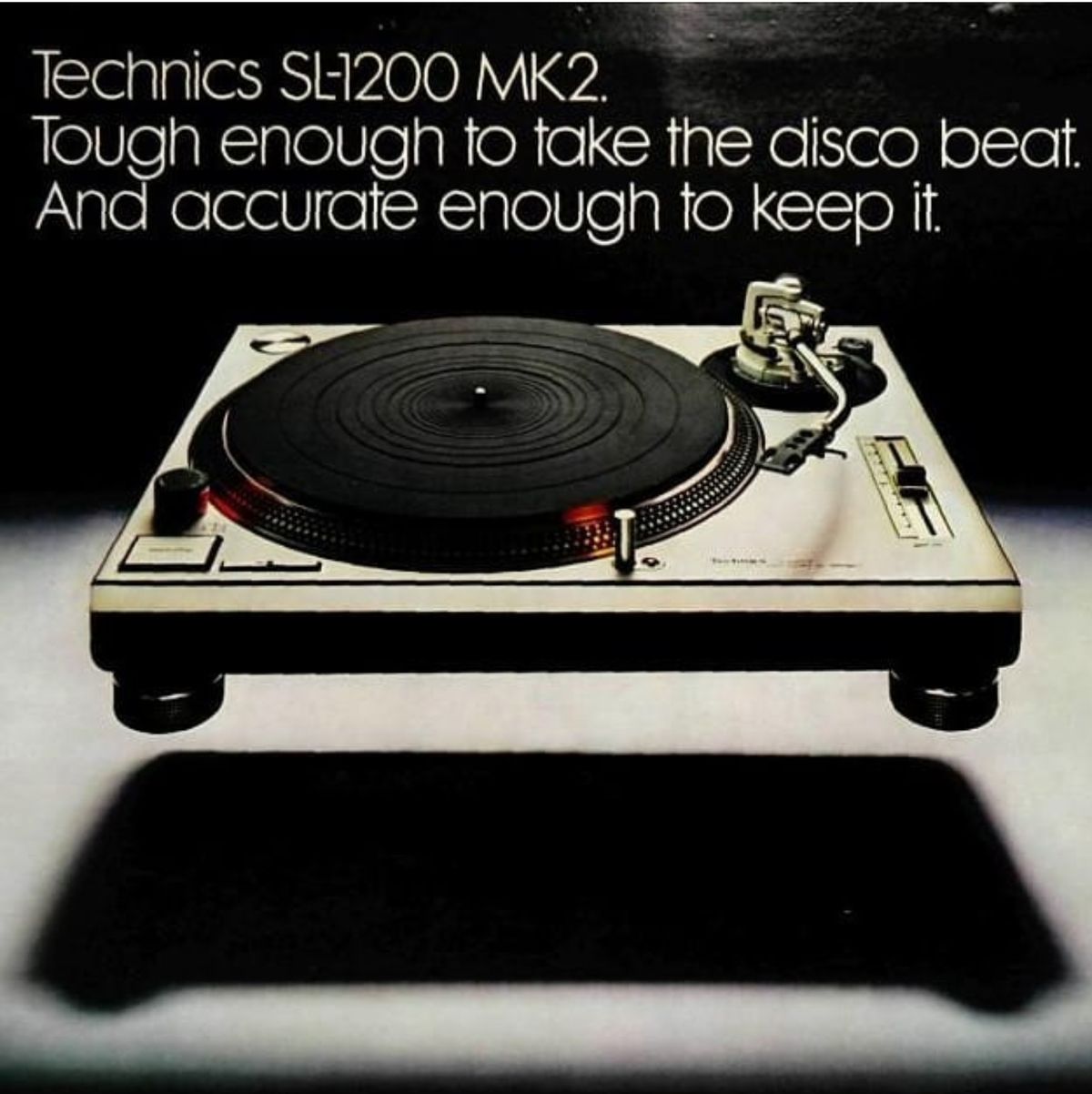
The evolution of the turntable was particularly important in the development of DJ culture. Technics had introduced the original SL-1200 in 1972, initially as a high-quality hi-fi turntable. Its direct-drive motor, sturdy construction and stable rotation made it attractive to DJs, who discovered that the same features that benefited home listening could also withstand the demands of a club. The SL-1200MK2, launched in 1979, refined the design specifically with DJs in mind, incorporating quartz-locked speed control and a pitch slider that made fine adjustments easier.

The MK2’s appeal lay in its combination of precision, durability and practicality. Unlike belt-drive decks, whose motors transferred power to the platter through a rubber belt, direct-drive turntables connected the motor directly to the platter, allowing them to reach speed quickly and maintain it reliably. This was critical when a DJ needed to cue a record, make subtle pitch adjustments or keep two tracks synchronised. 

For hip-hop DJs, it also provided a more dependable platform for scratching and other techniques that required repeated physical manipulation of the vinyl (more on this below).

It wasn’t just that Technics had produced a better turntable; it helped establish a common piece of equipment around which DJ skills could develop. As more clubs adopted the SL-1200MK2, DJs could increasingly expect to encounter familiar controls and performance characteristics when moving between venues.

Technics’ subsequent SL-1200MK3, released exclusively in Japan in 1989, continued the evolution with improved vibration resistance and the inclusion of a slipmat as standard. By the end of the ‘80s, the foundations of the modern club turntable setup were firmly in place: club owners knew what DJs needed, and Technics became the industry standard for both club and home use.

Mixers were also becoming more specialised through the ‘80s, reflecting the demands of club DJs. In the 1970s, the Bozak CMA-10-2DL had helped establish the rotary mixer as a fixture of high-end disco installations. The UREI 1620, introduced in the early 1980s, continued that tradition, offering a robust, relatively straightforward way to blend multiple audio sources. Its rotary controls suited DJs who prioritised smooth transitions and carefully balanced mixes.

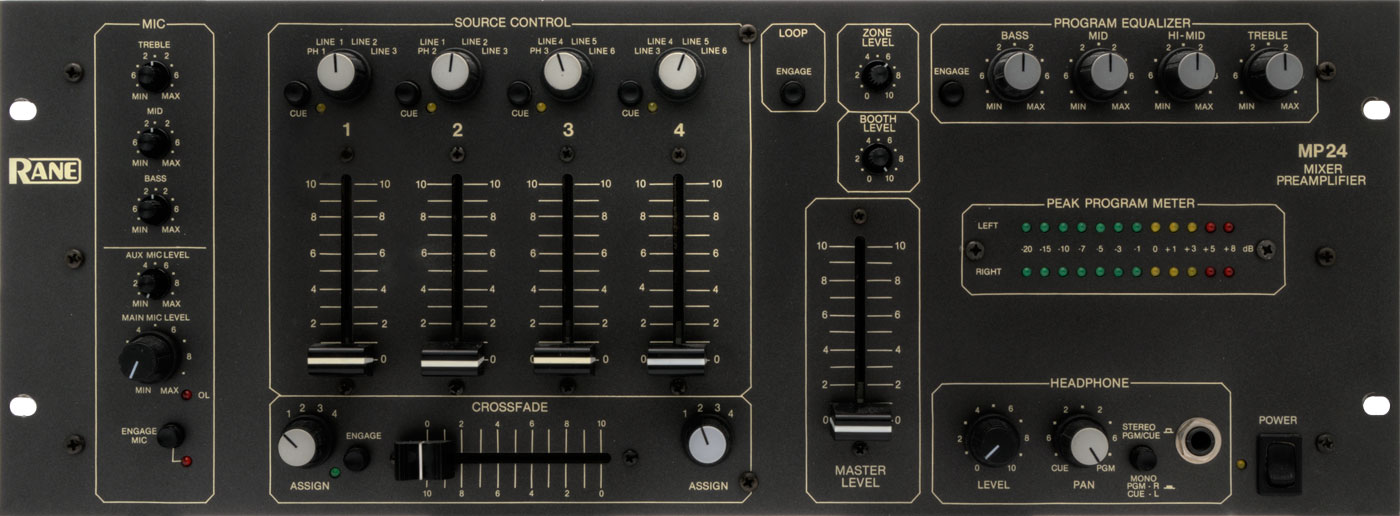
Parallel to this, hip-hop DJs were increasingly using cutting, scratching and rapid changes between records, and so the need for more immediate control became apparent. Rane’s MP24, first shipped in 1986, responded to this shift. Designed for club use, it included an assignable crossfader and split-cue monitoring, allowing DJs to preview one source in their headphones while another played through the sound system. The mixer was designed not merely to blend records but to give DJs greater control over what they could do with them.

Across the 1980s, some clubs became more DJ-friendly. The booth evolved into a dedicated working environment, with professional turntables and mixers integrated into the sound system. Better monitoring, cueing facilities and more carefully designed installations gave DJs greater control over what they heard and how they managed the music. The equipment, and environments where it was housed, were evolving alongside the expectations placed on the person operating it. 

Vinyl remained the main medium for DJs throughout the decade, even as another format began to enter the picture. CDs were first released in 1982, overtaking vinyl sales in 1988 and eventually surpassing cassettes in 1991. In 1986, Technics released the SL-P1200, a professional CD player with pitch control, aimed at DJs and broadcasters. CDs were already changing how music was sold and heard, but early DJ-oriented CD equipment remained expensive and relatively specialised. The SL-P1200 was an indication of what might be possible rather than an immediate replacement for the turntable.

The Rane MP24

Collectors become selectors

For most of the DJs featured in this piece there was a period of pre-professional activity which they don’t really count as “actual DJing”. They were music lovers and collectors first and foremost. The notion of DJing as a career was alien, not a consideration at all.

“I didn’t say to myself, ‘Right, I’m going to be a DJ, and this is going to be something that I do as a career,’” explained Colin Dale. “It was very much a hobby and a massive passion for music. When I first started out, I was a massive record collector, and that led me into DJing. It wasn’t until the early ‘90s when I’d started working on Kiss FM, and started putting on events, that it actually turned into my full-time work.”

If their penchant for collecting records wasn’t landing them work in bars or clubs, some DJs were also getting out on the road and doing their thing independently. Mobile DJs were travelling around playing events like weddings, birthdays, bar mitzvahs and so on.

“When I was doing weddings and youth clubs, there were a lot of mobile DJs because it only really took having a bunch of seven-inch records and sticking them in the back of your car,” said Eddie Richards, the UK house music pioneer. “You didn’t really have to have that much equipment. It all changed for me when I went down to Heaven in London and I saw Ian Levine mixing. I hadn’t heard any of the tracks and I didn’t really get how the mixing thing worked.”

At Heaven, Eddie also met the late Colin Faver, a trailblazing selector who would become a friend and invite him to be a resident at the Camden Palace. Eddie played on a high-spec, bespoke system, in a club that was modelled on New York’s Paradise Garage. 

“I went professional when I got a regular wage from Camden Palace, but before that, it was mobile DJing, which was not really great pay,” Eddie said. “I was just doing whatever I could just to get by—borrowing money from my sister, and paying her back when I had some cash. It was pretty tough actually, and it wasn’t until I joined the Palace and I got a decent wage from them that things started to change, and I could start buying a lot of music.”

Eddie Richards (center) at Camden Palace

“I’ve been entertaining for a long time, and to classify myself as having the title ‘DJ’… I guess it started when I had my first professional DJ job, because I was already doing it as a kid,” said Detroit stalwart Stacey Hotwaxx Hale. Stacey’s early fascination with music and being able to mix it continuously set her off on a path that led to a 40-plus-year career.

“As a teenager, I would program music for basement parties. I would put it on reel-to-reel tapes and make the music be continuous. I guess I was kind of already [DJing], but I didn’t know,” she said. “I knew what a DJ was, but the only thing I knew was somebody on the radio saying, ‘Oh, you’re listening to whatever.’ I didn’t want to be that. I knew I loved the music, so I was always playing the music.”

“I tell people that 1975 was the year that I got turntables and a mixer, but I wasn’t a professional DJ yet,” said Danny Tenaglia, the legendary New York DJ who migrated to Miami in the ‘80s. “I started becoming attracted to it probably around 1973 when I was introduced to it by a DJ’s eight-track tape, and I already had this love and passion for music: Soul Train and instruments and anything musical. And once I heard that, it kind of clicked for me.”

Danny got a break playing at a local pub in Brooklyn, called The Miami Lounge. By the turn of the ‘80s, Danny had already been playing music to the public for four years. His next step was the roller disco, where he played five days a week for at least three years. “I would go to the roller disco, even when it was closed, in between sessions, I would just stay in the booth,” he said. “It was the best DJ booth too. It was nice and private, and it was like my office. I should have just thrown a bed in there, I would have been happy. That was up until 1983, I did that religiously.”

Many US DJs got their grounding at roller discos, learning their music inside out, getting used to working a crowd, and finding their way around the equipment. This is true of scenes like Chicago footwork, where pioneers Spinn and the late Rashad got their schooling at roller rinks. In Detroit, Moodymann still hosts a regular roller disco night called SoulSkate.

“For someone like me, and people like me, who were fans of everything having to do with nightlife, it was our version of bringing that into a room, and the only difference was that people were skating around,” says Danny.

Danny Tenaglia

Similarly, in the UK during the late ‘70s and early ‘80s, dance culture was popular, and it became an integral part of the emergent DJ culture. 

“When I was around 16, I was a total soul boy attending daytime sessions like Crackers in Soho and the 100 Club,” said Trevor Fung, who started DJing in 1976. “The feeling of holding a room, controlling the energy, and sharing music with people who were totally obsessed with dancing got me hooked immediately.”

“When me and [the UK drum & bass DJ] Fabio initially started out, we were far more into dancing than we were DJing,” said Colin Dale. “We actually were dancers first and foremost, and we started a dance troupe called Free Base with my brother. That was the hip thing to do in the early ’80s. It wasn’t to go out and be a DJ. It was to be a good dancer in clubs.”

Dancers performed and battled at clubs like Crackers, where DJs including Mark Roman and George Power would play soul and funk to a packed club. Out of this period came greats like the late Paul “Trouble” Anderson, who went on to inspire a whole generation of house DJs. 

It’s fascinating to note that in some parts of the club scene, dancers were more prominent than DJs, who were still very much in the background at most clubs and bars. It’s an illustration of the many routes into DJing there were in those early days.

Hip-hop’s culture of innovation

Perhaps the most transformative development in DJing during the ‘80s came from a culture that was born in the streets of the South Bronx in the 1970s: hip-hop. More than a new genre, it was a cultural movement, centred around what became known as the “four pillars”: DJing, MCing, b-boying and graffiti. Creativity, individuality, and innovation were central to having style and earning respect. 

That competitive spirit was the driving force behind the evolution of hip-hop DJing. Back then DJs were experimenting with innovative ways to manipulate the music and equipment, extending specific parts, juggling beats, and keeping dancers moving. DJ Kool Herc, a widely celebrated pioneer, was known for introducing the use of two copies of a record to prolong the instrumental break, while Grandmaster Flash developed increasingly precise methods of cutting between records and rearranging their rhythmic elements. The turntables themselves became more than just record players—for hip-hop DJs they were akin to instruments, and DJs competed fiercely to see what they could do with them.

Grandmaster Flash described the thinking behind using two copies of the same record to the NME in 2019: “I was human sampling by looping a part over and over again,” he said. “Sampling didn’t come into play until 10 years later, when production came into play. So in the ’70s I was picking a part and using duplicate copies of the same record and manually looping that part. So that 10 second part would seamlessly become 10 minutes. 

“Sampling had not come into our culture until around the late ’70s/early ’80s. You had to know how to DJ to elongate that part for the breakdancers. And lastly, when the rappers showed up in the culture, they needed a clean bed of music to speak on and that’s when I invented this thing.”

The arrival of direct-drive turntables, particularly the Technics SL-1200 series, helped support hip-hop DJs’ experimentation. The Technics’ durability and consistent platter speed suited the physical demands of hip-hop DJs’ playful innovation. These progressions in technique turned the DJ from a person who selects and plays music into a composer, or live remixer, who expands, transforms and reworks music on the fly. 

Throughout the late 1970s and into the 1980s, DJs in New York developed a whole repertoire of techniques and terminology: scratching, beat juggling, backspinning, quick mixing and punch phrasing, among others. Grandmaster Flash’s innovations especially helped establish new ways of controlling records, which remain an innate part of DJ culture. 

By the 1980s, New York’s street culture began to make an impact beyond the block parties and clubs where hip-hop developed. Herbie Hancock’s 1983 single “Rockit,” featuring Grand Mixer DXT’s scratching, was a significant moment for this crossover. The single reached the top of Billboard’s dance chart, while its now iconic video and DXT’s performance helped introduce scratching to mainstream audiences. DJs appeared in early hip-hop videos, and films like Wild Style and Beat Street helped showcase hip-hop and DJ culture outside of the US. 

Competition provided another route into the mainstream. Battling has been part of hip-hop culture from day one, whether it was DJing, graffiti writing, dancing, MCing or even fashion. The New Music Seminar’s “Battle For World Supremacy” debuted in New York in 1982, and became a platform for fierce battles between rival DJs and MCs throughout the decade. Two DJs went head-to-head for ten minutes, trading two-minute routines, with only one of them progressing to the next round.

In 1985, the Disco Mix Club (DMC) launched its first DJ competition at London’s Hippodrome. The original contest focused on how many records DJs could mix together within a minute, with Roger Johnson winning the first event. But the format later became a showcase for the almost limitless technical abilities of DJs from all over the world.

The championship helped turn what was an underground discipline into an international contest, inspiring DJs to practise, develop signature routines, and push their equipment further and further. It was no longer just about extending breaks to keep people dancing, but wholly centred on the intricacies of their technical skills and what they could do with two turntables and a bag of records—and dazzling audiences in the process. 

Through this evolution, some DJs became virtuoso performers whose technical prowess could command the same level of attention as the music itself. Today, DMC is still considered the gold standard of DJ competitions, with many of its winners and participants landing successful careers and some routines becoming part of DJ folklore.

Record shops and pools

Not only were record shops essential physical spaces for the exchange of information and acquisition of new music, they were also social hubs. As DJ culture grew and evolved in the ‘80s, record shops were an essential part of the ecosystem. They brought people together. They provided the space for creative ideas to develop. They incubated scenes and were the testing ground where record labels would find out how popular their releases were (and whether to press more). 

In Soho, central London, there was a plethora of specialist record shops where many DJs and music enthusiasts would pick up imports. “The first records I bought, that were house music, were from Smithers & Leigh on Oxford Street,” remembered Eddie Richards. “Dave Lee (formerly Joey Negro) worked there and he brought it in. That was 1985, when I bought my first house music records.” 

Mi Price (later Swag Records) was critical to Colin Dale’s growth as a DJ. He worked there in the mid-‘80s, giving him access to the latest US imports. Its co-owner, Jazzy M, is credited as being one of the first DJs to play house music on UK radio. 

Trevor Fung also got a job in a record shop, Groove Records, which was located on Greek Street in Soho. “Finding the rare records in the late ‘70s and early ‘80s was pure detective work,” he said. “I spent half my life digging through crates in London import shops.” 

“By the mid-‘80s there seemed to be an explosion of record shops, especially in London, that came along to the point that you’d have a record shop on pretty much every high street,” Colin Dale said. “I’m not talking about corporate shops. There were a lot of little specialist shops and independent shops that were coming up as well. So there was a big shift when the whole electronic thing came along.”

As Trevor said, tracking down records could become an adventure that took perseverance. Hearing a record in a club or on the radio could lead to searches that lasted months or even years. Humming the tune to the guy in the shop or trawling through the record bins hoping to find that elusive track you just had to have—it was an all-consuming lifestyle.

“Looking back at when we were involved in music early on, especially the rare groove thing, it was crazy the amount of passion and dedication that people would put into finding this music,” Colin explained. Rare groove was a precursor to the UK rave scene in many ways. While it was centred on rare cuts from the past (hence the name) the blueprint was very similar, with soundsystems and warehouse parties the main channels for sharing the music.

A key source of information for many collectors in the UK was James Hamilton’s pioneering section in the Record Mirror. James, who died in 1996, listed many of the latest dance releases, often using comedically descriptive language. He is widely acknowledged to be the first music columnist to give a BPM to each record he listed, which he measured himself using a stopwatch.

“He didn’t look like he was involved in the scene as such, he was an older guy, but he was so knowledgeable and really knew his stuff,” Colin Dale said. “The BPM thing was just so new. I was a massive follower of that column. It was something you just did, if you were into buying records. Everyone bought the Record Mirror.”

Over in America, and across most of Europe, it was a similar story. Record shops were central to the growth of the culture, feeding into the development of new DJ-centred genres and their connected scenes.

In the US, record pools also became an integral part of DJ culture. In simple terms, record pools were groups of DJs who got together to create a “pool” of members that record companies would send promos to. This cultivated a mutually beneficial situation where labels could receive direct feedback from club and radio DJs, and DJs essentially got free records (although they paid a membership fee to be part of the pool). The very first record pool is believed to have included David Mancuso and Larry Levan, among others.

“It was the vinyl version of what we have today with digital pools like Inflyte and so on, but it was a membership subscription,” said Danny Tenaglia. “You would pay your monthly fees of $60 maybe, and all the record labels would send their promos to the record pool. There wasn’t usually more than 100 DJs that were members of the pool, because you had to prove that you were working in a nightclub and be worthy of all these free records. One of the first ones started with David Mancuso, and Judy Weinstein, who went on to start Def Mix.”

In Detroit, it was much the same. “We had three different record pools here: Dance Detroit, Midway Dance, (I still have the T-shirt!), and United,” Stacey Hotwaxx explained. “United was the urban one, Tyrone Bradley ran that, and it was all black music. Whereas the other two had black music, but it had your Dead Or Alive and all that, too.”

Stacey Hotwaxx Hale

The advent of DJ-friendly club music

It’s difficult to imagine now, but for much of DJing’s early history, very little music was made specifically with mixing in mind. That began to change during the 1970s, when disco pioneers like Tom Moulton developed extended mixes, and the emergence of the 12-inch single gave DJs longer, more mixable versions of records. Even so, much of the music DJs played was still designed primarily for radio or home listening, making it difficult to blend tracks seamlessly. At one point, record labels were actually even averse to mixing.

“The attitude of the record companies was they did not want anyone to mix because they wanted DJs to talk between the tracks and say what the records were, so people would go out and buy them,” said Eddie Richards. “That was their theory. They even put stickers on records that said, ‘If you play it, say it’. That’s what it was. It was a campaign to keep DJs talking.”

“People weren’t making music for the clubs, tunes didn’t have proper intros,” Eddie continued. “They didn’t have a consistent, quantised beat because it was performed by a band or live musicians. So it was pretty tough to mix back then. You had to really concentrate and know the music really well. It wasn’t possible to just go and buy music that could be mixed together easily because they’re all roughly in the same BPM.”

By the mid-‘80s, the emergence of house and techno took this evolution a step further. Building on the innovations of disco, producers increasingly began making records specifically for DJs, with consistent rhythms, extended arrangements and longer, beat-led intros that made them easier to mix. This shift was driven partly by DJs learning how to make their own music, and producers taking up DJing, creating a closer relationship between what happened in the studio and on the dancefloor.

Danny Tenaglia noted the impact of major labels commissioning house mixes in the mid to late ‘80s. “I moved to Miami, and I stayed there from 85 to 90, and that’s where a lot of changes happened for me, both musically and professionally,” he said. “When I moved down there, the big things were freestyle, hi-NRG, and Italo disco. Honestly, I hated it. I was into MFSB, more sophisticated sounds, leaning into Kraftwerk, Moroder and Yello, stuff like that.”

“What made it work in my favour was all the major labels were starting to do house mixes around that time,” he said. “So you had my hero, Shep Pettibone, and many others taking a Whitney Houston song, or a Taylor Dayne song, Depeche Mode or Pet Shop Boys and doing a house mix. Because these records were popular, I was able to start playing those, and then threading in some Chicago or New York house with it.”

It’s important to remember that the emergence of house and techno predates the 1988 acid house revolution in the UK, and the subsequent explosion of rave culture in Europe, by several years. Some of the earliest records were released, and exported overseas from the US, as early as 1985. Steve ‘Silk’ Hurley’s classic “Jack Your Body” hit the UK charts in 1987.

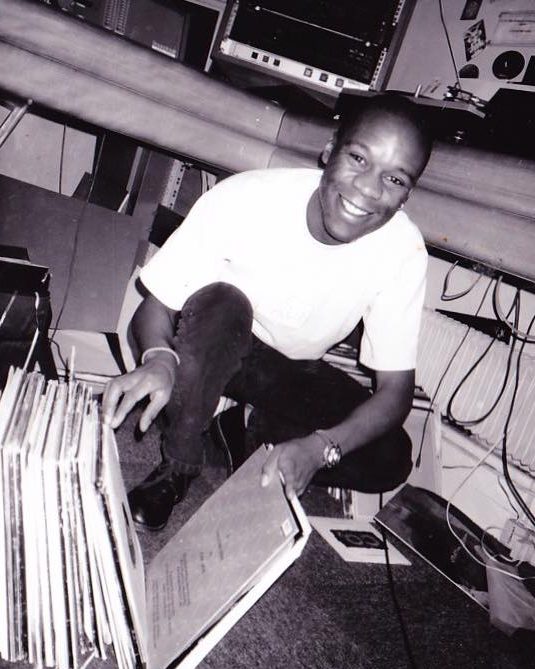
Trevor Fung

Just as Danny explained, the earliest house cuts were played alongside synth pop, hi-NRG, and other types of dance music. At that time there simply wasn’t enough material for an entire night of house and techno. The late ‘80s Balearic movement, inspired by Ibiza DJs like Alfredo, Leo Mas and José Padilla, was also, at root, eclectic. 

“Musically, my collection shifted massively,” reflected Trevor Fung. “It started with UK/US soul, funk, and jazz, expanded into go-go and hip-hop with my club, The Funhouse, and then absorbed Chicago house, Detroit techno, indie, and new beat. The biggest shift was the Balearic philosophy: realising that you didn’t need to stay in one genre. If a record felt right for the mood, you played it, whether it was a pop record, an obscure German electronic track, or a heavy house beat.”

The shift to bigger stages

In London, the British rare groove movement was closely tied to the emergence of rave culture. For a time, the biggest names in DJing would have been either locally known through their appearances in clubs and bars, or people who were prominent on the radio. 

In the rare groove scene, it was common for party organisers to break into warehouses and set up sound systems. Outfits like Rapattack, Funkadelic Soul Sound, Soul II Soul, Shake N Fingerpop, and Good Times helped establish the foundations of London’s warehouse party culture, which was replicated when acid house kicked off in the late ‘80s. 

“Norman Jay was throwing massive, massive parties, and I think around that period you had Soul II Soul, Froggy, there were so many of them,” Colin Dale explained. “Those names started to get elevated, and of course, when everything went electronic, it carried on from then.”

“For me personally, I think DJs really started to get elevated with rare groove and that massive movement because it was then that people started to really pick up on names,” he added.

“In the early 80s, the DJ was basically the guy in the corner turning records over or talking into a mic at a pub or soul night,” said Trevor Fung. “By ’88, with the explosion of acid house and the M25 raves in the UK, everything flipped. DJs became the main event, the curators of a total sensory sound experience. Suddenly, you were playing to 20,000 people in a field at 7:30 AM at events like Sunrise, standing on juggernauts in front of massive speaker stacks. We went from being local scene figures to headliners almost overnight.”

Trevor’s connection to Ibiza also offers a window into the shifting status of the DJ. He based himself in Ibiza for several years before the acid house “revolution” was sparked in the late ‘80s, by which time he was a resident at the now-iconic Rage night held at Heaven. He hosted the main room with Colin Faver, while jungle pioneers Fabio and Grooverider took charge of Room 2.

“When I brought Paul Oakenfold, Danny Rampling, Nicky Holloway, and Johnny Walker over to Ibiza in summer 1987, the freedom blew their minds and kicked off the whole UK movement when we got back,” Trevor explained.

As the Balearic sound was imported to London, it captured the imaginations of countless new ravers, as well as the unwanted attention of the media. This fuelled the acid house craze, which swept the nation. Media condemnation only fanned the flames and increased its popularity. From clubs like Heaven, to illegal warehouses and, eventually, huge outdoor events in fields, the hedonistic energy of Ibiza was transported to the UK and the rest of Europe. Outdoor raves took place in Belgium, Holland, Germany, Spain, France, Italy and other European nations. New genres and labels were spawned out of this proliferation of electronic music. DJs ended up playing on bigger and bigger stages, to bigger and bigger crowds.

“When acid house broke out of the UK, some DJs moved to other places, like San Francisco or wherever, and they knew how that system worked,” said Eddie Richards. “They knew what it took to put on a big event. So they’d put on a party themselves, and then it took off in their particular location. Once it got big enough, they could afford to bring over the people that were playing at the big raves, like Carl Cox, or me, or whoever. When DJs started touring, then it was like, ‘Oh wow, this guy’s actually DJing in America’ or wherever it might be. I think that’s when the whole thing shifted into this DJ superstar business.”

Many of the same DJs were booked at the big events, and ravers became familiar with the names on the flyers and posters and those names became a selling point for events. In London, for example, people like Colin Dale and Colin Faver became well known through their slots on Kiss FM and appearances at raves. Cassette tapes of their gigs—and, later, sets from the raves—circulated nationwide and, sometimes, worldwide establishing their names and building fanbases globally.

International recognition was crucial to the house and techno pioneers. The support and adulation from music fans, event promoters and label owners overseas brought them a level of success that simply wasn’t possible in their home nation. Artists like Kevin Saunderson, with Inner City, had commercial hits, while Jeff Mills, Juan Atkins, Derrick May, and others picked up regular bookings in the UK and Germany especially.

“I think it started happening like in the late ’80s and early ’90s, where raves were taking place here and there globally, and that mentality started to bleed its way into nightclubs, especially the larger venues,” Danny Tenaglia explained. “So there were venues that could hold 3,000 people easily, or maybe more, give or take. But then the concept became: ‘We’re going to get this promoter, this sub promoter, that sub promoter,’ and each one wanted to bring in their own DJ. Then, before you know it, instead of a guy like myself who held a solitary residency, then it was like five or six names on a flyer.”

What started at the dawn of the ‘80s as a pastime-cum-job for a select few gradually morphed into an exploding global culture. As the music gained popularity, so too did the idea of presenting it in bigger club spaces, with professional DJs, high-spec equipment and the notion of people having an “experience.” By the latter part of the decade, outdoor raves were popularised around Europe, the UK and parts of America. The magnitude of these events meant big money for those organising them.
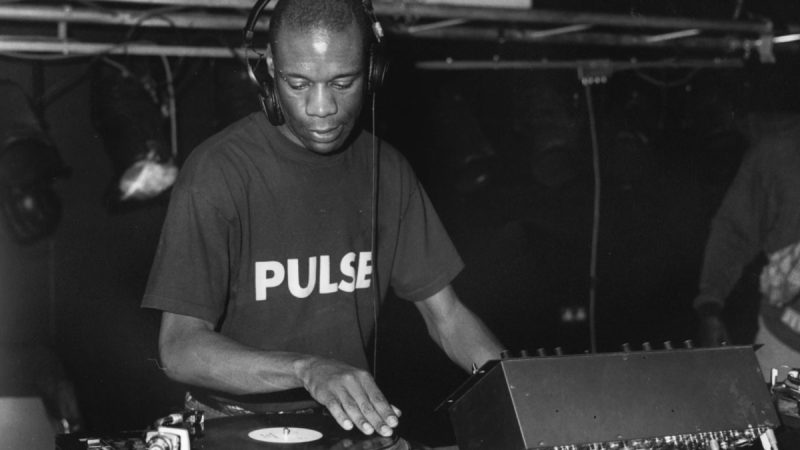
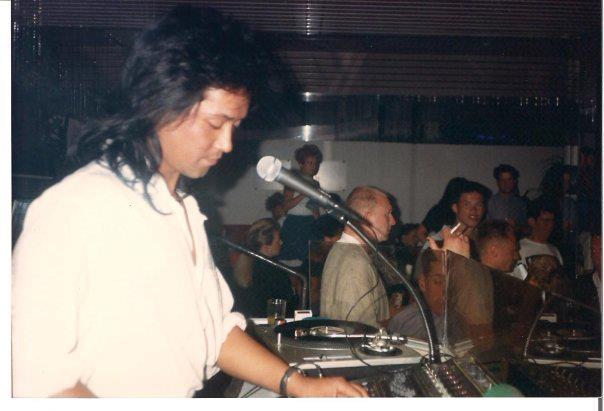
Colin Dale

“A lot of it has happened because it all turned into a massive industry,” said Colin. “That’s why you have all these massive DJs, because some of them became very lucrative and could make promoters a lot of money, which is the reason some of them were elevated so much.”

Today, becoming a DJ often equates to having a professional career, whether that’s IRL in clubs and festivals, or bars, weddings and birthdays, or online as a social media influencer, Twitch DJ or radio host. Those at the very top tier of DJ culture can charge up to hundreds of thousands for their sets. An entire industry has been established that’s very different to the independent, hobby-driven way to earn a little bit of money that formed the foundation of what’s happening today. The 1980s marked a pivotal time for DJing, ushering in a new era and a new business model that still exists now: DJs as headliners.