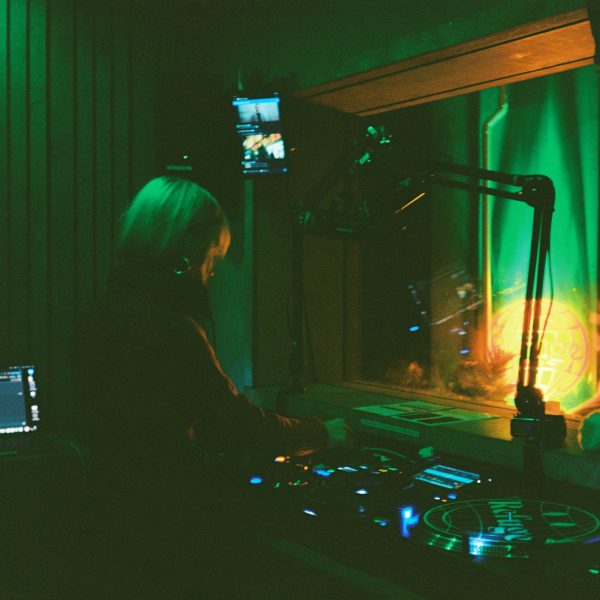
Satoshi Tomiie on the joys of vinyl DJing

From staying musically curious to the importance of limitations, the revered Japanese artist explains his DJing philosophy.

Listen to this article by Bridge editor Ryan Keeling

For Satoshi Tomiie, curiosity has always shaped his DJing. 

Across a career that stretches back to the 1980s, the Japanese DJ and producer has moved through different sounds and eras. Early on, he was associated with US house music and his collaborator Frankie Knuckles, before becoming a leading figure in the progressive house movement of the late ‘90s and early 2000s. These days you’ll mostly find him playing classy strains of dub-infused house—but it’s important to point out that for Satoshi, these changes have never been particularly deliberate. He’s simply followed the music that interests him, whether that’s a new release or a forgotten B-side from 30 years ago.

This philosophy extends to the way he performs. Satoshi is a passionate advocate for vinyl, although he’s equally happy to embrace the opportunities of digital DJing. For him, the two formats offer different possibilities, and choosing between them is as much about the user experience as it is about sound quality. His live performances, meanwhile, are based around improvisation, using deliberately limited setups to create music in the moment, with all the risks and rewards that involves.

In the conversation below, Satoshi explains the finer details of his craft. He also reflects on the value of limitations and why, after so many years behind the decks, he still has no desire to stop.

How does the ratio work between vinyl and digital for you?

There are the promos, my friends directly send me digital files and the music I am working on in the studio. That stuff I play, and with the promo companies I trust, I listen to them. You can digitize your own vinyl and carry it with you. So I do both. I love vinyl and it’s really fun to play.

But at the same time, I like to have a variety of music. I play a lot of digitized vinyl records from a USB. In a way, I play a lot of music that was once pressed on vinyl. Normally, I play with two CDJs and two turntables.

Do you find there are things that simply aren’t available digitally?

Yes, some stuff is only on vinyl. A lot of stuff is also available digitally. I go to the record shop and it’s not like I stop buying vinyl because something is available digitally. I like the music on vinyl, so I buy it.

I prefer playing a vinyl rip to the digital version because of the sound. The limiting on digital is different. Sometimes with digital copies, they use a totally different limiter setting and it sounds really squashed. Some vinyl actually has a very similar dynamic range to digital. In that case, digital is fine.

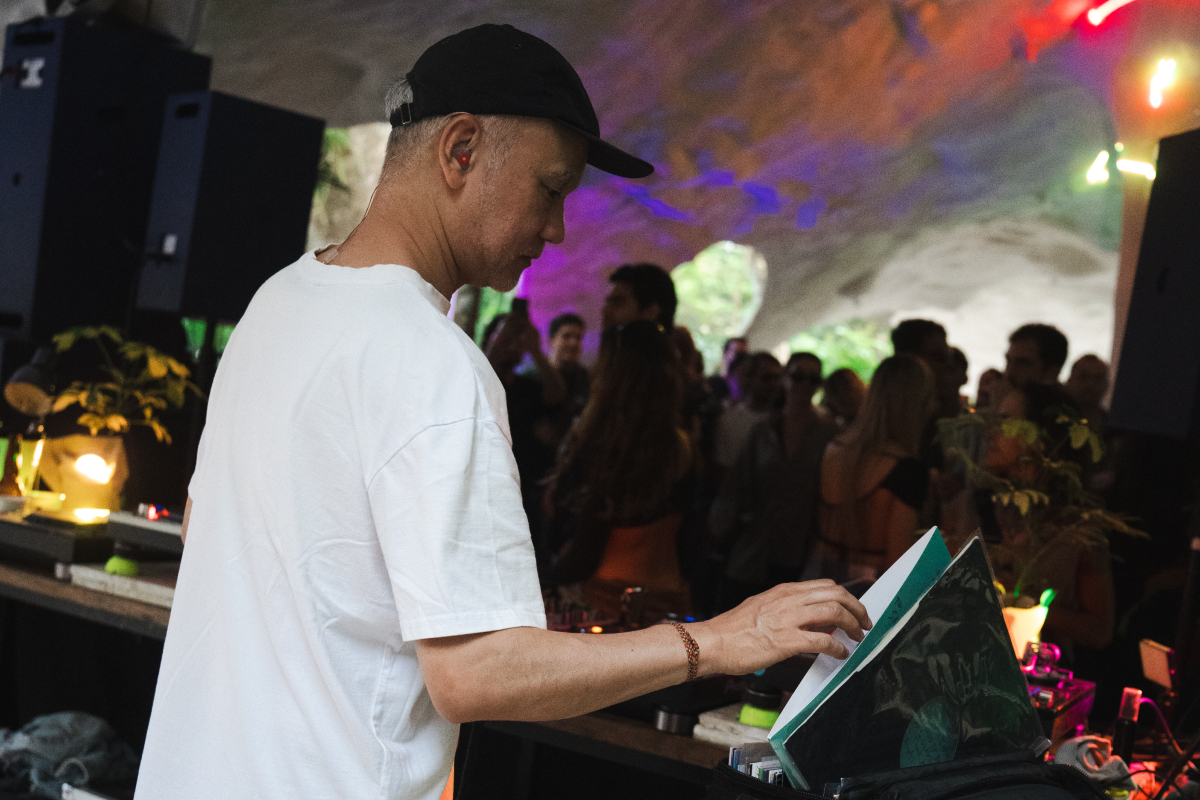
Credit: @lapsique.media

It’s interesting, we tend to talk in black-and-white terms about “vinyl quality” and “digital quality,” when actually it depends so much on the characteristics of that particular production and mastering process.

Yes, it depends on the context. As a user interface, I really like vinyl. This is how I learned to DJ. CDJs have a different kind of fun or convenience. I take the best part of both.

Would you say that playing vinyl better suits the style of DJing or mixing you prefer?

You can layer tracks, loop them with digital. That’s actually the part that I found interesting about having four decks on Traktor. You can focus on what you’re doing musically. You don’t have to worry about beatmatching records.

Tracks have a story from the beginning to the end. I compose a bigger story by combining these little stories, which are the individual songs. I basically play most of the whole song and then mix the very end of the track into the beginning of the next track.

For this, I think vinyl makes sense. Of course, we can do this on CDJs too. But for the music I play, as a user interface, vinyl makes sense to me.

How would you describe your current DJ style?

I play house. What kind of house? It’s a mixture of things I like from back in the day to contemporary stuff. It’s really difficult to describe myself.

From the beginning, the reason I went to clubs was to discover music I didn’t know. I understand playing somewhat for the crowd. Playing something they’re familiar with is one way to do it. But I don’t do that much.

For me, it’s always been about going to clubs to discover new music. I don’t play just for myself or just for the crowd. The performer has to be inspired by what they’re doing in order to entertain them, I think.


I play some stuff that came out in the ’90s but I didn’t experience at the time. Some tracks I already have, but I now find the B-sides more interesting.

I don’t really play many vocals. Mostly instrumental, more groove-driven. Those grooves are based on Black music, and that’s what I really like about house music. It comes from music I relate to.

Your DJ style has gone through different phases over the years, but are there things that have remained consistent?

Throughout my career there have been different sounds, like many other DJs, but I never really chased trends. It’s more about following my curiosity. I think it’s naturally staying relevant to what’s happening because I’m curious about what’s happening.

Yes, I assumed that you never had firm points in time where you stopped playing one style and started playing another.

For some people, it looks like I’ve changed my style completely. But no, if I find something really interesting, I’ll try it myself and see what happens. Sometimes it clicks. I never really say, ‘I’m not doing this style anymore and this is the new style.’

Recently, Matt Edwards (Radio Slave) did an interview about his opinion that making good records is not enough to get booked. He’s right. Before, if you had a big hit, a crossover hit, you got booked. A long time ago, the DJ didn’t have to do any promotion. You make one hit record and all of a sudden you’re a big star.

These days, it’s not like there’s one record everybody’s playing anymore. You’re selling 300 records. Most of the time this doesn’t really take you anywhere.

At least for me, I never make music because I want to get booked. If it works as a booking tool, why not? I don’t deny that. But the purpose of making music, at least for me, still has to be enjoyment in the process.

Are there things you feel you have to do in order to be visible and get booked? Or does the philosophy you just described extend to everything? So you do your own thing and bookings are a byproduct.

That’s the ideal world. You do what you really love and you get booked. But unfortunately the world doesn’t work this way. People actually try almost everything they can think of and it’s still not working. I’ve been lucky.

Many years ago, somebody told me, ‘You should play this party.’ I was like, ‘But my music doesn’t really work there.’ This person told me, ‘You should make music that works in this format.’ I understand the logic as a businessman, but this is not the reason I’m doing music. If I want money, I’m in the wrong business.

For making music, I’m a super-purist, I guess. I only do what I want to do. Luckily, I’ve been accepted doing it this way.” I’m very grateful.

Another thing that’s important to me: I don’t like to repeat myself. So if something was successful before, I don’t want to do it again. It’s done. That’s not a judgment of other people. This is just about me.

I’m sorry to people who request tracks; I don’t want to disappoint them. But it isn’t really my thing. Maybe that’s part of what’s kept it fresh for me through the different eras: I don’t repeat myself.

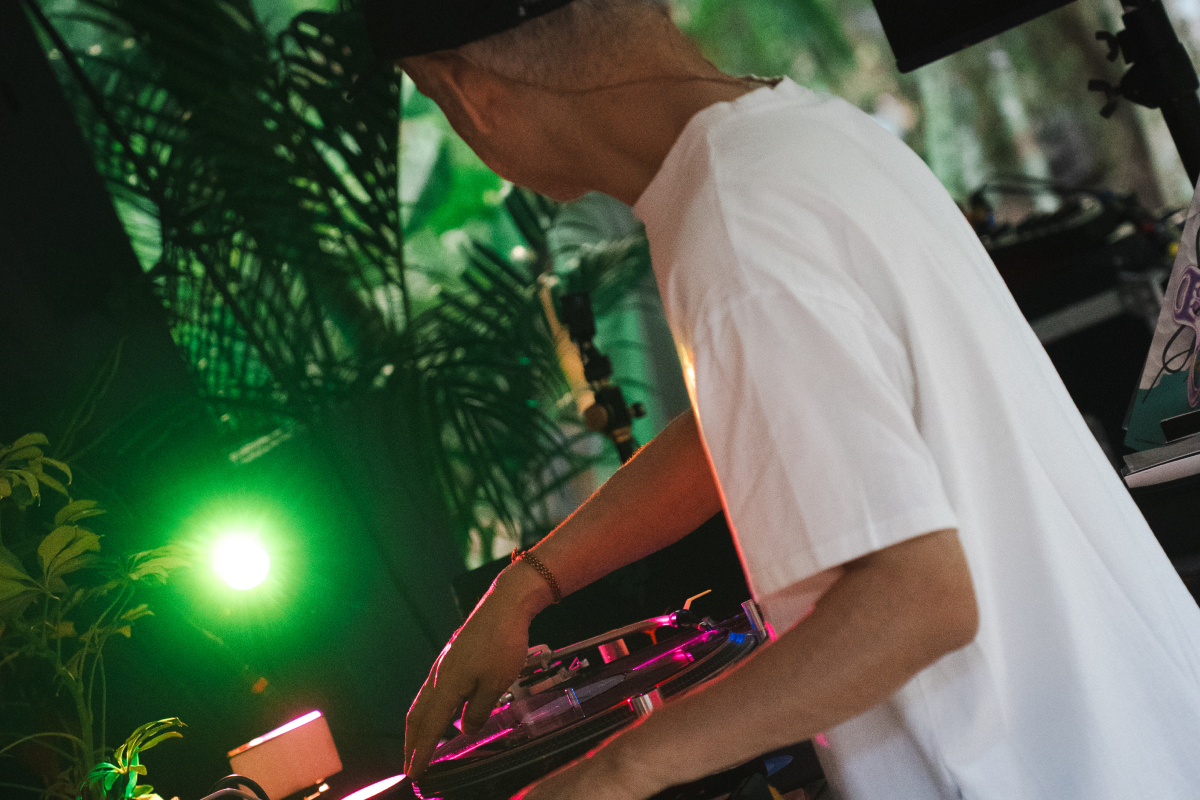
Credit: @lapsique.media

I was curious about your process for responding to a dance floor. What signals are you looking for when you’re trying to understand how people are responding to the music you’re playing?

It’s mostly instinct. If you get absorbed in the groove, you just move yourself. But I’m not looking for this moment all the time. People get tired of jumping all the time. It’s a balance. I don’t play really hard music anyway.

If I play three nights in a row, I don’t play the same exact set. ‘Tonight I’m able to play this record I couldn’t play yesterday,’ or vice versa. ‘This track probably won’t work tonight. This one’s too uplifting because of the set I’ve been building.’ These things depend on the dance floor and the crowd there. Reading the dance floor is key.

Do you think only about the next record, or might you have one in mind that you want to work towards in three or four tracks’ time?

Sometimes it’s super spontaneous. I want to play this record next because I hear something in one record and think, the next record should be this. Or I’m thinking maybe three, four records ahead, then building towards that.

Obviously, I can’t take millions of records to the gig. I try not to have too many options. Too many options is sometimes the equivalent of no options.

Normally, I limit the amount of music I bring. That’s where vinyl is useful: it creates a limitation. Of course, you can create limits with digital music too.

Would you also have a limited number of tracks on your USB?

You could do that, but to me it’s not the same as vinyl. You could make a playlist. If you have millions of tracks on one USB, searching for the track you want to play next is hard. I’m making past gigs into playlists. ‘I played this record on this night. Let me go back.’ I tend to overlook some songs if they’re on digital.

Also, a nice part of having a record is that you have to bring three or four songs on that record. You can’t take only one favorite track. Sometimes I’m tired of playing the same track, so let me try another track on the same vinyl. ‘Oh, wow, how did I miss it? I really love it.’

With digital, sometimes you find your favorite track and you’re just playing it and forget about the rest on the same release. 


In your experience, has it become easier or more difficult to be a vinyl DJ over the years?

You still have to deal with skipping and feedback. The difference is that these days, if it really doesn’t work, I can switch to digital. So there’s a plan B. But it’s not the same thing.

And the other thing is that modern sound systems, with DSP, there’s always latency. Plus the distance to the speaker. So there’s always some delay, and especially when you’re mixing records, this delay is kind of critical.

But actually, mixing vinyl these days is much easier in some ways. Before, the music was made on tape, and sometimes the material would stretch or shrink a little bit. With tape editing, the tempo was never as accurate as with modern computers. Constant pitch adjustment was mandatory.

These days, even with analog records, the music is mostly made on a fully digital system. There’s no tape involved, so the tempo is super tight. There’s very little drift, and mixing contemporary music on vinyl is so much easier.

I mean, imagine DJs in the ’70s, mixing music played by live musicians. When the drummer does a fill, the tempo drifts, so you’re constantly pitching the record. David Morales, he’s amazing at this. His pitching is super tight, his mixing is super sharp. And I was like, ‘Wow, how can he mix these disco records like that?’ Because the tempo is moving all the time.

And this is one of the things about the Urei 1620. To me, it’s still the best mixer for mixing records, because it really blends the music together. It does this kind of magic. Even if your mixing is a little bit rough, it’s OK, because the Urei does its magic. And I think it’s because of how it saturates. Basically, the rotary knob is the gain control, so when you turn it up, it starts saturating. And this saturation becomes part of the mix, before it goes to the mix bus. This is where the magic happens. It glues music well even without channel EQ.

A fader mixer doesn’t really have this. With a fader mixer, you set the gain, and then the fader goes from zero to the maximum level you’ve set.

To be honest, as a user interface, I actually like faders better. As an instrument, I really like a fader mixer better. But sound-wise, for actually mixing two records together, I still think the Urei 1620 is the best.
Many people don’t like the user interface, including me. But the sound…

Traditionally, New York clubs used the Urei, or a modified Urei. These days, there’s a club called Refuge that has a modified 1620. I played on it for the first time and I was like, oh my God. It reminded me how musical this mixer is. And this is what makes the 1620 special.

Credit: @lapsique.media

What role do FX play in your sets?

I carry a delay pedal all the time, doing dub mixing with delays. It’s not about destroying the track but rather emphasizing it. I also use a lot of reverb on the V10 when the mixer is available. When you’re dub mixing, you can accent the snare with a big reverb. The delay is a really big part of using the mixer as an instrument, or as a dub mixer.

It’s not taking the groove away from the track, it’s making the impact a little bit bigger. Sometimes a part of the track is quite long, so maybe I’ll make a little breakdown with a filter, just a little delay and reverb. Give that moment a little bit of life in the DJ set.

But I really hate it when somebody uses too much of an effect. I try to make it as minimal as possible.

Yes, FX can lose their impact if used too often. 

Exactly. Less is better. I don’t do it all the time, but effects are a really important part of my DJ sets.

 Why do you prefer using a pedal to the delay effects built into DJ mixers?

Most of the delay effects on mixers are quite weak. They do delay but it’s very mild. It doesn’t have the impact. By bringing my own delay, I have control over the feedback and everything. I understand why the effects on mixers are like that because people could break the sound system.

The reverb is actually great, and the phaser sounds great. But the delay, I always find it just OK. It’s fine, it’s cute, but it’s not wow. This is why I bring my own delay.

Let’s talk about your live sets. Could you describe what your setup looks like and the thinking behind it?

I do different kinds of live sets. Sometimes it’s a Eurorack modular synth live set, sometimes an Octatrack-based live set. Sometimes I collaborate with other artists. I don’t have a permanent setup, but the key thing is that I like limitations and challenges.

I don’t use a computer because, if you have a computer, it’s like, ‘I can do this, I can do that,’ and then I’m losing focus. Using the Octatrack is quite limited, and with Eurorack, you don’t know where it’s going because it’s 100% improvised. I don’t prepare a song. I just like making music on the fly, making music for that moment, watching the crowd. So I have to have a lot of freedom to do this.

With
the Octatrack, a drum machine and a couple of synths and effects, it’s much simpler. I have many grooves ready, so it’s a bit like a DJ set. Maybe I’ll skip something and go to a different one because of how the night is going.

And it’s something to do with my music-making, too. Many times, I don’t play my finished music in my DJ sets. I appreciate people liking the music, but the fun part for me is making it. I don’t really enjoy playing something I’ve already prepared in the studio. I want to bring the excitement of the studio process into the club.

Even the preparation in the studio is more like practicing the guitar before the concert, practicing guitar for the improvisation. It’s polishing up your skill, not the music itself.

What feeling does that kind of performance create in you? Do you get a different feeling or energy from performing live compared with DJing?

If something goes wrong when you’re DJing, you can just play another track. But a live set, it’s like walking on a tightrope. If something goes wrong, everything stops. So when you finish, it feels like an accomplishment. DJing is a totally different feeling. These days, I’ve finally got to a level where I can sometimes sip a beer between beats. But that’s a luxury.

I guess the flip side of the risk is that you could end up somewhere you’re not happy with. Are you ever unhappy with how the sound has developed or how people are responding?

Luckily, not so far. But maybe that’s because I’ve been too busy to think about it. Recently, though, one of the main machines stopped working in the middle of a set. I was like, what do I do? One option is to stop and say, ‘I’m sorry, the machine broke, I can’t perform anymore.’ But I was like, no, I’m not going to quit.

The other option is to switch to a DJ set. But I thought, no, I’m going to see what I can do with the stuff that’s left. Now it’s even more limited. Just a drum machine, a synth and some effects. Let’s see what I can do with this.

It’s almost like you show up for a DJ set with a bag full of records, and there’s no turntable. Then you have five tracks on a USB. But at that moment, you’ve got to perform. There are 1,000 people in front of you, ready to dance. What am I going to do, disappoint them? No. And in the meantime, I’ll try to fix the machine. It was challenging but I think it gave me some inspiration for bringing the live set to the next level.

Thinking about the future, as someone who’s been doing this for decades, how much do you think about your own longevity? Do you see yourself continuing to travel and DJ well into the future?

As long as I enjoy it, I’ll keep going. But there are little adjustments. For example, I don’t do crazy traveling anymore. I don’t mean the number of gigs, it’s more about the distance. Playing LA on Friday, New York on Saturday, then going back to Europe the next day. I used to do this but I’m not doing it anymore.

DJing has been my passion throughout my life, basically. I have no desire to give it up. I think it also helps me keep my sanity. If you’re doing something you enjoy, it’s really healthy for you, I think.
Text: Ryan Keeling